 |
|
| Home | Marine Aquariums |
Freshwater Aquariums |
Planted Aquariums |
Brackish Systems |
Ponds,
lakes & fountains |
Turtles & Amphibians |
Aquatic Business |
Aquatic Science |
Ask the WWM Crew a Question |
| Please visit our Sponsors | ||||
Co2 and Ph for planted tank
12/28/10 Quick question for Neale, CO2 injections
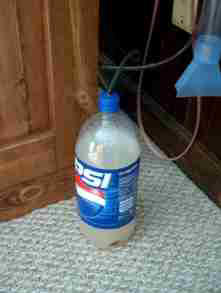
2/24/10 Emergency!! Yeast in my tank!! Please help!--
12/04/09 Re: Adding light, plants, and kubotai loaches to
stable 55gal freshwater community; Human-powered CO2 infusion
system! 11/13/09 Re: Adding light, plants, and kubotai loaches to
stable 55gal freshwater community 11/15/09 Re: A host of things: substrates, water
parameters, stocking options 8/22/09 Lighting/CO2: FW Planted System: CO2 dosing
7/22/2009 Re: Lighting/CO2: FW Planted System: CO2 dosing
7/23/2009 Re: Lighting/CO2: FW Planted System: CO2
dosing 8/13/2009 Re: Lighting/CO2: FW Planted System: CO2 dosing
8/14/2009 Planted tank co2 question - turn off at
night? 4/9/09 CO2 Website Recommendations 2/16/08 Hi, I just wanted to tell you about the setup I have. I have a 40 gallon display, tall tank with a 6.4 pH and good ammonia, nitrites, and nitrates, forgot the numbers, but I believe it was low, and I have very soft water. I have a whisper filter that pumps 100 gallons per hour, and in addition, I have 3 undergravel filters. I use glass gravel and I have some ornaments and hiding spaces for the fish. I have the bubble generator to supply oxygen for the fishes. In the tank, I have 3 live plants, planning on getting 2 more but not sure what types. I wanted to get a floating plant for the discus, what would you recommend? <Water sprite would be a good choice to try depending on your conditions.> I have 3 discus, and 10 cardinal tetras. I keep the temperature at 82 degrees. Is this overstocked or is it possible for me to add any more cardinal tetras, possibly 10 more, or is it too much? <Keep the nitrates under 20 ppm with water changes. Live plants will help with the nitrates depending on the lighting and general health of the plants. If you cannot keep the nitrates under this level then I would recommend not adding any additional fish.> I do 30 percent weekly water changes and feed them frozen bloodworms, brine shrimps, beef heart, occasionally, and flakes. I am also trying to build a carbon dioxide generator, as I saw online. However, there are so many different recipes for the reaction, which one would you go with? Do you recommend making one? Thanks so much for your help. < A good friend of mine runs a website called thekrib.com that discusses CO2 and the pros and cons of adding CO2. This is not a toy and can wipe out your entire tank if not used correctly. I recommend reading this website often and do not use CO2 until you know what you are getting into. If you do decided to go this route then it will help you build a CO2 unit with everything you will need.-Chuck> CO2 in planted tanks
9/22/08 CO2 fertilisation
How to differentiate CO2 from O2? - 7/10/08 dear sir/madam, <Hello! Benjamin here> I have a 250 gal planted tank, and after reading and doing some DIY yeast CO2 stuff, I decided to buy the real system. The only problem is, how can you tell if the gas inside the bottle is really CO2? Is there any way to test it? <There isn't a way a hobbyist can easily assay the purity of the gasses in the cylinder, however, purchasing your cylinder from a reputable source and having it refilled properly will ensure you have CO2> thank you. <Welcome. Benjamin><<Mmm, could bubble a bit through some freshwater... Carbon dioxide is much more water soluble... and will drop the pH quickly... You won't be making other gasses here though. RMF>> Adjusting CO2, pH, dKH, the "Shift" Key on Your Computer Keyboard - 7/16/08 Dear Crew, <Hello again!> First, I would like to say thank you to Benjamin. I have confirmed the bottle was indeed filled with co2;) <Welcome, and glad to hear it. My thanks to Bob for pointing out a simple test I overlooked/was ignorant of> I have a 250gal planted aquaria, heavily planted, with 30 cardinals, 2 Corydoras, 5swordfish, 3 algae eaters, 3botias,1 black ghost. All fishes seems to be doing fine- the swordfish just bred. Plant growth, however, has been slow. I'm experiencing difficulties in achieving the correct level of water parameters (ph; kH and co2 levels) currently my tank water has ph=8.5 and kH=11 I'm using sera test kit for testing the water kH and ph. I'm using well water that has ph=7.5 ; and kH=11. unfortunately, haven't found a gH test kits from my LFS, so I assume that the water has a high level of gH, since it shows marking on dry pipelines. <11 dKH also indicates high TDS> Recently I bought a CO2 unit from my LFS and it has been running for about a week. And made adjustment of about 5 bubbles per sec. and leaving it running throughout the night. Q: How come my ph doesn't show any changes? Should I pump up the CO2 rate? <I wouldn't> Is it because of the high kH? <This is buffering it, yes. Consider an acid buffer in your water changes> I've tried using RO water (with ph=7; kH=3)changes but after a few hours the ph and kH went back to 8.5ph and 11kh. <11 dKH in a 25o gallon tank is a lot of buffering capacity. Will take many water changes...also, do you have an sources of carbonate in your aquarium? Aragonite, limestone, etc?> Also, it will come to a time when I will have to make water changes that I don't want to keep buying RO water. <With your hard water, it may be necessary for you to purchase an RO unit to make your own- at a significant savings compared to purchasing the water> What should I do to make my life easier? <Use lower alkalinity in your water changes for a while, see if this helps. To make my life easier, please read our page on "How to Ask the WWM Crew a Question and do use punctuation, capitalization so that I don't have to type edit your email. These are all archived for posterity (and Google!) and it will speed the reply and posting- or prevent our ignoring it entirely- if you follow our guidelines.> many thanks, <No problem!> Hans. <Benjamin>
Planted Tanks... Seltzer water for CO2, pots... 2/28/08 Thanks For Your Great Website, The Cream of the Crop ...... <Okay!> I am not new to the hobby, 20 years of Fresh Water Planted & Marine/Reef. Enjoy the hobby so much I build custom acrylic aquariums/sumps, complete set up in Garage to do so with all essentials needed for a professional result. <Neat!> (Police Officer as a Career) I recall as a child, a neighbor with a planted tank, would replace his evaporated water with Seltzer Water, Have You ever heard of this? <Gosh... it's been years... but yes... for the, oh I see this below> I personally don't see the reason to add CO2 to any of my Planted Tanks (But a firm Believer of Iron Additives). <Agreed... carbon dioxide is readily available... from inside and outside tanks... readily soluble in water... generally not rate-limiting...> I have a RODI Unit that I use as an ATO, but Always pondered the thought of all the half full seltzer bottles I emptied into the sink. <? Maybe... smaller bottles, are they going too-flat for drinks? Can/could be poured in your tanks> Second Question.. any benefit in leaving potted plants in the pots when planting? Take Care.. Matt <Mmm, perhaps to save a bit of mess... some are made to fall apart/decompose over time... By and large I remove these pots myself ahead of planting. Cheers, Bob Fenner> Co2... Yeast/bottle type... DIY media 2/18/08 A while back I purchased a cheap co2 reactor. you know the ones that run on yeast fermentation. I was wondering is there a cheaper way to refill the unit other then the packets . Can I make my own? <Oh, yes... there are a few home-made/DIY mixes of sugars, yeast packets that can be used... I would look into what is posted on the Krib (.com) here> The name of the system is Hagen Nutrafin CO2 System. <And worth experimenting... Bob Fenner> Plant CO2 questions -- 1/2/08 Hello. <Katherine> I was wondering what the average bubble rate should be for a co2 system to be beneficial to plants. <Mmm, depends... on how much plant life, metabolic rate, lighting... other aspects of water quality, particularly nutrient availability and alkaline reserve...> I have a 55 gallon tank and want to add CO2 to it. <Is a worthwhile project> However I heard that letting the CO2 run 24 hours isn't the greatest thing ever. <Correct. Likely best to use a controller... or to have a timer turn off during "dark" hours> If I bought two Hagen co2 systems, which only effect 40 gallons total, would it still be a problem to let that run overnight? thanks. <Depends... FWIW I would read a bit more re this use before investing... Some definite potential downsides... Can be over- mis-used... Do read here: http://wetwebmedia.com/PlantedTksSubWebIndex/co2agfaqs.htm and on the Aquatic Gardener's Association site re. Bob Fenner> Freshwater refugium, co2 questions 12/07/2007 hello; <Hello.> I own a 125 gallon freshwater aquarium with 12 Corys, 2 bushy Plecos, 8 upside-down cats, 2 pictus cats, 4 paradise Gouramis, 4 African butterfly fish, and 15 tiger barbs. the tank is heavily planted with java ferns, swords, water sprite and moneywort. there are 2 36" compact fluorescent lights on top. I made a 20 gallon wet/dry filter and connected it under the tank with a hob spillover box. the whole thing has been set up for 3 years now and I have had no problems to speak of. <OK.> I am now thinking of turning my tank into a discus tank, as well as adding co2. I have been doing a lot of research on-line, but I still have a few questions. a friend of mine has a cool refugium he made and filled with a milfoil of some type. I was thinking this would be a good step to take before getting the discus (I plan on first removing the barbs, Gouramis and butterfly's to make room). <Butterflyfish actually work quite well with Discus, the two species completely ignoring each other. Your real problems will be with things like Synodontis and Pimelodus, which are a bit too active and nippy to really work well with Discus. Paradisefish (Macropodus opercularis) won't appreciate the super-hot water Discus like either.> eventually I want 12 discus. my plan was to simply raise my wet/dry up about a foot and place a 20 gallon plastic bin next to it and use a siphon or spill box to transfer water. then place my water pump in the plastic bin. is this a good idea? <In theory, yes. But do remember the more splashing and water circulation, the more quickly the CO2 will leave the water. High levels of CO2 are good for plants, but fish aren't crazy about them. In general, it's often better to focus on either plants or fish. If you look at the 'Nature Aquarium' type set-ups, fish play a very minor role, and the stocking level is very low. Discus are quite demanding fish, and your time is better spent focusing on water changes, water quality, etc. Discus don't like bright lights either, limiting your selection somewhat, unless you provide lots of shade from the very start.> then I want to use a small compact fluorescent over the refugium and set it to run at night. what are some good plants for a refugium? <Almost anything. Floating plants that grow fast and are easy to crop work best, and algae best of all.> do I have to add any substrate? <Nor for algae of floating plants.> I would prefer not to. I also want to add a co2 system. does it make more sense to add the co2 before I get the discus, or after? <I'd get it first, so that you learn how to keep a constant pH, which adding CO2 tends to work against. Once you have the perfect balance of pH with CO2 concentration, and your plants are all thriving, then get your discus.> all co2 systems I have seen come with a bubble counter and diffuser. are these things really necessary? <Yes.> my plan is to just use a cheap foam bubble wand and place it in the bottom of the bio chamber in my wet/dry. <Won't work. CO2 is largely insoluble in water, hence the need to maximise the time the CO2 is in contact with the water. That's what the bubble box thing does. It stops the CO2 from bubbling up to the surface too fast. You're also going to have real problems keeping a constant CO2 level if you do it by eye. Adding CO2 at random will do no good to your plants, since they respond only to steady changes in conditions, not sudden ones. Obviously adding too much CO2 will harm your fish by reducing the pH.> will that be harmful to the bacteria? <Filter bacteria don't like acidic water, so anything that reduces pH is bad for them. Once the pH gets to 6 or less, they stop working.> if so, were is the best place to add the co2? <Doesn't matter, so long as the CO2 level is constant.> will having a refugium light at night, and plants growing in the day allow me to run co2 24 hours? <You probably don't want to do this. A 12 hours on, 12 hours off system should work better. Most plants need a dark period, and don't thrive under constant illumination.> if so can I use a regulator without a solenoid. <No idea.> my water is moderately hard, will I need an RO filter, or will this setup be sufficient? <Depends on the fish being kept. But as a rule, moderately hard water with a neutral pH is fine for captive-bred Discus. Wild-caught Discus are a different matter. In any case, the KH and pH are critical factors in determining how much CO2 to add to the water, so you will need to measure those and act accordingly.> I really appreciate any advise you guys can give. <Cheers, Neale.> Air Stones and Live Plants 8/1/07 I have thoroughly enjoyed spending some time with your website for the past several hours! Great stuff. I am getting back into the aquarist hobby after taking a 17 year hiatus! I am re-starting my 38 gallon tall aquarium set up with a Magnum 200 canister (still going strong). I would love to have live plants in the tank, but the last time (read 17 years ago), I remember having what I thought were circulation issues due to the depth of the tank. My LFS recommended a large air stone to help circulate the water. Now I read some of the FAQs and aeration doesn't seem to be a recommended practice for planted tanks. I would love your recommendation. I enjoy the serenity of some bubbles in a tank, so can I get away with some, but not a large stone? <Greetings. The deal with airstones, and indeed any form of turbulence in a planted aquarium, is that the splashing causes carbon dioxide (CO2) to leave the water. Since plants need this CO2 to thrive, when this is lost from the water, plant growth slows. In fact, serious plant growers use devices to *add* CO2 to the water and take care not to have any splashing that will cause the CO2 to be lost. To improve circulation, these tanks usually rely on pumps that move water about with the use the air bubbles. Any decent canister filter should provide enough circulation, but additional powerheads can be added if required. Regardless, in planted tanks, it is normal to *understock* the aquarium anyway, so water current is less critical than in a heavily stocked community tank. Bottom line: aim for good plant growth, or go for water with bubbles, but you can't really have both. Cheers, Neale> Aquatic plants 5/17/07 hello again. <Hello> I have a new question about Aquatic Plants. I'm thinking about starting a Garden and seeing some of the pictures online I was and still am completely amazed by it all. However, I still have a few questions.... the first question I have is about filtration. Is it possible that when I set up the tank and the plants that all I could use would be a bag of active charcoals to help put co2 into the water system for the plants to feed off of? <Maybe... adding carbon will in some ways make it available... but gaseous introduction is the best, surest way of provision> I have looked on the site... but there isn't a sections for water garden plants for dummies so all the places I've looked have all these technical words that I really don't understand. could you help me out please? thanks, Paul <Do give the Krib (.com) a read as well as Dennerle and Tropica's sites... perhaps Takashi Amano's books, Pablo Tepoot's one volume on plants, planted systems... There is, indeed, much to know... and therefore good reason to invest ones time in study here. Bob Fenner>
Discus In A Planted Tank 1/28/07 Hey there after lots of research and countless hours. My answer was still unclear. Now the question. do I need a CO2 system for a fish and heavily planted tank? < The plants will do better with some CO2 in the water. Some stem plants like frill usually need CO2 to thrive. Sword plants and Cryptocorynes usually don't require CO2.> Is this tank ready for discus? < Discus can live in a bare tank to one that is heavily planted. Discus do not like to be stressed. I would recommend that you wait until you tank is fairly well set up before adding discus. If you are going to add plants after they are in and established, then I would work in small areas over time so not to disturb the tank too much.> I am looking to make an Amazon biotope. < These are very pretty tanks, except that in the Amazon the warm acidic water is so poor in nutrients that there are very few aquatic plants.> Right now I am running a 75 gallon FW. The substrate is 135 lbs.. fluorite 4 in. thick all around and 6 medium driftwood pieces some plants 3 Amazon swords 2 canister filters Eheim pro 2128 thermo and Rena xp3. temp is about 30.6 C. or 85 F. < I think this is a little too warm but I know other discus keepers keep their tanks this warm.> pH.5.7 KH 3 GH 1, Peat is being used in one filter for its added benefits. Fish 20 neon tetra 10 glow light tetra 5 Rasboras 1 king tiger Pleco L 065 The tank is month old, I do 2 water changes a week with RO/DI water 30 gallon each time. I treat the RO water with equilibrium powder form Kent Zoe, Discus Trace < Sounds like a great tank. I would recommend adding Bio-Spira from Marineland to make sure your tank has all the biological bacteria established and you don't get any spikes.-Chuck> Does Co2 brake (break) <sic> silicon sealent (sealant) down? "Let's Slow That <sic>Silicon Down, Give Em A Brake." <Silicone... RMF> 12/5/06 <Hi, Liz and Brandon> My husband and I are starting a fresh water discus tank and want to add live plants. I understand we need Co2 for the plants. <Not absolutely necessary, the correct substrate and lighting are equally important.> We are running a 75 all glass aquarium tank and want to know if the Co2 will damage the silicon sealant <Will not> and how much Co2 should be used to keep the ecosphere balanced? <Check out this link. Anything you want to know about growing plants can be found here. http://www.wetwebmedia.com/PlantedTksSubWebIndex/AquariumGardenSubWebIndex.html> Thank you, <You're welcome. James (Salty Dog)> Elizabeth and Brandon Need Help - Green Water Problem, planted tank 9/27/06 I am having a green water problem that so far, I have not been able to get rid of. To get rid of the green water, I have been doing ~ 75% water changes at least twice a week, cut way back on fish feedings, added more fast growing stem plants such as Anacharis, Bacopa, and Wisteria, and stopped adding the Seachem Flourish fret's. I even tried a blackout, in which I unplugged the lighting and covered the tank with a comforter for 24 hrs. The problem remains'¦whenever I do water changes, the green water comes back in about 3 days. <Wonder what the root problem/causes are here?> My tank and water parameters are given below. Considering that GH and KH were low when I tested yesterday evening, I also added 2 tsp of Epsom salts to boost GH, and a tsp of baking soda to boost KH. I will retest this evening and post the results here. <Okay> Also, am a bit surprised that my CO2 is so low considering that I am using three 2L yeast bottles, which seems to be a bit more than a tank of this size would need for adequate CO2 levels. Any help would be appreciated!!! - Michael Tank Parameters Tank: 38 gallon tank; heavily planted Age: 2-1/2 months; started 7/7/06 Filter: Aquaclear 50 <Need more than this likely> Substrate: Eco-Complete Lighting: 2 X 55 watt PC; 12 hrs/day CO2 Source: Yeast Reactor; 3-2L bottles using wine yeast; ceramic diffuser Fert.s: Fish load (a bit on the heavy side on intention); Seachem Flourish Water Quality Parameters pH: 6.9-7.0; TetraTest pH/pH probe Nitrate: 0; Salifert Nitrate Test Phosphate: 0; Salifert Phosphate Test <Being taken up readily by the algae> KH: 1.6; Salifert Alkalinity Test GH: 0; TetraTest GH CO2: 5-7 ppm; CO2 calculator, http://www.csd.net/~cgadd/aqua/art_plant_co2chart.htm <Well... I would "stay the course" at this point... with one change. I would turn off your DIY yeast/C02 reactors... they may be supplying more than carbon dioxide here. Bob Fenner> CO2 to keep pH down at higher KH 9/18/06 Hello Crew <Tim> At the moment, my pH is around 6.5 which is roughly where I want it. However, the KH is very low (perhaps 1 dH) and I am worried about pH crash. <I am too. I would raise the KH here> Whenever I try to raise the KH, the pH goes up with it (no real surprise there). <Mmm, actually... one can raise KH w/o alkalinity... easily enough with calcium or magnesium chloride... Please see the second citation here: http://www.google.com/search?sourceid=navclient&ie=UTF-8&rls=PCTA,PCTA:2006-31,PCTA:en&q=raising+KH+without+alkalinity> I am also resisting using phosphate-based buffers. I am thinking of adding CO2 to my fish-only, 50-gallon tank in order to maintain the pH at where it is but with KH much higher, say 4-5 dH. <Not altogether safe to make such an ongoing adjustment... I would soften the water here first> Bearing in mind this is a fish-only tank (with silk plants), what would be the most economical setup to add CO2? Thanks Tim <Again... Please read here: http://www.google.com/custom?domains=www.WetWebMedia.com&q=using+carbon+dioxide+for+plants&sa =Search&sitesearch=www.WetWebMedia.com&client=pub-4522959445250520&forid=1&ie=ISO-8859-1&oe=ISO-8859-1&cof=GALT%3A%23008000%3BGL%3A1%3BDIV%3A%23336699%3BVLC%3A663399%3BAH%3Acenter%3BBGC%3A99C9FF%3BLBGC%3A336699%3BALC%3A0000FF%3BLC%3A0000FF%3BT%3A000000%3BGFNT%3A0000FF%3BGIMP%3A0000FF%3BFORID%3A1%3B&hl=en The cached versions... Bob Fenner> Need Help :(... Planted Tanks, CO2, Water Hardness 7/20/06 This is going to take a while to write down , I live in an area where the tap water is 0 KH and GH with a PH of 7 , <Wow! The "Land of RO?"> I recently got a 350 litre fish tank , I like heavily planted tanks so decided to do a lot of research about CO2 injection (The yeast way) <Yikes... need some added buffering capacity...> having made 2x2 litre reactors and staggering the changing of one every week whether it needs it or not I think I have roughly the same constant flow of Co2 entering the tank , The pH dropped on first injection <Oh yes> so I used Bicarb to increase the PH back to 6.9 , Now the water has a KH reading of about 4 to 5 and a GH reading of 0 , <I'd increase the general hardness here...> The problem is this , The PH just wont stay balanced (Not a good thing) I am getting green water (I think this is mainly due to me fertilizing the plants on the same day as I put them in) , The plants stream with oxygen for about 2 hours a day (This is a good thing), Lighting is the standard 30 WATT and 15 WATT Multilux system that comes with a Trigon 350 (Which is what the tank is) . Now , There's a million and one articles on the net about starting CO2 but how about stopping it , What would I have to do . <Turn the count (of bubbles) down by half every week or so> I love this hobby and I want what's best for my fish and plants and I also want what is best for me (The joy of staring into an aesthetically pleasing tank for hours a day) . The tank has been running around 6 weeks , I used mulm and aged aquarium water from my other 2 aquariums to jump start it (which worked really well ) None of the fish introduced have shown any signs of suffering or illness , All feed normally and squabble and display as they should . Please send me advise on stopping CO2 (Even if I don't use it right away) . Or some encouragement as to what I am doing is ok . The green water is quite annoying and I want that sorted out , <Can, will be with the use of either a commercial product for increasing alkalinity (more than bicarb)> But the priority is in sorting out this PH imbalance , The waver goes from 6.9 to 7.1 sometimes a little lower sometimes a little higher . Temperature of tank 78-80 (But in this recent heat wave it has risen to 84 a couple of times, Nothing I could do about it all 3 of my tanks did this) . PS I have layered the tank with 3 inch of vermiculite under a sand substrate all plants are doing fine , Haven't added fertilizer since initial set up as I thought the algae was utilizing this and wanted the nutrients to be used up so the plants could start outcompeting the algae and hopefully green water would go , Anyway please send me some advice and post an article to for people who want to stop using CO2. <Don't have time, plans for a/the article right now> On initial set up the bottle ran out of Co2 and the PH climb was unbelievable (So I know I cannot just stop it and that's that) I think this was due to me using bicarb to balance the PH and the bicarb was forcing the water to its own PH equilibrium without the presence of carbonic acid to keep it in check . <This is likely the case, yes> You know the KH and GH and PH now , Is it even worth trying to use with such strange water parameters ? , <Yes, still worthwhile. Just need to buffer the water to near the pH you're looking/shooting for> Bah I witter too much thanks in advance for any help you can give me , Yours Antony Piwczuk one stuck guy :\ <Anton... Please read here: http://www.wetwebmedia.com/FWSubWebIndex/fwph,alk.htm and the linked files at top... Look into a commercially available product to buffer your water near where you want... 7.0... 7.2... Bob Fenner> Growing Plants w/o C02 7/4/06 Hi, <Hi, Pufferpunk here> I have a 20g standard tank, Eco-Complete substrate tank with one 18w Power Glo light in the hood. Plants are alive but not growing much at all. I do not want to use C02. If I bought a double florescent light fixture, would I double my plant growth without awaking the algae growth? <It would be helpful to have 2 bulbs instead of one, I have a 90g planted tank w/4 bulbs.> I dose with Excel once a week and do a water change as well, 50 percent. <I am not familiar with Excel. I am having great success using Yamato Green (www.yamatogreen.com) & Jobe's Plant Spikes placed by the roots--no CO2.> I am pretty much looking for a low light, low maintenance 20g tank. A friend of mine (we have the same set-up except for the substrate and the plants) are not doing too well. One tank that I maintain, has one light, no CO2, Fluorite with freshwater gravel and the plants are huge--java fern growing all over Tis a 38g tank, and a power-Glo light, the next size up from the 24inch. What should I do to step my plant growth up a notch, other than CO2, if possible. <I swear by Yamato Green! (BTW, please try using proper capitalization next time you write, as I had to correct for our FAQs.) ~PP> Air pumps, aerating planted tanks - 05/13/2006 I was reading in a book and it said that keeping air pumps on during the day is not really a good idea... if you have plants. <Can be detrimental... as this "drives out" Carbon dioxide, adds oxygen...> It did not really give a reason but it said that since photosynthesis stops during the night hours, <Actually... the dark reaction/s of photosynthesis occur during non-lighted periods...> and everything in the tank gives off carbon dioxide, that it is a good idea to have an air pump / air stone running at night. Should I leave air running all day or do what the book suggests. Thank You <I would likely leave all running continuously... much more to this "story" then stated here... likely other factors are much more important to your overall plant growth, health... Too much chance, possibility of trouble with leaving gear off... Bob Fenner> Planted tank CO2 flow rate - 05/05/2006 Hi WWM crew, <Nick> Firstly, love the site and a huge thank you! <Welcome> I'm about to set up a planted tank and am considering using a Clippard EC-2M-12-L electronic valve instead of the more typical needle valve (e.g. Clippard MNV-4K2) and solenoid configuration. http://www.clippard.com/store/byo_electronic/byo_mouse_valves.asp I need to determine whether the flow rate of this valve is adequate to supply the CO2 needs of a 4 ft planted tank. <From their site... yes, they have many such valves> From the data sheets the Clippard MNV-4K2 needle valve flows a maximum of 5 SCFM, whilst a Clippard EC-2M-12-L flows a fixed 0.5 SCFM. To me the flow of 0.5 SCFM seems to be adequate, especially in terms of the usually quoted 1-5 bubbles per second flow rate for a planted tank. <Yes... much more than adequate... I would actually rig this system up, try counting the bubbles produced per your setting... to see if this is going to be too much. I would measure the resultant drop in pH here. Bob Fenner> Thanks. Nick Daglis. CO2 and the Planted Tank - 03/11/2006 Hi Bob, <Ray> Last time we met it was at MACNA in DC. Normally I am a Reef Tank hobbyist however I do enjoy some of the more exotic freshwater fish and of course, being a reef hobbyist, I enjoy seeing a tank grow to its potential. So naturally if I keep a Fw tank it would have to be planted. <Both wonderful world types> 3 times so far in the past 2 years, I have almost managed to wipe out my tank because of CO2 injection. <Not hard to do with some gear, water that doesn't have much buffering capacity> I am using a solenoid operated needle valve and a 20 lb CO2 bottle. The first time, was rather quickly after I first installed the CO2 system and one night one of the kids asked my why all of my fish where in the top corner of my tank. <Yikes!> I was injecting too much and this was at night when the lights were off (It is a 55 Gal Tank lit by 4X65Watt PC lighting with a 15 gallon sump). I theorized that I wasn't so much putting too much CO2 into Solution, but the plants were not using it as it was dark and that caused a subsequent pH drop. <Likely so> (Sure enough, I was right). After many water changes and running air stones, I only managed to kill very few fish. (Of course my prized glow in the dark danios did go as my zebra Pleco). <Ouch!> As a result, I bought a Milwaukee Controller and I set the solenoid on a timer (only turns on during the day) and reduced my CO2 stream to about 1 bubble every 5 seconds. (from 1 a second). <Good> About 6 months later same situation. We managed to catch it time, however it looked like the needle valve was winged all the way open. I figured it was done by one my cats and wrote it off. About 2 months ago (after running over a year without a hitch), same thing again. Here is what I discovered. Junk builds up in the CO2 line either in the diffuser or airline. However, I adjust the CO2 bottle to get what I feel is a good bubble rate. In the third case, the airline blew off of the diffuser which was clogged (and not visibly either) <Carbon dioxide is so water-soluble, that such diffusers are not necessary... small bubbles will go into solution given their release at sufficient depth... otherwise, there are some neato devices to hold the bubbles underwater for a while for this to occur> with some white stringy stuff. The CO2 build up in the line caused it to disintegrate (This was CO2 Safe silicon tubing or so I was sold) <Very odd then> until it blew off the diffuser. The bottle now has no impediment to leaving the bottle and pH drops like a rock while I am injecting enough CO2 to look almost like a steady stream. The first time this happened I figured the needle valve was mistakenly hit, but now realize I am the idiot that opened it. The second time the airline was blown and it was obvious. <I see> Now at the advice of some hobbyists, they are telling me that diffusers are so yesterday and CO2 reactor is the way to go. <Is one way> I ordered the CO2 Reactor 1000, which is a big ugly black thing that I don't want in my tank even though it hangs on the outside. (This way if the line goes I can't over inject), it will just blow co2 into the air. I cannot find a single article on the web or magazines which even suggests that I can place this reactor in the sump, which this tank does have. <You can> Currently the sump has 2 heaters and the return pump with a filter portion made up of bioballs. (I actually have an extra skimmer in there but it didn't work for crap but I thought I would experiment). I can put the reactor in the sump and the CO2 would be good and dissolved into the water before it hits the main tank. For some reason folks on the planted tank forum think this is a bad idea and I can't think of a good reason except some CO2 loss to before it makes it to the main tank. AM I Missing something? <Mmm, not as far as I know, can tell. Your concern, the loss of carbonic acid through disruption is about it> Thanks y'all and see you at Saltwater U2 and MACNA. Ray O'Connor <Ah, yes... Looking forward to it more and more. Cheers, Bob Fenner out in HI> Yeast Won't Produce CO2 - 01/09/2006 Hi crew. I very much thank you for your earlier responses. I have been stuck up with a problem yet again. I want to know which type of yeast is suitable for the DIY method. I used bakers yeast at first. It started producing CO2 in just half an hour but after 2-3 days the production of CO2 is stopped. Will active dry yeast be suitable for this purpose. Any help will be greatly appreciated. Thanking you < Check the expiration date on the yeast box. Old yeast packages are usually the problem.-Chuck> CO2 injection accident 12/20/2005 Dear WWM crew, Hope all is well at your end. Unfortunately I can't say the same, having lost 4 Amano shrimp and 3 guppies -my entire stock basically in a matter of hours. On the bright side, all the snails appear to be dead too! The tank is a 20 gallon long, with 2" Fluorite under 2" gravel, planted, 130W of PC and CO2 via a fermentation canister. The tanks has just been cycled (3 weeks) with the 3 fish introduced yesterday, and the shrimp 1 week ago (in the middle of cycling)! <A fore note: I would not use CO2 on such a new system, nor place shrimp in same> Unfortunately, the fermentation went out of control and the foam ended up in the tank. I did a 90% water change with water that was 4F warmer than tank water, straight out of the faucet, since the fish were floating on their sides, and I was not prepared for this but felt that anything would be better than what was in the tank at this point! I added a 3"X4" sheet of PolyFilter, but that didn't help the shrimp. Two died and two committed suicide on the carpet... The water was clear after the 90% change, but hours later is a little cloudy again. What else can I do? <Nothing more than what you have detailed... other than moving the livestock ASAP to another established system> Would another 90% water change stress the plants more than a little bit of yeast and their fermentation byproducts? <A matter of balance...> As always, I am grateful for your time and help... Narayan <Sorry to hear/read of your trials. Steady on my friend. Bob Fenner> New fresh water tank setup 10/25/05 Hey everyone, <hello> I've been using WWM for tons of research and I finally have my first set of questions. I've been doing saltwater for about 6 months now and it's been going great. My g/f wants to get a fresh water tank for her house. I haven't done fresh water for quite some time and even then I never did plants (this will be a fully planted system). I'll just list out what I want to get and let me know if I'm on the right track. The tank is going to be a Clear-For-Life 75g and I plan on running 4x96 PC retrofit. <good> I've read actinic isn't great for freshwater so this will be all 6700 to 10000k daylight. The filtration I want to use is the Marineland Emperor 400. I don't know that I really want to go canister but if it's essential then I will. <canister provides better mechanical filtration!> The substrate is what is confusing me. I read that fluorite is hard on the stomach of Cory cats and that I should have a top layer of smoother gravel. <that is true> I've also run across floral base which seems to be less coarse. <I wouldn't worry about the Cory cats too much> Should I just stick with a 2" base of fluorite and a top layer of a different gravel? <that should be fine> What would you recommend for the top layer of gravel? <I would just go with the fluorite...the Cory cats should be fine> I imagine vacuuming will be out of the question with a full plant system but will I need to worry about any bad bacteria growing like Cyano? <not unless you have high phosphates, nitrates, etc> I'm also a little confused about the CO2 reactors. I don't want to do the DIY but I also don't have quite enough money to buy a big fully auto CO2 setup. Would something like the Hagen CO2 Natural Plant System work? Would this be enough for a 75 gallon or do I even need to worry much about CO2 with this setup? <that is only recommended up to 20 gallons...you would need something bigger than that.> <<I have used two of these units on the same tank.... will do for a larger system, if filled/maintained on a staggered basis.... I staggered mine by two weeks. Worked adequately. -SCF>> Thanks for having such a useful site and I greatly appreciate any and all advice. -Craig <good luck, IanB> pH and Instability - 10/26/2005 My tank's pH is about as unstable as I am! <Yikes! Stabilize yourself, first, hon!> I have a 150 gallon show tank that I converted to a central/south American planted tank 2 months ago. The source water is unfiltered, treated for chlorine/chloramine, and has: pH: 7.5, GH: 3, KH: 5. The tank has a day time pH of 7.8 and night time pH of 8.3, <Yeee-ikes!> GH: 0.5, KH: 5. How do I stabilize and lower the pH without the normal non-plant-safe buffers? The substrate is layered 2" peat, <Mm, I usually recommend keeping peat in a container in the filter instead of in the substrate.... it can become a bit of trouble.> 1.5" 1/8" quartz gravel, and 2" play sand. I did solubility tests on all substrates and they were all null. Decorations are all granite, slate, and driftwood. Lighting is 250w 10000K Ushio MH and 65w 6500K PC (both stolen from my old reef system). I have a small amount of green algae on the sand that the Plecos and snail won't touch. Livestock: 1 med. Angel, 1 sm. Severum, 1 sm. Clown loach, 6 lg. Giant danios, 2 sm/med. Plecos, and 1 2-inch yellow/orange snail (unidentified thus far)...I don't want to put any more in it until the pH is stabilized but I want to do Kuhli loaches and Discus. Oh, I also haven't put any plants in yet for similar reasons...as well as current budget. Please help! <Uhh, are you adding CO2 to this system, perhaps? Though I suspect the peat may have something to do with this, I am really starting to wonder what else might be going on. pH changes with changing CO2 levels, which is why I ask.... Also, is this tank aerated? 24/7? What sort of filtration? Any other system details you can think of? Also confused, -Sabrina> pH and Instability - Addendum - 10/26/2005 Oh, I forgot to include my temps....night time temp drops to 78 F and day time high (because of the Metal halide) is 80 F. I feed twice daily from various Tetra, Wardley, Omega One, and OSI flake foods and occasional Nori for the Plecos and snail. Thank you. <All sounds good so far. -Sabrina> pH and Instability - II - 10/27/2005 Thank you for the response! <You bet!> I'm at my wits end! <A tough place to be. Take a deep breath and chill, everything resolves with time, one way or another. Take it all in stride....> I'm not using CO2 and I haven't a clue what's going on. <Nonetheless I still wonder if CO2 might have something to do with this.... Uhh, have you got a CO2 test kit? Or can you find one inexpensive enough to purchase just for "the heck of it"? I'm curious as to the CO2 levels in the morning, midday, and an hour or so after lights-out. I don't want you to go out and drop several bucks to satisfy my curiosity for something that might totally not be the issue, though.> I've done the peat moss thing before without buffers and had no problems, though source water was a little bit harder and only pH 7.3. Do you have any more ideas? <Aside from how the peat may be breaking down, my only other thought is toward that hefty lighting. Would you try decreasing the lighting for a couple of days? Maybe to half of what it is? See how that affects the pH, if at all. Though I still think very strongly that the peat may be a contributor, here.> I do se a fair amount of gas bubbles in the sand and the on the algae on the sand directly below the MH. Any and all help would be appreciated! Branon. <Please do keep me updated if you test CO2 or try augmenting your lighting - I would like to see how this plays out. Also confused, -Sabrina> CO2 Regulator - Milwaukee vs. JBJ? - 03/31/2005 I am interested in starting a freshwater planted tank using CO2 fertilization, but am in need of some help in choosing a good CO2 regulator. I've been looking at the regulators by JBJ and Milwaukee, but both seem to have a downfall. The JBJ has a fixed working pressure that is factory set and non-adjustable, and the Milwaukee does not include a check valve in its attached bubble counter. <Downfalls, indeed. I would think that the Milwaukee would be easier to manipulate to your needs....> On at least two websites I've seen the Milwaukee regulator for sale, but adapted to include a bubble counter with check valve. Most recently, on Aquariumplant.com, I found what they refer to as a "Top Gun" CO2 regulator. By calling this company I learned that this is actually a Milwaukee regulator adapted to include a bubble counter with check valve. <Strikes me that this is the better option.> This leads me to wonder if I can just buy a Milwaukee regulator as it is typically sold and adapt it myself. <Probably.> In other words, does anyone know if there is a bubble counter with check valve that can be purchased to replace the bubble counter without check valve that the regulator comes with? <Mm, I don't see why not.... I don't know of any specific details to give you, as I have only limited experience with pressurized CO2 systems.> I know the JBJ bubble counter with check valve is sold separately, but I don't know if it would be compatible with the Milwaukee regulator. <I also do not know.... You could contact the manufacturers, but I'm not certain they'd be inclined to give advice regarding modding their products to work with competition's products.> Any additional advice you can provide regarding CO2 regulators would be greatly appreciated. <My best advice to you is to hop on a planted tank forum, such as the all wet thumbs forum at http://www.aquabotanic.com , and find out from folks who have done exactly what you are looking to do. I apologize for not having all the answers for yah, but I'm sure someone there will.> Thanks! <You betcha! Wishing you and your plant tank endeavor well, -Sabrina> Planted tank question Hello Bob! <James here today> I have a large 96x30x30 tank that I am wanting to make into a freshwater, planted tank. I am looking for opinions on filtration for a tank this size. I was thinking about a large wet dry filter, versus 3 Eheim 2228 filters with the built-in heaters. The tank is reef-ready with one large, center overflow. Also, not wanting to go crazy with plants, is CO2 a necessity? <CO2 is not a necessity. More important to have a nutrient rich bottom for the plants to feed on. Fluorite is one product, but there are several. The wet/dry will definitely improve oxygen levels in the tank as one plus, but will also help rid the tank of CO2 due to the large amount of gas/air/water exchange. You may want to check Pentair's (formerly rainbow) filtration systems. They have systems large enough to filter a tank such as yours. Drs. Foster & Smith is one place that I know that carries them. I'll also post a link here that has FAQ's about wet/dry filters and planted tanks. http://www.wetwebmedia.com/PlantedTksSubWebIndex/tksstdsagFAQs.htm. James (Salty Dog)> DIY CO2 yeast spill Bob, HELP!! Here's the situation in a nutshell. I have a 70g planted tank running 4 months now (5 zebra danios, 3 true SAE's, 1 Pleco, 6 Serpaes, 2 o-cats). Last night while with a babysitter my 3-yr-old kicked over the DIY CO2 bottle and this morning there was a horrible white cloud. We couldn't see the back of the tank! The SAE's are all gone and the others are not looking good. What needs to be done to clean up the yeast spill and salvage the tank? Thanks. Jeff Tucker <Quick like a bunny change out as much of the water as possible.... toss in whatever PVP containing water conditioner you have (Amquel, Stresscoat...) in multiple doses... BobF> Phosphates, algae, PMDD, and CO2 injection Hey, WWM-ites,
<Glen> Once again, thank you for your time in answering all our
questions. The Wife has OK'd making a donation on your
new Amazon Honor System link (at the bottom of the homepage, for those
of my fellow readers who haven't noticed it yet) after two more
paychecks. <Thank you, and her> MacL, your answers on
the acrylic questions will save me lots of money, and I appreciate it!
<Yay!> I've arrived at a few more tentative decisions for
near-future directions, and would appreciate feedback. <Okay> We
started our 55g freshwater community tank with sodium biphosphate (to
drop the pH 9.5+ tapwater here in Austin), <Wowzah! Liquid rock!>
phosphate buffers and fake plants. We've swapped out
most of our fake plants for real ones now, and I've stopped adding
more phosphates now that we have a luxuriant carpet of algae (more on
that in a minute). From what everyone says, using a
phosphate buffer in a planted tank is pretty well guaranteed to cause
rampant algae growth. Am I wrong in understanding it this way? <Mmm,
can, but not necessarily> Lighting/CO2 and Platy question Good afternoon WWM crew, I have a three part question that I'm hoping you can provide some guidance on. My first relates to lighting/CO2: I've had my 30G tank for about 8 months now and have enjoyed it tremendously. It is stocked with a number of plants like swords, stem plants (Cabomba, wisteria), etc. Right now I have about 1 watt/gallon of light and I feel that my stem plants, in particular, are being effected more due to insufficient light. Now I've read your website re lighting/CO2 etc and it was extremely helpful. I would like to increase the light using full spectrum bulbs (Vita lite, etc per Mr. Fenner's articles) to about 3 watts/gallon. Now my question, since an increase in light intensity gives you more photosynthesis during daytime hours and ultimately more CO2 consumption, do I have to inject CO2 into my system? < Increased lighting will definitely increase the demands by the plants for nutrients like CO2.> Would more frequent water changes help? < The trace minerals found in tap water would need to be replenished as the plants use them up.> I would love to be able to plant all kinds of plants even plants that require bright light, but I don't want to become a chemist and have to go nuts over the amount of CO2 needed, how it affects my pH, etc, etc. Is there an alternative? < Plants will only grow as well as the nutrients around them are made available. Stem plants in particular seem to need more CO2 then others. There are still many beautiful tank setups with out CO2. I would recommend that you set up your tank the way you want. Some plants may flourish while others take off. Try different ones and see what works in your tank.> My second question: I've read articles regarding the use of carbon instead of CO2 (Excel Carbon was the brand name). Would this make my life easier? < Carbon in general does not increase the CO2 content of the water. I am not familiar with this product. There is a carbon block in which a current is run through and it generates CO2 . Look for it at Belowwater.com under products.> My final question is regarding my female platy. I've had her for about 5 months and she has given birth to two fry (or at least 2 I've been able to save) that have grown to be healthy fish. The last few days she's been acting really strange. She has been swimming erratically, kind of like something spooked her, it's almost spastic. She is not swimming erratically 100% of the time just every few minutes she has one of these "fits". There are no signs of discoloration, parasites, bloat, ich, velvet, etc -she looks completely normal! My pH is about 7.2, nitrites zero, nitrates about 10 ppm. The temp is around 79 degrees. I also add some aquarium salt at every water change, which is weekly. She still feeds a bit, but spends most of her "free" time hiding and has become unsocial. I'm afraid that she's getting old or has come down with some disease. I have 1 other male and female platy (also 1F platy that is only 1/2 inch long), 2M and 2F guppies (1F guppy that is 1/2 long-no color yet), 4 Neons, 3 cherry barbs, 1 Cory catfish and (I think) 1 Otocinclus. Do you know what this is? How to treat? Thanks and happy holidays, Chris < She may have come down with a internal bacterial infection. Try and treat her with Metronidazole.-Chuck> Lighting/CO2 and Platy question Good afternoon WWM crew, I have a three part question that I'm hoping you can provide some guidance on. My first relates to lighting/CO2: I've had my 30G tank for about 8 months now and have enjoyed it tremendously. It is stocked with a number of plants like swords, stem plants (Cabomba, wisteria), etc. Right now I have about 1 watt/gallon of light and I feel that my stem plants, in particular, are being effected more due to insufficient light. Now I've read your website re lighting/CO2 etc and it was extremely helpful. I would like to increase the light using full spectrum bulbs (Vita lite, etc per Mr. Fenner's articles) to about 3 watts/gallon. Now my question, since an increase in light intensity gives you more photosynthesis during daytime hours and ultimately more CO2 consumption, do I have to inject CO2 into my system? < Increased lighting will definitely increase the demands by the plants for nutrients like CO2.> Would more frequent water changes help? < The trace minerals found in tap water would need to be replenished as the plants use them up.> I would love to be able to plant all kinds of plants even plants that require bright light, but I don't want to become a chemist and have to go nuts over the amount of CO2 needed, how it affects my pH, etc, etc. Is there an alternative? < Plants will only grow as well as the nutrients around them are made available. Stem plants in particular seem to need more CO2 then others. There are still many beautiful tank setups with out CO2. I would recommend that you set up your tank the way you want. Some plants may flourish while others take off. Try different ones and see what works in your tank.> My second question: I've read articles regarding the use of carbon instead of CO2 (Excel Carbon was the brand name). Would this make my life easier? < Carbon in general does not increase the CO2 content of the water. I am not familiar with this product. There is a carbon block in which a current is run through and it generates CO2 . Look for it at Belowwater.com under products.> My final question is regarding my female platy. I've had her for about 5 months and she has given birth to two fry (or at least 2 I've been able to save) that have grown to be healthy fish. The last few days she's been acting really strange. She has been swimming erratically, kind of like something spooked her, it's almost spastic. She is not swimming erratically 100% of the time just every few minutes she has one of these "fits". There are no signs of discoloration, parasites, bloat, ich, velvet, etc -she looks completely normal! My pH is about 7.2, nitrites zero, nitrates about 10 ppm. The temp is around 79 degrees. I also add some aquarium salt at every water change, which is weekly. She still feeds a bit, but spends most of her "free" time hiding and has become unsocial. I'm afraid that she's getting old or has come down with some disease. I have 1 other male and female platy (also 1F platy that is only 1/2 inch long), 2M and 2F guppies (1F guppy that is 1/2 long-no color yet), 4 Neons, 3 cherry barbs, 1 Cory catfish and (I think) 1 Otocinclus. Do you know what this is? How to treat? Thanks and happy holidays, Chris < She may have come down with a internal bacterial infection. Try and treat her with Metronidazole.-Chuck> Something's Brewing in the Fish Tank.... - 10/14/2004 I have read extensively on this both here at your site, again great job, <Thank you for the kind words!>> and at numerous others including the krib. <Likely my favorite spot for CO2/GH/KH information.> my questions are this: co2 affects ph not KH right? <Uhh.... Yes. I believe so.> peat affects KH, GH and ph? <Yes, yes, and yes.> I have seen it suggested that lowering with peat first will help hold a more stable ph when using Yeast co2, is this true to your knowledge? <Can do better than knowledge on that - I can testify to seeing it happen in my own tanks. My tanks are stuffed, er, "to the gills", with peat and bogwood, and if the CO2 stops, everything stays stable. Seems a freaky miracle, to me, but the pH doesn't even flinch.> I'm at 8 dH and 4kh, so I'd have to raise my KH after bringing down the ph with peat right? <Mm, may be a good idea.> the more popular yeast mixes aren't very effective for me, but I live in Cheyenne, Wyoming so wont that altitude make a difference, maybe why I'm not seeing the production most are? <Uhh, I really, really don't have an answer to that; so sorry. It seems to make sense, though.> I get one bubble about every 20-35 sec.s with mixes others get 1 a second. could be my water I suppose.... <Or good/bad batches of yeast. Do try to get your yeast from a brewers' supply. Also of note, it will take quite a while for a newly mixed batch to "rev up" to production; mine take a couple days to be producing regular, timely bubbles - my fix for this is to run two generators on the one (72 gallon) tank, and stagger the mix, so one is always going full swing while the other is starting up or petering out.> I've been using a bell but am considering banding it to the powerhead so it enters where the water does and chops up the bubbles, any thoughts and feelings. <I think and feel that this would be a very good plan. It will get the CO2 more easily dissolved into the water.> This has been a little frustrating and the info available is black and white different.... <Indeed. Patience really, really is key, here; it will take you time to work out what will be best for your tank. A good, quality brewers' yeast will be a good move, if you're not already using it, and do consider setting up a second DIY on a Rubbermaid container to "fiddle" with, as well, if you're concerned at messing with your fishes' water too much.> help! :) Ian <I hope to have been of service.... Please feel free to let us know if you have further questions. Wishing you well, -Sabrina> Planted tank set-up, CO2 questions here it is my second try bob Hi guys! don't be gentle. hehe, a good idea with WWM the info is just... beyond value. seriously. hiring? So I started this project. the idea was to plant a slightly heavily planted main display with fish and inverts and then have a smaller 20% or more at least of the main tank volume refugium heavily planted on reverse lighting cycles from each other. and incorporate inline mechanical filtration by use of floss or sponge media inline to the input and output of the refugium. was that clear? < OK so you pump water out of the big tank into small tank and then pump the water from the small tank into the big tank.> the idea is to correct the plants reverse cycles of o2 to co2 during day and night. also supplying co2 and oxygen to the water at all times. < So when the lights are on the big tank and the plants are absorbing CO2 and giving off Oxygen then the smaller tank will be generating CO2 because it will be dark and absorbing oxygen from the big tank.> in the interest of diy I bought filtered, sanitized, non-silica Premium Playsand by Quikrete. I used about 2.5-2.75 inches. it ranges from extremely fine to what would be at least 10-25 grains of sugar for lack of a better measuring system at that size. I started with the refugium, cycling it (also with a bag of established gravel in a nylon toe. hehehe)) and adding fish and some Aponogeton bulbs to start. also a powerfilter while it is stand alone. right now I have with my Red Sea Master Kit: ammonia=0 nitrite=0 gh-8 kh-4 ph-7.6 water temp at=80F I use two pigtail fluorescents 20 watts each in the only spectrum I could find I think 10k, Daylight. Seems white for daylight I feel they misclaim. Grr. <Something with a color tamp of around 5500 K might be better.> questions: this is what I didn't see in my research. some of this I know I could be doing better I just don't have monetary means and I support a few tanks already. am trying to further freelance design career outside of actual design job, anyway right now I'm using a powerhead, cycles I think 90 times an hour. just free hanging, and I'm powering venturi air till plants come in. Should I use any air once plants establish? < Even with live plants you need to provide some water circulation. Check the oxygen levels or watch the fish if they look stressed then definitely add some aeration.> I use Sera Fishtamin and Sera Florena fertilizer. German company, Local Store only carries that brand. any thoughts or exp. with these? < Expensive and many not be needed depending on the plants you are keeping and the CO@ levels.> what should the flow be like in the proposed tank once plants are in? < I still like at6 least three times per hour even though the plants definitely help keep the water clean.> spray bars or basic return? < Check the CO2 levels. Typically aeration releases CO2 from the water, but there is a small amount of CO2 in the air that is absorbed into the water and can be utilized by the plants. Try it both ways and check the CO2 levels and see which one works the best by watching how the plants are reacting to the changes.> I see many claims about livestock that sounds suspicious like 1 Gold clam per gallon over at azgardens.com. how accurate is that? it cant be can it? < Stocking levels are almost always recommendations based on past experience and what usually works for the average aquarist. These can always be modified once you understand the requirements and are prepared to meet them.> I wanted to mix clams and shrimp in both the tank and refugium. any thoughts? freshwater clam info is hard to find! < If you place fish in a tank with invertebrates than you always need to be concerned about medications affecting the invertebrates. Many medications will cure your fish but kill off many invertebrates so stay away from medications that contain any copper. Other than that there is not too much info available to aquarists.> more filtration? canister? I mean the fully submersed media bothers me, a wet/dry should b more efficient, but it robs co2 doesn't it? < I have had poor luck using wet dry filters on planted aquariums. The wet dry filters have such a large surface area that the living bacteria actually absorbed the CO2 making it unavailable to the plants. I use canister filters in my planted tanks.> so I figured plants , livestock and some mechanical inline with the reverse cycles. am I making a mistake, its hard to b sure of oneself without experience. I read filtration which popped those questions... < A good canister that pumps at least three times the tanks volume in one hour would work fine in a plant tank.> my apono's started sprouting so I gently popped them into the sand. one is growing outrageously and is just hairgrass looking right now about 1.5 inches tall, about 4 or 5 of these protrusions. tiny green but mostly reddish deep purple I didn't think my lights would support such a plant as the reds have slower or is it needier photo processes. feelings and thoughts on that? < The bulb may rot if buried in the sand so I would try just letting them lie on the surface of the sand. New growth is often reddish in color wait until they are fully grow and I am sure they will be a bright green.> will killies eat plants I have seen conflicting info? < There are hundreds of species of killifish and I am sure that there are going to be a few that many nibble on plants.> feelings on SeaChem flourish tabs in sand like that? < The tabs will definitely be appreciated by the plants.> thoughts about SeaChem Flourish excel carbonate without co2?? < There have been many different ways of adding CO2 to a planted aquarium. If you add it every morning when you turned on the lights then measure the CO2 levels at different times throughout the day to see when the tanks need more . The question then becomes if and when you are around to add it and how much will it cost in both money and you time to keep it up. When you spend more time working on your tank you may not enjoy it as much.-Chuck> thanks guys you have no idea how much I appreciate this. can I donate or something? I didn't see anything Ian Planted tank, substrate, CO2 Qs hmmm. I was afraid the Fluorite would be too rocky and damage the roots of any root bearing plants I have.... < Fluorite is like a fired clay and is softer than typical sands and gravels.> hm.... about the current over the plants. I was going to blow a powerhead over them. but stop using aeration from the venturi as it would remove to much co2. in fact I got to thinking and the easiest thing to me is to have two tanks and run one at night and one at day that way there would always be abundant oxygen. < That would be a perfect balance as long as all things were close to each other.-Chuck> Ian Carbon dioxide infusion AND circulation Dear Bob, Well done for the website - very informative. I have just started using a DIY Co2 injector for 4 small plants I introduced recently. I have had my 1 metre aquarium for over 10 years however I always had big fish so plants were never possible to keep. Since I have the Co2 injector which is giving out very small bubbles (the big bubbles are being broken down by the water filter), do I still need aeration? I am asking this question as my 3 clown loaches tend to sleep more than they used to do when I switch off the aeration. I would really need to have some good advise on this, as I do not want to harm the fish. Having said that the aquarium looks nicer without aeration. Thanks a lot for any advise you will be able to give me. < Yes you still need to aerate the tank. During the day when the lights are on the plants take in co2 from the water and give off oxygen. At night when the lights are off the process is reversed and the plants take in oxygen from the water and give off co2. So at night there is a competition between the plants and the fish for oxygen. Aeration adds oxygen to the water so both your fish and plants will benefit. -Chuck> Antoine Azzopardi MALTA CO2 plant tank questions 7/29/04 Hello all, I last contacted you last fall when I was setting up my 50 gallon planted tank and you all were exceptionally helpful for which I'm eternally grateful. I'm now thinking about taking the plunge/dive/leap into CO2 and have a couple of questions for ya, if you don't mind. I have a "reasonable" collection of plants (a couple Amazon swords, some Ludwigia, a couple of crypts, a couple of Vallisneria, and some newly planted wisteria and moneywort). Fish-wise, I have 9 true SAE's, a somewhat ornery krib, 4 white clouds, 3 Cory's, 3 Oto's, and about 6 Amano shrimp. Lighting is ~144w, half full-spectrum and half actinic (I believe, I haven't looked back since installing them last fall). pH is ~7.4, KH about 2-3, GH? (my home has a water softener installed and my test kit never seems to give an understandable reading). I have a Magnum 250 canister filter that I normally keep filled with activated carbon. I'd like to do a pressurized CO2 setup with a 5# tank, regulator, needle valve, reactor/diffuser, bubble counter, etc. Mainly to improve my plant growth. 1. Any way you think I could run the CO2 into the canister to use that instead of a separate reactor? < Sure , but the bacteria in the filter will utilize the CO2 just like a plant so you will have to measure your CO2 levels for awhile until you get the readings you want.> 2. Someone is selling a canister/regulator on eBay - I *think* it would work but I'm a little wary of the "fixed pressure" he mentions in the description - is this what I want, assuming that I use a needle valve to control the flow? < Looks like this will work just fine.> The description reads: "Aqualine Buschke CO2 Regulator. The regulator unit is completely chrome plated and has a fixed working pressure of 1.5 bar, a needle-valve for fine adjustments, and two pressure gages showing both bottle and working pressure. The regulator fits every industry standard CO2 bottle with an external valve. 5 lbs co2 tank with brass valve The Cylinder is less than five months old for CO2 use in aquariums, beverage dispensing and paintball. A CO2 valve is included with a standard fitting for easy connection to all regulators. I bought these items new about six months ago to help with my planted aquarium. The increase in plant growth was incredible. Unfortunately a house move has forced me to sell the aquarium and all the accessories." 3. My wife is a little concerned about having a CO2 tank in our dining room (leaks, explosions, torpedo's, etc). I assume that treating these things with respect (including strapping them upright) and monitoring for leaks will drastically reduce those risks - am I correct? < CO2 is not flammable so as long as the tank is not ruptured or the top is knocked off you should be fine. A fire will increase the pressure inside the tank and a slow leak is no big deal.-Chuck> Thanks VERY much in advance for any advice you can provide. CO2 levels I have purchased a CO2 system and LaMotte test kit for my Freshwater Aquarium . Is there a recommended level for CO2 for a planted tank that I could use for a guide line ? Would appreciate your assistance . Dieter Cordes Leesburg , Florida <Hi Dieter, aquabotanic.com and www.thekrib.com have a lot of good information on this topic, check out the links below for more information. Best Regards, Gage http://www.aquabotanic.com/charts.htm http://www.thekrib.com/Plants/CO2/ >
CO2 and SAEs Hi. <Hello.> I set up a 75g plant tank last week. I have a pressurized CO2 system with a controller (Pinpoint). I have the controller set for 6.9-6.8 ph and the KH is 4.0. <Sounds good> I picked up 5 true Siamese Algae Eating fish last Sunday. They have been doing well until yesterday. They are staying close to the bottom and not really doing much of anything. There color is ok and they don't seem to be breathing hard. Based on what I read the CO2 level shouldn't be too high for them. <Hmm.... I haven't heard of these fish having any sensitivity issues with CO2; they are very, very widely used in planted aquaria that involve CO2 injection, and regarded as one of the most efficient algae eaters for such tanks. Do certainly check your CO2 and O2 levels, but I think it would be wise to look for other issues, as well. Have you checked ammonia, nitrite and nitrate? Did you quarantine the fish prior to adding them to the tank? Are the fish showing any symptoms of illness?> Please let me know if you have any opinion. <Well, it could be possible that they're just settling into a new environment, but certainly do be on the lookout for anything else amiss - test the above levels, fix if necessary. If nothing is out of whack, you might try stopping CO2 for just a couple of hours to see how they respond - though I really don't expect that the CO2 is the cause of this (unless it's way off). If they were not quarantined, I might suspect ich or some other parasite of the gills, perhaps.> Thank you. Ken <Sure thing - hope this is just something simple! -Sabrina> CO2 question First of all, can you please reply to this email at XXXX Thanks. <Done.> Ok. So I have a 20 gal and a 37 gal tank. The 20 is fixing to be upgraded to a 55 in about 2 weeks and I would like for it and my 37 gal to be planted tanks. <Wonderful!> I have some plants in the 37 gal, but they are all very young small, and slow growing. In doing my research on setting up my 55 and ordering the supplies for it, I came across an article on co2 reactors in a catalog. Seeing as my ph is normally high-about 8.0-8.2- (which doesn't seem to bother my fish) <Might be an issue in the long run, though - but usually, a stable pH is more important than an exactly accurate pH.> and I seem to be having trouble getting the plants to grow, I was hoping you could tell me more about these. I was thinking about getting a fully automatic one (less chance for me to screw something up) but I am perplexed by all this bubble counting and stuff. How do these things work? Are they all really complicated? Will I be sitting behind my aquarium for hours each day counting bubbles? :-) As appealing as that sounds, I don't think they would accept that excuse at work. <Here's the article that got me started: http://www.thekrib.com/Plants/CO2/co2-narten.html On my 72g, I have two such yeast systems, and I alternate them, so that when one is petering out, the other is going strong, and vice verse. I haven't (yet) had any major pH issues. This yeast DIY method of CO2 injection is cheap and *relatively* easy, but pressurized canister systems are much more fool proof - with an initial cost of somewhere in the neighborhood of $200. One more link, absolutely LOADED with info: http://www.thekrib.com/Plants/CO2/ > But I digress. I wish I could tell you what plants are in my 37 gal, but the two that I did know, I forgot and the other 3 came in those packages of mystery bulbs. <Ahh, I can at least give you a genus to research, find out what species you have - those "mystery bulb" packages are almost always Aponogeton bulbs.> In the 37 gal, I have 2 clown loaches 6 tiger barbs, 5 Rosie barbs and a Pleco that will be traded in or put in the 55 once he gets big enough. <Sounds great - but do keep in mind the ultimate size (12") of the clown loaches, too. Fortunately, they grow very slowly.> In the 20 (and please don't send fish control to my house to arrest me as my husband did this ignoring my pleas and listening to some very bad advice from an LFS) there is a silver tip shark an Oscar and a very big Pleco (I know, just a touch overcrowded, hence the need for the 55 gal) <Biting my tongue ;) > I have compensated by way overfiltering the 20.. but anyway, I need to know if you recommend co2 reactors for my type of setup for plant growth and ph control (I know I should make my own water w/ peat, but I simply would have no where to put it) or is it too much of a hassle? If co2 reactors are not the best thing for me, what would you recommend? I don't plan on planting the 55 for at least 2 mo.s to allow it to get established, but the 37 is ready to go now. <Above all, to lower your pH, peat is the best route. You can add it in a filter or whatever floats your boat - but it *will* do the trick. It'll also turn the water yellowish/brownish, but I find that nice. All you need for water changes is a Rubbermaid bucket with a filter sock full of peat, fill, let it sit, and you're set. And if you drop pH in any manner, with CO2, peat, whatever, you'll need water of the same pH as in the tank when changing water - again, peat is the answer, IMO. It would benefit you to do both CO2 and peat if you wish to do plants.> Please excuse my long, rambling email. I blame it all on my ADHD! Thanks as always for your good and useful advice. <You bet. -Sabrina> New Plant tank and CO2 Excellent - thanks again. You've got me a little intimidated with the C02 stuff, though. Is that critical, or can I start without it and see how it goes? -Jason <No Problem, I remember the first time I had CO2, butterflies in the stomach, weak in the knees, wondering if my C02 mix will be as good as others, "what if I add too much sugar and not enough yeast"? just kiddin; the tank will do fine without injecting CO2, that is the beauty of this hobby, there are so many different ways to do things, and the amount of bells and whistles you can add to your tank is almost limitless. Intense lighting, CO2, fertilizer, and warmer water will accelerate the rate of growth of your plants, with less of the above stuff the plants will still grow. It just depends on how nerdy you want to get. Try getting your friends excited about a bloom on an aquatic plant, good luck, guarantee they change the subject. Have fun, Gage> - CO2 Offline - I have a Milwaukee regulator and SMS 122 controller combo with my 125 gal planted community tank. Looks like the solenoid has gone bad or the connection from the controller has mysteriously stopped working. Plenty of CO2 in the tank and both gauges show pressure. Controller blinking signal to open solenoid. My pH has shot up to 7.6 from 7.0. I keep my KH at 5 with Seachem Alkaline buffer, so I assume the pH will naturally drift towards 7.8. <Likely.> I have a variety of community fish that includes neon tetras, gold nugget Pleco, German blue rams, Juli Corys. How long will these fish be ok at the higher pH? <Hmm... well obviously not forever, but they should be fine for a little while - week or two.> Are there any emergency steps I should take? <For starters, I wouldn't add any more buffer... you might also try to add CO2 for the moment via a DIY yeast reactor.> I think that it will be difficult to bring the pH down and maintain it with Seachem Acid buffer. <Still, might be worth the effort in the interim.> The Milwaukee unit has the regulator, solenoid, and needle valve all together and I don't know if I could take them apart if I wanted to. <Bummer... you might want to procure a different unit that separates the controller from the solenoid/valve assembly - would give you more options in a situation like this.> I hate to have to buy another regulator/solenoid/needle valve while the original is fixed (and then have an extra), it's only 3 months old. <Still, the all-in-one construction is now a pain in your but, no?> Any thoughts/suggestions will be appreciated. John <Cheers, J -- > CO2 in planted tank Hi Bob, I have a 72 gallon discus tank and is "moderately" planted ( I have to be able to vacuum regularly, meaning I have to move the plants and re-plant, and there are only a limited number of plants that will tolerate 84 degree water temperature.) As I have only had this species tank for two months, I have been reluctant to add fertilizer or co2. I just this week-end bought a BioPlast Nutriflex system and installed it. The salesman assured me it would solve both my co2 and fertilizer problems. I can let you know how it works out. It may take 3-4 weeks to ascertain. I if you have any pearls of wisdom on this subject, I will welcome them. Earl Hornsby <Have some exposure to the BioPlast line (a friend "bought them over" to the U.S.), and this unit should indeed aid you in overall plant growth and maintenance. You will still need to monitor major fertilizer components (e.g. nitrate, phosphate) and possibly augment these other than relying on fish wastes. Do take a look on WetWebMedia, Dennerle and Tropica's websites re other plants that range into the mid 80's F. to add to your collection. Bob Fenner> Re: CO2 in planted tank Thanks, I will check the other web sites mentioned. I do monitor nitrates as I have about 1 1/2 years experience with fish water fish). I have not seen test strips or kits for measuring phosphates. What should I look for? Thanks, Earl Hornsby <I would seek out a decent kit (we have FAQs archived on WetWebMedia.com re these) in a colorimetric assay form (drops of reagents, color changes, comparisons), and shoot for 0.1 or so of soluble HPO4. Bob Fenner> Re: new 72-gallon tank setup Hi Ronni, <Hello again Paul!> This is Paul writing to you from Toronto, Canada again. We last talked about a month ago while I was in the process of setting up my 72 gallon tank. <Yep, I remember> I finally got my tank running and everything looks like it's going well. I have a total of 19 fishes and several plants. Even though my plants are doing okay, I would like to inject some CO2. There is a product from Germany called "Carbo Plus" which generates CO2 by electrolysis. Have you heard of such product? What is your opinion of it? Do you know of anyone that have used this product and are fully satisfied? The apparatus is quite costly and I would like to get some feedback before investing in it. <Honestly, I've never heard of it so don't know whether it works well or not but I would recommend asking about it at http://wetwebfotos.com/talk/ as someone there is bound to have tried it.> Thanks and take care. Paul <Sorry I couldn't be of more help! Ronni> Carbo Plus for Co2 Hi Bob, I have my 72 gallon setup running for about a month now with several plants and about 20 fish. I would like to add co2 to give my plants a boost by injecting co2. There are several methods out there and I have come across a German product called "Carbo Plus". Have you had any experience with this product?? Or do you know of anyone who has used this product and been very successful. The product sounds too good to be true. Since it's an expensive investment, I would like to get some feedback first. Thanks for your time to response. Paul <Have seen this product in magazines and at the international tradeshow, the InterZoo (in Germany). The science is sound, but I still prefer CO2 injection... w/ or w/o a meter in concert. Bob Fenner> CO2 charger not working! Hi, I will be very grateful to you if you can help here (this question might be a little off topic, but I couldn't find an answer in hours of web searching). I recently added live plants to a 35g freshwater fish tank -- several dwarf water onion, java fern, corkscrew Val, crypt walkeris, Anubias, and anacharis. I also increased from ~1 to ~2 watt's per gallon of quality lighting (1 day spectrum, 1 actinic blue) when I added the plants, and added a timer to maintain 10-12 hours of light. The problem is the plants have failed to thrive, and several types of algae have gradually increased (brownish on glass/rocks, reddish on plant leaves, and hairlike in a couple of instances). *I've used liquid fertilizer minimally (= or less than manufacturer's instructions with liquid fertilizer, and added a few substrate tablets), *I've kept pH to about 7.0 (it went very high, > 8.0, for a while!), *ammonia, nitrites, hardness, etc. have consistently been near zero/normal,<good> *I'm doing weekly ~25% water changes,<good> *I've cleaned the algae where I've been able to (off of the glass and rocks), The only thing I've tried and failed at is starting a CO2 reactor (the yeast/sugar/water combo won't start in several attempts, I'm re-doing the set up suspecting some kind of contamination)... I'm hoping this will enliven the plants to take up whatever nutrients are causing the algae to thrive. Does this make sense or am I missing something? Also, do you know of any source for troubleshooting information on starting a CO2 generator??? (I'm an engineer and ex-home brewer so this problems a little frustrating!!!)<From what I have read the combination of the three..lighting,co2, and the fertilizer should keep the plants thriving. I found a site from our FAQ's that might help http://www.hallman.org/plant/CO2.html and our FAQ's on CO2 http://www.wetwebmedia.com/PlantedTksSubWebIndex/co2agfaqs.htm hope these links help!!! IanB> thanks in advance for whatever help you can provide!!! Rod Co2 I moved my figure-8 puffer into the new 45 gallon tank a couple of days ago. His color is quite pale and he is ventilating heavily. Is this just from the stress of moving or is it possible that the DIY yeast Co2 generator has saturated the water with too much Co2; especially given that I only have a few plants and very little lighting, just one bulb (N.B. my tank has 10 ghost shrimp and a bumblebee goby; the bumblebee goby made the move at the same time as the puffer and appears to be doing quite well). I think I will add an airstone right away to inject more air, is this a good idea? Also, should I disconnect this Co2 generator? A speedy reply would be appreciated. Paul <Hi Paul, I highly doubt the DIY yeast Co2 could diffuse enough Co2 into a 45gal to harm the fish. This is most likely stress from the move. Check the rest of your water parameters to make sure they are all within range. An airstone could not hurt at this point. Eventually if/when you really get into the plants and the Co2, the surface agitation from the additional aeration might pose a problem, but right now the fish are your main concern, so I would go for it. Best of luck, Gage> To inject or not to inject Co2 into aquarium !Will injecting Co2 into my 45 gallon aquarium with DIY yeast setup benefit my java fern, java moss and wisteria taking into account that I have only 1 two-foot fluorescent light? In other words, is injecting Co2 only effective for systems with more lights than mine? Thanks, Paul <It may not make much of a difference without more full spectrum lighting and fertilizer. You want to find a balance between the 3, the more light you have the more CO2 and fertilizer your plants need, and the more CO2 you inject, the more fertilizer and light your plants need, and so on. That being said... go for it! Its cheap to set up, you've really got nothing to lose, except maybe a soda bottle. -Gage http://wetwebmedia.com/PlantedTksSubWebIndex/co2agfaqs.htm> CO2 <<Greetings.>> In order to inject CO2 to the aquarium I know two methods. First is CO2 tubes plus accessories Second is producing CO2 by yeast+sugar+water solution. I plan to use 2 liters Coca-Cola bottle to store the solution. However, I cannot guess the effect of CO2 pressure when I adjust and limit the CO2 output. <<Haha... this is the fun of yeast reactors. It is quite possible to build up sufficient internal pressure to burst a plastic soda bottle.>> If you have any experience I will be very pleased to hear it. <<Well, your best bet is to experiment. There will be a safe proportion of water, sugar, and yeast. I found this link on Google doing a search for "yeast reactor" - looks like it might be helpful: http://www.hallman.org/plant/CO2.html >> Best regards, Ercument E. Sorusbay <<Cheers, J -- >> CO2 Set-Up Hi Robert, <Hello Michael> Thanks for the SPEEDY and great tips...both much appreciated! I'll definitely look into a "temporary" CO2 setup, perhaps try it for a couple of months. I couldn't possible justify an elaborate (and pricey) CO2 bottle/solenoid system right at the moment, but an experiment is not beyond me! <Great! Ah, the joy of finding things out> The RO unit advice is a point well-taken, something I've been considering anyway. <You will not regret this investment into you, your family and wet pets health> I'll definitely use the baking soda tip you mentioned...when I read that, It really dawned on me I should have finished my second year of chemistry! (DUH!) <I'll say! I only know/remember much of all... from a few years of teaching at the H.S. level...> As far as the larger tank...well....you got that right too! My wife and I have been planning for the (not too) distant future for a species tank, perhaps with Jack Dempsey's. Going from a blackwater tank to a Cichlid tank...guess I've always been one of extremes! =) <Ahh! Now, about those elusive lottery numbers...> Thanks again, and I'll be sure and let you know how things pan out! <Looking forward to it. Bob Fenner> Cheers, Michael Construction of a CO2 Canopy for Plant Tanks <Interesting concept. Have you considered submitting this work for pet-fish magazine subscription? Please do. Here is the name, email address of a friend, Sue Steele, who acts as the Managing Editor of Freshwater and Marine Aquarium Magazine in Los Angeles: famamag@aol.com. You may want to re-do your drawings (for clarity and publication). Will post your name, article on the Plants Subweb of WetWebMedia.com with your name and permission. Bob Fenner> Construction of a CO2 Canopy for Plant Tanks Dear Bob, <Lalith> Thank you very much for replying my mail. I am so happy that you considered it as a good project. Many thanks for agreeing to publish my article in your web site. I will also submit it to Freshwater and Marine Aquarium Magazine with better drawings. In the meantime I will contact your friend Sue Steele with the present document. Once I redo it I will forward it to you. I very much appreciate your kindness in giving your support to my little work. <A pleasure my friend. It will be well-received and stir people on to experimentation, application, considering their possibilities. Could there be anything better? Bob Fenner> Regards Lalith CO2 Injection (for live plants, Discus system) Greetings and thank you for your previous advice on the Eheim 2128 Pro II Thermofilter! And thank you for Wet Web Media and many hours of dedication to our passion! After forty years of fishkeeping we're setting up our first pot planted 60g Discus tank (months in the study, planning and acquisition of components; sparing virtually no expense) <Yikes! Am I too old for you to adopt?> and are debating the addition of a CO2 injection system with pH controller, solenoid, the works so to speak. I've been to many sites trying to decide if the CO2 system cost is valuable enough in controlling pH and helping our plants and livestock to justify the addition. <It is> Particularly in maintaining pH for Discus which we will be introducing several months down the road. If it will assist in providing a better environment for our future family of Discus I'll go for it! <You will not be disappointed> We will be running water into the RO storage unit and "firing" up the tank in the next two weeks. Your recommendation as to advisability of CO2 and manufacturers of good components would be most helpful. Wildriv, AKA Charlie DeLorme <Mmm, do "shop around" for advice from actual, recent users here. The various chatforums (ours: http://wetwebfotos.com/talk/) are invaluable for this. Compare features (e.g. better needle-valves, larger CO2... at least five pounds) makes, models and buy the better, bigger... they are worth it. Be chatting, Bob Fenner> |
|

|
Features: |
|
| Featured Sponsors: |