|
FAQs about "Freshwater"
Morays Eel Systems
Related
FAQs: "FW"
Moray Eels,
FW Moray ID, FW Moray Behavior, FW Moray Compatibility, FW Moray Selection, FW Moray Feeding, FW Moray Disease, FW Moray Reproduction,
Marine Moray Eels,
Related Articles: Freshwater Moray Eels by Marco
Lichtenberger, Freshwater Moray
Eels, Moray Eels, Other Marine Eels,
|
 |
|
Re: a bunch of morays in a bucket
12/29/17
Hello again Neale, Marco and all you nice people at WetWebMedia,
Dear Marco, thank you for your kind and quick reply!
<You are welcome.>
Allow me to continue my previous story. After seeing what they have to offer me
today, I told the guy that none of the eels that he offered me are the species I
ask for, the brackish-freshwater Gymnothorax tile. I showed
him the pictures from WetWebMedia and that super-cute baby G. tile of yours, he
said he will look for it & it doesn't look alien to him, he had seen those,
though not as frequently as Echidna nebulosa, interesting eh?
<Yes, both are common eels in Indonesia.>
I remember discussing with Neale (or was it you or Mr. Fenner?) about marine
morays entering freshwater (to look for richer nutrients). But, what I witnessed
today, are very small baby morays from species which are
supposed to be fully totally marine and not brackish (G. pictus, E. nebulosa, G.
richardsonii), and yet they are caught in a river (though admittedly still in
the estuarine environment). What are those babies doing in the river?
<Mangrove belts and estuaries are kind of nurseries for many fish species.
The freshwater rivers are rich in nutrients (especially particles of small
size), the mud can be used to hide in and the murky water makes it less likely
to be spotted by many larger predators.>
How did they, marine morays babies, survived brackish water at such young age?
<So far we don't know the salinity of the water they live in. We also don't know
how long they stay there.>
I look at Fishbase, it says that G. richardsonii is totally marine.
<Often occurs in shallow water, doesn't need reefs.>
So how did the baby of G. richardsonii ended up in the river? Chasing shrimps?
<Probably and also to hide.>
The procurer even told me, that if he lower his nets on the estuarium and nearby
rivers, those baby morays are what he usually got, along with other eels and
eel-like fishes (such as Ikan layur / Trichiurus, a popular food-fish here). He
told me that "those from the river and river mouth are not so beautiful
colorful, except for tiger eel (Gymnothorax polyuranodon).
If you want colorful ones, wait until I catch eels around the coral reefs in the
islands nearby, I can get you belut pita (ribbon eels), very beautiful" Off
course I told him that I don't want marine eels, as I don't want
to start a marine tank, and the marine eels that we usually encounter in the
Java sea are the larger ones.
<I found marine tanks always easier to maintain. All my brackish eels sooner or
later were transferred into marine tanks and lived there for around a decade or
longer. Skimmers and live rock make it so much easier to
provide a high water quality.>
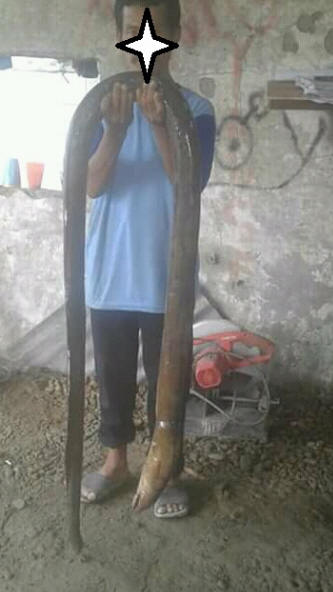
G. javanicus and its friends are huge and dangerous! And the legendary
Strophidon sathete are also not very alien from our coastal areas and rivers as
you know already, and to some people they are delicacies. They do get very big.
An FB friend of Mr. Septian caught one of those 3 meters long Strophidon not
long ago, here are the picture.
<What a beast.>
Tonight I am watching my eels and feel happy, we have the big fat Echidna
rhodochilus on the left and the slim and slithery G. polyuranodon on the right.
Now two of my Echidnas has been taught to eat frozen shrimps (thanks
to the directions from WetWebMedia ;) to dim the lights), but the smaller one,
after almost 3 months, still prefer live shrimps, just like the new G.
polyuranodon.
<Patience. All moray eels I personally knew accepted frozen food sooner or
later. As noted before, try feeding in the dark, try the very same food
items they accept alive. Keeping them without tankmates and providing enough
caves also helps.>
If there are certain vitamins to make them interested in frozen food, please let
me know.
<You can try garlic. There is also hooking bait dip sold in fishing stores, but
I would not put this stuff in an aquarium.>
So sorry for the length of the e-mail. As a closing message, allow me to thank
Neale, you and all you excellent WetWebMedia crew for assisting me in enjoying
my hobby as a brackish water aquarist specializing in eels. New
Year 2018 is approaching, and I wish you all a wonderful New Year!
<No problem. Have a good start into the new year.>
Best Regards, Ben
<Cheers, Marco.>
Re: a bunch of morays in a bucket 12/29/17
<Ben, am deleting your messages as your files continue to be too large. SEE as
in READ our requirements. We have limited file space. ONLY send files of
a few hundred Kbytes, NOT Megs. BobF.>
|
 |
|
Re: And now I have three of them! (RMF, am I quoting you right here?)
12/1/17
>>Clown Loaches in brackish water? Not I, though am back to Borneo in
January...<<
Hello Neale and all you wonderful people at WetWebMedia, warm greetings from
Indonesia!
<Definitely more pleasant than cold, dark, wet wintertime England!>
As promised, here are further observation from my aquarium. I have good news.
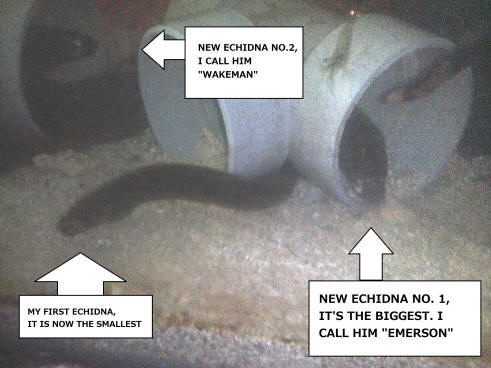
Now I have three Echidna rhodochilus. I found a guy who caught two Echidnas from
Segara Anakan lake, South Java. This is very far from the original place of my
first echidna, which was Muaratawar estuarium in North Bekasi, at the northern
part of Java. They are bigger than my older Echidna, maybe about 40cms, and
fatter too.
<Very nice additions, in my opinion. I am most envious of your relatively easy
access to such a variety of fish-life.>
He put them in freshwater aquarium for many months, together with an Oscar.
They got along well, and indeed they are just as docile as my previous Echidna
at home. But knowing how Oscars are, what's stopping the Oscar to consider those
much smaller Echidnas as tasty worms? So therefore I bought
them all. I named them Emerson and Wakeman :D
<Nice!>
So, I put them on my aquarium, and indeed, they get along well with each other,
and with my older Echidna. They even share the same home pipes.
<This/these species are often sociable. Not 100% reliable, but oftentimes.>
After a few days there are no fighting for space or for food (I have plenty of
feeder guppies and river shrimps still in the tank). Mr. Echidna (the first
moray) and Emerson are very active, they like to dig the sand and rearrange the
pipes and other ornaments. while Wakeman seems to be content on sitting on its
pipe, going out only when wanting to terrorize the shrimps and guppies. It's
humorous to see Echidna and Emerson digging under the pipe where Wakeman is in,
as both his friends are busy digging, Wakeman stuck his head out of the pipe, as
if saying "Yo guys, what's going on??".
BTW, you are very correct, echidna rhodochilus are not as "fierce" as the
reputation of morays in general public tends to portray them. They never made
any attempt to bite me, not even the new ones. When I put my hand on
the aquarium, they just slip around and under my fingers as if swimming around
mangrove roots. They seems to have a high "Curiosity" as you said.
<That is very much true for Morays. Altogether lovely fish, and excellent
aquarium residents.>
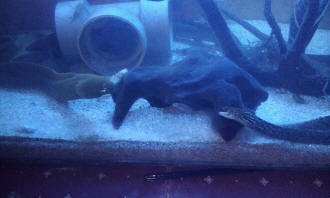
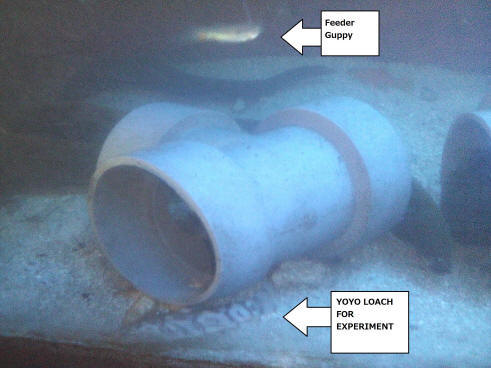
For experiment, I put some Yoyo loaches and clown loaches. All three echidnas
doesn't seem to mind, they don't even react when the loaches are entering their
pipes. Therefore, these echidnas that I have doesn't seem to
exhibit any territorial aggression, at least for now.
<Interesting.>
My question: The loaches seems to be doing well, they are still as colorful and
as playful as ever, so maybe the different salinity level in my echidna aquarium
are not significant enough for them. Or maybe loaches does have a
bit of tolerance for low-end brackish? I will move them back to my other
aquarium sometime later, but if they seems to be happy with the morays, shall I
left them alone, or must I move them back?
<Good question. Generally, loaches are not brackish water. But Fishbase reports
Acantopsis choirorhynchos as occurring in brackish water, and there are reports
of Clowns in brackish, but I'm very skeptical of this -- though
I know Bob Fenner has mentioned seeing this in the wild, I believe. Still, the
loach/moray combo isn't one I'd particularly recommend, and if you see signs of
stress, I'd be rehoming one/other of the species accordingly.>
My second question: I am still unsuccessful in weaning my echidna (the old one)
away from live shrimps and guppies. It doesn't seem to be interested with frozen
shrimps and bloodworms for now. Maybe because there are still some live shrimps
and guppies left in the aquarium from the last batch I bought. What are your
thoughts about this?
<These Morays do hunt by smell. Try using long forceps or bamboo satay skewers
to offer small bits of meat near visibly hungry Morays. Feel free to starve 'em
for a week or more if needed! They will, when hungry, snap at
food offered in this way. Do let me direct you to some reading, here:
http://www.wetwebmedia.com/morayfdgfaqs.htm
While aimed at marine Morays, much the same holds for their freshwater
relatives.>
Well, that would be all for now, thank you for your kind attention!
Best Regards, Ben
<And to you, Ben; cheers, Neale.>
|
|
Re: And now I have three of them!
12/2/17
Hello Neale and all you amazing people at WetWebMedia, warm greetings from
Jakarta, Indonesia, we hope your weekend will be very enjoyable!
<Well, actually rather busy with furniture being moved out of storage -- but
let's hope for a successful weekend, anyway.>
Following up our previous conversation about Echidna Rhodochilus and loaches,
here are more pictures from my "experiment".
<Indeed.>
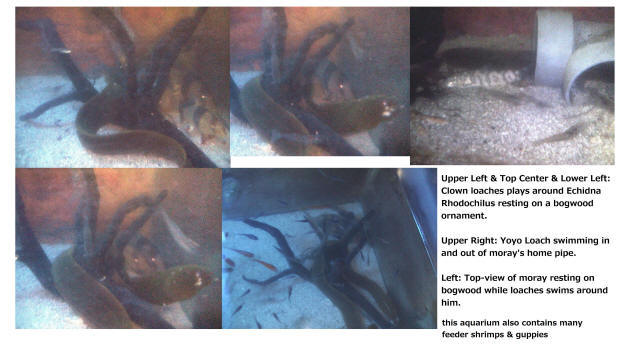
As I mentioned, the Yoyo loaches and the Clown loaches seems to get along with
the morays; the clowns in particular seems to take an interest in the largest
moray (Mr. Emerson), they swims around him and even "resting" their bodies on
him when he is visiting the bogwood ornament which I put in a corner of the
aquarium. The Yoyo loaches are moving in and out of the morays' home-pipe with
no fear and not molested at all. I include the
pictures with this e-mail.
<Neat! While I remain skeptical about the loach/moray combination in the long
term, it might well be that you can find a 'happy medium' salinity that suits
them both. Certainly such things happen in the wild, at the very edges of
estuaries, where freshwater and euryhaline brackish water fish coexist, often in
huge numbers. My own local river, the River Thames, as it rolls through London
is just such a habitat, mixing freshwater bream and
roach alongside brackish water flounders and eels.>
All loaches so far still retain their colors and cheerful behavior, and still
eats like pigs whenever I throw bloodworms at them. No negative impact from the
brackish water are seen yet.
<Good.>
No physical changes seen yet. I think I will continue the experiment for a week
to see if any negative effects appeared. If any negative effects are showing, I
will certainly follow your advice & return the loaches to their
previous (full FW) home.
<Wise.>
The only "bad sign" I observed, is that the guppies, shrimp and Sailfin mollies
that I intend to be put as "feeder fishes" (for the echidnas), often get to the
bloodworms intended for the loaches FASTER than the loaches themselves. They
have this incredible speed and intuition; loaches seems to swims slowly and
lazily towards the bloodworms, while mollies, guppies and shrimps moves very
fast. Luckily, they seems to only able to take small bits and pieces, while the
loaches eats the larger portions.
<Try feeding at night, maybe once or twice a week. Catfish pellets or wafers
will be slowly nibbled on by loaches through the night, when the Mollies are
asleep.>
Thank you for the feeding tips; I will wait until the morays has consumed all
the feeder guppies and shrimps, before trying to put them into "fasting mode".
With the exception of largest few shrimps which came from the first
batch of shrimps, that I put in this aquarium months ago... they seemed to have
become "part of the landscape" instead of being "feeders", as the morays doesn't
seems to molest them at all, even though they will terrorize
and eat the smaller shrimps from newer batches.
<Odd!>
A friend told me that a feeder who survived several weeks without being caught,
will have its smell "blended" with the environment, and thus the bigger fishes
cannot smell them anymore. Is this true?
<It's certainly plausible.>
Lastly, I am thinking of writing a small article about my experiences keeping
the Echidnas. It will be a summary of our discussions here and other info which
I gathered both from the Internet and from personal experiences. I hope that
article will be useful for all FW moray lovers worldwide. What are your thoughts
about this one? As you mentioned, I do have relatively easy access to fishes
that are considered "rare" in the rest of the world, so I wish to share my
experiences with them.
<Anywhere in mind? TFH in the US and PFK in the UK are two of the best known,
but might also think about the likes of Amazonas, a magazine more tailored to
advanced hobbyists worldwide, with a particular accent on top-quality
photography. They've certainly published many lovely articles on wild-caught
species including photos of their natural habitat, capture methods, and so on.
Sounds up your street, I'd have thought!>
Well, again I thank you and have a nice weekend!
<Good luck with the article, Neale.>
|
 |
Re: And now I have three of them!
12/4/17
Hello Neale and all you excellent people at WetWebMedia. Greeting from
Jakarta!
<Hello Ben,>
(Neale, I hope your furniture-moving experience last week were enjoyable!)
<Wouldn't say 'enjoyable' as such...>
Thank you for your input about my future article. For now, my
English-language capabilities are still not so adequate for serious articles
in prominent magazines. I need to brush-up my skills first & obtain more
knowledge, before attempting to write such serious articles. Again thank you
for your suggestions & I will make that on top of my "List of Important
Things to Do".
<Hmm... do write to Bob Fenner at this website. He knows much more about the
trade than I do.>
Since I am in creative mood, I start by writing my thoughts about FW Morays
on my personal website here:
https://sites.google.com/site/houseofharyo/freshwater-moray-page
<Ah, yes! I do think self publishing is a good way to develop your writing
skills.>
If you are not busy, please have a look! Your comments and inputs will be
very much appreciated! * bowing *
<Have looked, and enjoyed. Would point out "Mr. Bob" is "Bob Fenner", and
"Mr. Marco" is "Dr. Marco Lichtenberger".>
This is a work in progress, and will be updated & expanded in the future,
when I finally get my hands on a G. Polyuranodon and possibly G. Tile.
<Quite so.>
I was contacted by another hobbyist (the one who sold me my first Echidna
R.), that he has access to a shop where they know what a Hydrometer are &
possibly has some in stock. If I can actually get my hands on one, I will
do salinity testing on my aquarium, as I am very much interested to know
what the numbers are. Then I will do testing on the river near me and the
other one in North Bekasi (where they caught my first Echidna Rhodochilus).
This way I can draw a salinity chart, which might be useful.
<Absolutely. I'd have thought a magazine or commercial website would enjoy
an article written about 'freshwater' Morays in the wild, with details of
their actual environment. One problem the hobby has is when aquarists repeat
facts from other aquarists. Sometimes those facts are false, but so embedded
in the literature (books, magazines, and now websites) those facts are
treated like Gospel! So actually going out to a 'freshwater' Moray habitat,
measuring the pH and salinity, and then writing those numbers down is
EXACTLY how the hobby moves forwards. Include some nice sharp photos of the
habitats, as well as nice sharp photos of your Morays, and I'd think you'd
be on your way to a very commercially sellable article!>
Well, that would be all for now. I wish you a wonderful day & will keep you
updated.
Best Regards, Ben
<Cheers, Neale.>
|
Re: And now I have three of them!
12/14/17
Hello Neale and all of you splendid people at WetWebMedia. Greetings from
Jakarta!
<And to you, greetings from Berkhamsted, England!>
Thank you for your good info about articles, they are very inspiring. I will
plan my research and the trips accordingly. I hope I will be able to find the
time after the Asian Games.
<Oh!>
Through Facebook, I met a new friend online from Yogyakarta (a neighboring
province). He is a fish seller who specializes in FW morays, sourced locally
from rivers in southern part of Java. In fact he kept Strophidon
Sathetes on large FW aquarium for months, as well as other "FW" moray types.
They said that the longest time he had experienced in keeping G. Tile, E.
Rhodochilus and G. Polyuranodon in "freshwater" (freshwater with a
little amount of seawater mixed in) were 2-3 years before those are being sold.
He even mentioned that he once had a white-mouth moray in FW for a few months
before someone bought it from him. This city will be on my list
of "places to visit" in my quest for getting more understanding about FW moray
eels.
<Indeed! This sounds like what'll be a great trip. So many interesting things to
learn about freshwater Morays, and you're lucky enough to be able to find out
about them in the wild.>
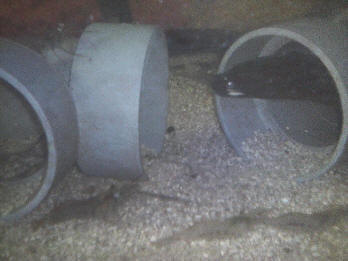
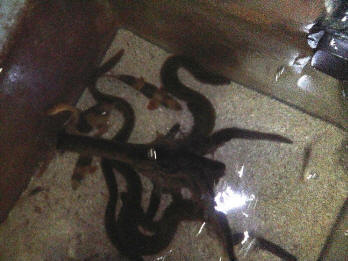
As for my clown loaches, they're still being good friends with the eels, sharing
their home pipes in peace. I think they looks so cute together, so I will keep
the loaches there for a bit longer. The loaches looks fat and
healthy, and so far still colorful. They often use the long bodies of the eels
as "pillows" to "sleep", ha! But again I am very aware that the water I am
putting them now is not their usual habitat. With that in mind, what are the
sign of "salinity too high" for loaches? Does this include losing their bright
colors?
<Possibly. But more likely they'll become skittish, nervous, disinterested in
food.>
One thing I noticed is that Mr. Emerson (my largest moray) has been moving this
home pipes around a lot these past few days. He dug the sand in and out under
the pipes, moving the pipes from one corner of the aquarium to
another. So I guess he must be hungry but getting bored with the live river
shrimps and the feeder guppies & mollies.
<Does seem possible. A variety of foods are always a good idea, to round out any
vitamin shortcomings in the foods you've used so far. Squid, white fish like
tilapia, and clams all good options.>
And to think about it, the river shrimps on my aquarium has grown a bit, they're
eating well (they seems to love to eat the leftover body parts of their fallen
comrades, or even their moulting friends),
<Normal. Recycling calcium. They're meant to do this!>
and has become rather large, with long menacing pincers. So, not so appealing
anymore for the eels (I think, do I make sense? What do you think dear Neale? I
think those shrimps are Macrobrachium types).
<Many shrimps have larger front claws, so in itself not definitely
Macrobrachium. But on the other hand, Macrobrachium are so widely farmed in Asia
that the odds of them ending up in the aquarium trade is high. I've
even seen them here in England, though the demand for them is not great.
Not alive, anyway! Very delicious when cooked!!!>
So just a few hours ago, I cut up a large, thawed frozen shrimp and threw it to
the aquarium, experimenting, maybe the largest moray would eat it.
And yes, Mr. Emerson opened his jaws very widely and ate the pieces of frozen
shrimp in the manner of a snake. It's very interesting to see how snake-like he
is when eating. And it was humorous to see him sniffing
around confusedly trying to find the rest of the pieces, right after the river
shrimps literally stole the pieces from under his nose, ha! My friends told me
that morays are blind as a bat, they only have the sense of smell and the sense
of movement (they could detect movements). After seeing how easy it is for
shrimps to steal food from under a moray's nose, I believe it.
<Spot on. Indeed, they can be "blinded" by too much smelly food in the tank at
once. Like a bright light blinding a person, I guess, making it hard to see
things.>
The other two, Mr. Wakeman (the second largest moray) and Mr. Echidna (the
smallest, my first moray) doesn't seem to be interested in frozen shrimps for
now. I hope they will follow suit soon.
<Quite so. Plus, do offer some white fish as well as molluscs, like clams.
The more variety, the better.>
Well, that's my latest updates for now. Thank you for following my fish stories
and being such a good listener. Have a nice day!
<And you too. Cheers, Neale.>
|
 |
|
Various types of Morays that are usually caught in the rivers in
Indonesia 12/20/17
Good evening Neale and all of you beautiful people at WetWebMedia.
Greetings from Jakarta!
<And a howdy to you too, Ben.>
(Neale, your hometown "Berkhamsted", from the name, which sounds archaic, I
assume this is a very old historic town with a castle surrounded by moats.
Must be a wonderful tourist attraction!)
<Well, it's quite pretty I suppose. But it's home!>
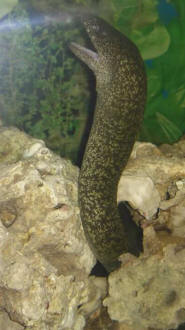
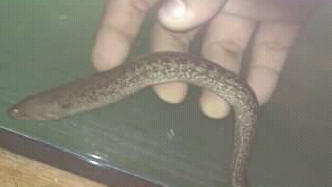
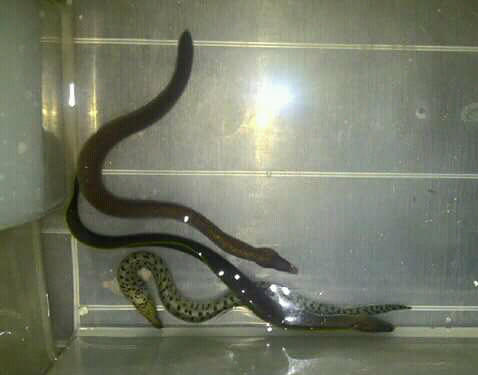
I'd like to present some of the pictures from Mr. Septian, my friend in
Yogyakarta, Indonesia, who specializes in capturing and selling moray eels from
the rivers in that province, to ornamental fish lovers. He had sold them all,
but he still has many in stock.
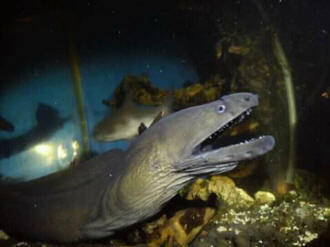
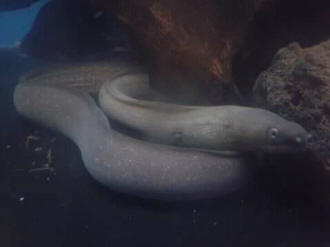
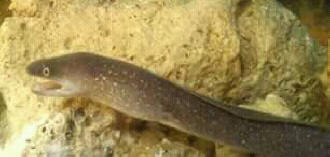
As you can see, he routinely captured the usual suspects of G. Polyuranodons and
G. Tiles, but he also had captured some not-so-usual morays in the past, such as
Strophidon sathetes, G. Undulatus, and some others I cannot recognize. All were
caught in the river, not far from the estuarium, just a few kilometers.
Interesting eh? Make me even more interested to go there and sample the water!
<Oh, absolutely! One thing to remember though is vertical stratification is VERY
common in estuaries. In other words, dense seawater moves along the bottom of
the estuary, like a wedge. Less dense freshwater floats on top.
https://en.wikipedia.org/wiki/Estuarine_water_circulation
So you will find freshwater fish in the top few metres, but marine fish at the
bottom, and for all practical purposes the two kinds of environment don't mix.
Some fish can of course swim between salt and freshwater -- many
puffers for example -- while others stick very much to their preferred salinity.
So even if a river estuary is several km inland, the bottom could easily be
almost fully marine conditions, whereas the top few metres might be more or less
completely freshwater. Strong currents (such as upwelling) can cause mixing, but
if the river is slow and ambling gently towards the sea, there might be very
little mixing. This means that if you dip your hydrometer into the water next to
the riverbank, you might detect a very low salinity; but if you put a baited
trap on the bottom to catch fish living there, you might be catching fish from
the salty, near-marine environment at the bottom.>
As for my own eels, I will try to feed my eels again tonight with frozen shrimps
and squids. Mr. Emerson (the largest) loves frozen shrimps now, but the other
two are still not interested. If they reject the squids, I will
make myself fried calamari for dessert ;)
<Yum!>
Thank you and have a nice day!
Best regards,
Ben
<And to you, best wishes, Neale.>
|
 |
Re: fw: Various types of Morays that are usually
caught in the rivers in Indonesia 12/21/17
Marco; thought you'd find this message/post interesting. BobF
Thanks. Indeed is!
<Cheers mate. B>
Various types of Morays that are usually caught in the rivers in Indonesia
/Marco 12/21/17
Good evening Neale and all of you beautiful people at WetWebMedia.
Greetings from Jakarta!
<Hi Ben.>
(Neale, your hometown "Berkhamsted", from the name, which sounds archaic, I
assume this is a very old historic town with a castle surrounded by moats.
Must be a wonderful tourist attraction!)
I'd like to present some of the pictures from Mr. Septian, my friend in
Yogyakarta, Indonesia, who specializes in capturing and selling moray eels
from the rivers in that province, to ornamental fish lovers. He had sold
them all, but he still has many in stock.
As you can see, he routinely captured the usual suspects of G. Polyuranodons
and G. tiles, but he also had captured some not-so-usual morays in the past,
such as Strophidon sathetes, G. undulatus, and some others I cannot
recognize. All were caught in the river, not far from the estuarium, just a
few kilometers. Interesting eh? Make me even more
interested to go there and sample the water!
<Indeed. Especially the S. sathete looks amazing! Most common in estuaries
and can grow well beyond 3 m. I can also see Gymnothorax richardsonii (known
as the dish "Bakasi" around the city of Cordova on Cebu) and Gymnothorax
fimbriatus in the pictures you sent. All of the above have been reported
from brackish waters, even G. fimbriatus. Can't see G. undulatus in the
pictures, but it's reported from brackish waters, too, so it's well
possible.>
As for my own eels, I will try to feed my eels again tonight with frozen
shrimps and squids. Mr. Emerson (the largest) loves frozen shrimps now, but
the other two are still not interested. If they reject the squids, I will
make myself fried calamari for dessert.
<Kept G. polyuranodon in the past for many years. Various fish species were
the favourite food, but shrimps, clams and calamari were also eaten when
hungry.>
Thank you and have a nice day!
<You too.>
Best regards, Ben
<Cheers, Marco.>
Re: Various types of Morays that are usually caught in the rivers in
Indonesia 12/22/17
Hello Marco!
<Hello Ben.>
Thank you for replying & sharing the info about feeding your G. polyuranodon. I
am in the process of acquiring a G. polyuranodon. I hope they are easier to wean
off live food than my Echidna rhodochilus.
<Had no problem with either of them.>
To this day two of my three E. Rhodochilus still refuse to eat anything else but
live shrimps and feeder guppies/mollies. Especially the small one, it is very
picky about the size of its prey; it terrorized the smaller shrimps, but keep
away from the larger ones, especially the ones with long pincers :D
<A calm and dark environment without other fishes in my experience makes it more
easy to train morays to frozen food. Also, I'd start with the same food items
they eat alive. >
Maybe when there are no more feeder shrimps/fishes in the aquarium, they will
start looking for extra alternatives. My goal is to get them to eat bloodworms.
<Why would you want to do that? They are not part of their natural diet and not
very valuable as a food source for such a fish. I'd aim for a variety of
crustaceans and fish with addition of cephalopods and bivalves.>
One of my friend has been able to train his G. Polys to eat bloodworms, I think
it's very cool, I offered to buy one of his, but he is very reluctant to sell
his eels to me, so I must acquire a newly caught G. Poly of my own & begin
training.
Here is a video of his G. Polys, eating bloodworms.
https://www.youtube.com/watch?v=816Z5mD9NDs
<Poor eels.>
So, you ate morays (G. Richardsonii) during your trip to the Philippines?
Must have been an interesting experience, I imagine a fish that long must have
hundreds of long sharp bones, how does the cook handle that?
<See here in Manila:
http://www.marketmanila.com/archives/bakasi-a-la-victor . The bones are
indeed a big downer.>
I read somewhere that Strophidon are frequently being caught in the
Gangga/Ganges river in India, and the locals regarded them as food-fish. I
imagine a 3 meters Strophidon could feed a small family!
<Morays are eaten all around the world. The Romans, who started fish keeping (in
Europe at least) also kept morays as a food source. Muraena helena still is
often eaten around the Mediterranean as are many species in the Pacific, e.g. in
Japan, China. The larger the eels, the higher the content of Ciguatoxins,
though.>
I hope one day we will be able to discover the reasons why some species of
marine morays has the tendency to enter brackish waters, even all the way to
freshwater, while most other morays remained in the sea and has nothing
to do with brackish and freshwater.
<Mostly to hunt (estuaries are rich in nutrients), some maybe to breed, but
little research has been conducted with regard to that.>
Well, thank you for the discussions! Best Regards, Ben
<Cheers, Marco.>
Re: Various types of Morays that are usually caught in the rivers in Indonesia
12/23/17
Hello Neale, and all of you amazing people at WetWebMedia,
<Hello again Ben!>
Thank you for informing me about the vertical stratification of salinity in
estuaries. I think I have heard of this occurring in Sentani Lake in Papua
province. Perhaps the same thing also happening in the rivers of Java, it
makes sense that a few kilometers away from the estuarium, the lower parts of
the rivers actually still a bit brackish. Morays are bottom dwellers, and
brackish bottoms of the rivers must have suited them well, which could
explain why our friends in Indonesia routinely caught them in such rivers.
<Quite so. Or not! As the case may be.>
I hope one day we will also be able to explain the causes of differences in
environmental preferences among the many species of brackish/"freshwater"
morays. As an example, G. Polyuranodons are routinely being caught far
inland, which means they enjoy being in FW environment, while G. Tiles are
routinely being caught in the river mouths, which are brackish water
environment, which means that they could enter FW but much prefer BW.
<Does seem about right.>
Maybe we will be able to explain the differences in behavior in captivity as
well, such as: Strophidon will bite, while E. Rhodochilus are more timid and
docile (at least mine are).
<Interesting. Definitely keep notes on what you discover, and the more photos
and facts you record, the better. Is there an aquarium society in your part of
the world? Perhaps give a presentation on what you learn, or write something for
their magazine. You might get some extra feedback that will help you expand your
knowledge even further.>
Well, thank you for the excellent discussions!
Best Regards,
Ben
<Cheers, Neale.>
|
Subject: Re: Various types of Morays that are usually caught in the
rivers in Indonesia 12/26/17
Hello Marco!
<Hi Ben.>
Thank you for your advice about FW moray feeding, I will put them into practice.
I intend to introduce my morays to a variety of food, from bloodworms to frozen
shrimps to tilapia fillets, in addition to live food as they have now. Certainly
I don't plan to feed them exclusively on bloodworms ;)
<Good to hear.>
Interesting to hear that morays are eaten around the world. I read up about the
ciguatera poisoning, sounds horrible. Luckily, I no longer eat fishes which has
no scales or no fins or both, thus all types of morays and eels, I don't eat,
thus I am save from the ciguatera (hopefully!).
<The accumulation of toxins has nothing to do with fish having scales or not. In
addition, almost all fishes, among them almost all eels and all morays, have
fins. For example, your morays have dorsal, caudal and anal fins that compose a
continuous seam. To avoid Ciguatera simply avoid eating large predatory
specimens. Most intoxications are related to barracudas and groupers (both have
scales and fins by the way).>
have a wonderful day!
<You, too. Cheers, Marco.>
Best Regards, Ben
Re: Various types of Morays that are usually caught in the rivers in Indonesia
12/26/17
Merry Christmas Neale and all you great people at WetWebMedia, greetings from
Indonesia!
<Hi Ben! Merry Christmas to you, too. Going to bounce the rest of this message
into Marco mailbox. Do feel he's much more of an expert on these obscure Moray
Eels than I am! Cheers, Neale.>
Re: Various types of Morays that are usually caught in the rivers in Indonesia
12/26/17
Merry Christmas Neale and all you great people at WetWebMedia, greetings from
Indonesia!
<Merry Christmas to you, too.>
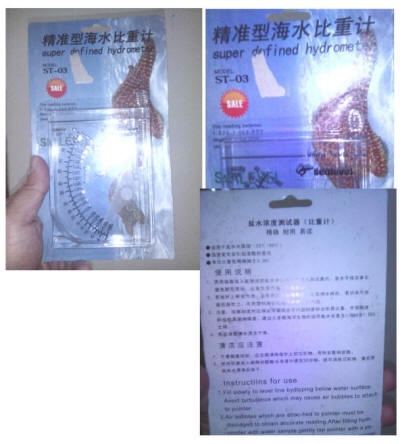
Good news: I finally obtained a hydrometer. Through the directions given to me
by another moray fans, I am able to locate a fish shop which sells this
hydrometer. It is actually a new booth located in Sumenep, my usual
hangouts. This booth specializes in aquarium equipments imported from China.
Super cheap compared to Japanese or Western imports.
Bad news: The shop owner totally has no clue about what is a hydrometer and how
to use it. His excuse is: "I don't read Chinese, I don't understand English".
Worse news: the hydrometer itself is made in China, the instructions are written
in Chinese, and the English translation is confusing. But anyway, I hope i will
be able to figure out how to use it. I am happy I finally own one, and I will
start testing soon. I will let you know my findings when I am done sampling.
<It's easy. I use one of these too, when a more exact measurement is not
necessary. Fill it to the upper line with water und read at the tip of the
pointer on the scale you prefer. Left scale for ppt, right scale for SG.>
Thank you for your kind encouragement, I will certainly continue my research.
For now I think there are no scientific society of aquarists around here, what
we do have are hobbyists clubs, and I am now a member of
Indonesian freshwater morays fans club. However we're all beginner hobbyists and
none are expert aquarists trained in aquarium science, unlike you, Mr. Fenner
and Mr. Mario. What I will continue doing is to collect some more
specimens (I am aiming for at least one G. polyuranodon and maybe one small G.
tile), and making notes on their behavior & living environment. I will also
making notes on other morays I found in captivity around here.
<Sounds very interesting. Feel free to keep us updated.>
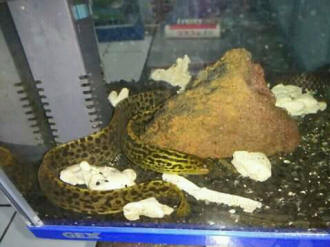
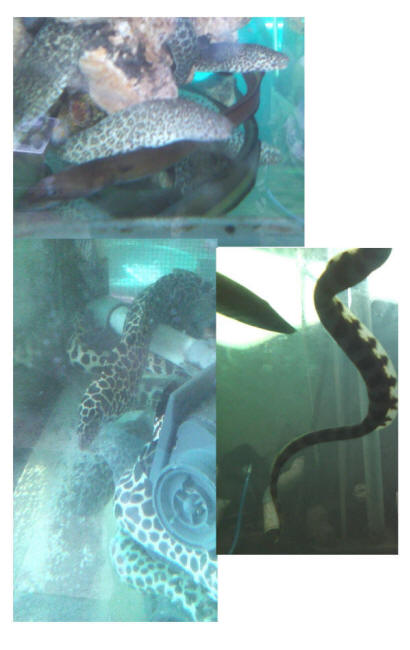
In fact, in Sumenep there is actually a guy who keep some morays, I include the
picture here. There is one echidna nebulosa that looks stressed & swimming
around so fast, darting around like crazy. Aren't morays supposed to stay
more-or-less stationary at the bottom?
<They spend most of their life in caves or buried in mud.>
Is this behavior due to being put in bare aquarium?
<Exactly. Pure stress. They need caves. I used at least two per eel even in
holding tanks when trading them.>
And there are some morays bunching up around the filter and some other under a
rock. Looks like honeycomb morays, or maybe tessellated morays? I am not so sure
and the shop owner does not understand Latin names.
<Honeycomb moray and tessellated moray are two common names used for the same
species: Gymnothorax favagineus. There might also be a closely related
Gymnothorax isingteena with jaguar-like spots in the center of the upper
picture.>
I think these morays are supposed to be 100% marine species, but perhaps our
marine morays population does prefer to hunt in the estuarium.
<G. favagineus is indeed found in brackish waters, but prefers marine
environments.>
Well, wish us luck & have a nice day!
<Thanks. Cheers, Marco.>
Best Regards, Ben
Re: Various types of Morays that are usually caught in the rivers in Indonesia
12/26/17
Hello again Marco,
<Hi Ben.>
Thank you for the information about Ciguatera poisoning. Now I know better which
fishes to avoid. Glad to hear that it's not about fins and scales!
Best Regards, Ben
<Very good. Take care. Marco.>
|
 |
|
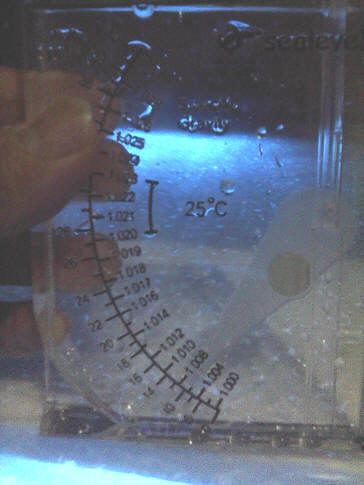
My initial hydrometer readings 12/26/17
Hello Neale,
<Marco here again. Got your email in my inbox.>
This is my initial hydrometer readings. The seawater which I took from the beach
of Jakarta, is about 1.020-1.021. My well water is 1.003-1.004, and my aquarium
is 1.008 sg. so, this means my aquarium is low-end brackish, am
I right?
<I'd call it mid brackish with about 1/3 SG of average seawater, but you also
call it high low-end brackish. >
Best Regards, Ben
<Cheers, Marco.>
|
 |
Re: My initial hydrometer readings & a new G.
Polyuranodon! 12/27/17
Hello Marco, Neale & all you good people in WetWebMedia,
<Hi Ben.>
Thank you for replying & informing me how to use the hydrometer in the
earlier e-mail. Glad to know that my hydrometer works. I guess now I
officially joined the cult of the brackish water aquarist! :D
<Yes, you have.>
I will keep you informed about my latest (amateur) research into morays. As
I mentioned in an earlier (separate) e-mail, I just obtained a G.
polyuranodon (finally!) so, more eels to watch and observe. It's a cute
fish, just as cute as my Echidna rhodochilus.
<Nice eel. Is among my favourite moray eel species. They are hardy and not
very aggressive (for a Gymnothorax). Although they reach a length of around
3 feet with time, they remain quite thin and have a much smaller body mass
compared to other eels of that length.>
Best Regards, Ben
<Cheers, Marco.>
Re: Various types of Morays that are usually caught in the rivers in
Indonesia 12/27/17
Hello Marco, Warm Greetings from Indonesia, Merry Christmas to you too!
<Thanks, Ben. Hope you had a good time.>
Thank you for clearing up that "honeycomb moray" and "Tesselated moray"
refer to the same species: Gymnothorax favagineus. This species are very
common in our aquarium trade. And thank you for informing about Gymnothorax
isingteena's Latin name. It's also rather common here.
I will keep you and Neale updated with the results of my latest findings. I
just acquired a G. polyuranodon (Christmas present, Yay! :D ), so now I have
one more eel that could be observed in my aquarium :D
<Very good. Looking forward to hear about your observations.>
Best Regards, Ben
<Cheers, Marco.>
|
Re: My initial hydrometer readings & a new G. Polyuranodon!
12/28/17
Hello Marco, Neale and all you wonderful people at WetWebMedia,
<Hello Ben.>
What species of morays (other than the G. polyuranodon and E. rhodochilus that I
already have) that would thrive in my aquarium at 1.008 sg brackish water?
<Gymnothorax tile should work, but in my experience is healthier at higher
salinities. Strophidon sathete probably would do well with regard to salinity,
but gets too large for usual aquariums. I am not aware of any other morays able
to permanently live in mid brackish water.>
Thank you & Best Regards, Ben
<Cheers, Marco.>
|
 |
|
|
Various types of Morays that are usually caught in the rivers in
Indonesia 12/20/17
Good evening Neale and all of you beautiful people at WetWebMedia.
Greetings from Jakarta!
<And a howdy to you too, Ben.>
(Neale, your hometown "Berkhamsted", from the name, which sounds archaic, I
assume this is a very old historic town with a castle surrounded by moats.
Must be a wonderful tourist attraction!)
<Well, it's quite pretty I suppose. But it's home!>
I'd like to present some of the pictures from Mr. Septian, my friend in
Yogyakarta, Indonesia, who specializes in capturing and selling moray eels from
the rivers in that province, to ornamental fish lovers. He had sold them all,
but he still has many in stock.
As you can see, he routinely captured the usual suspects of G. Polyuranodons and
G. Tiles, but he also had captured some not-so-usual morays in the past, such as
Strophidon sathetes, G. Undulatus, and some others I cannot recognize. All were
caught in the river, not far from the estuarium, just a few kilometers.
Interesting eh? Make me even more interested to go there and sample the water!
<Oh, absolutely! One thing to remember though is vertical stratification is VERY
common in estuaries. In other words, dense seawater moves along the bottom of
the estuary, like a wedge. Less dense freshwater floats on top.
https://en.wikipedia.org/wiki/Estuarine_water_circulation
So you will find freshwater fish in the top few metres, but marine fish at the
bottom, and for all practical purposes the two kinds of environment don't mix.
Some fish can of course swim between salt and freshwater -- many
puffers for example -- while others stick very much to their preferred salinity.
So even if a river estuary is several km inland, the bottom could easily be
almost fully marine conditions, whereas the top few metres might be more or less
completely freshwater. Strong currents (such as upwelling) can cause mixing, but
if the river is slow and ambling gently towards the sea, there might be very
little mixing. This means that if you dip your hydrometer into the water next to
the riverbank, you might detect a very low salinity; but if you put a baited
trap on the bottom to catch fish living there, you might be catching fish from
the salty, near-marine environment at the bottom.>
As for my own eels, I will try to feed my eels again tonight with frozen shrimps
and squids. Mr. Emerson (the largest) loves frozen shrimps now, but the other
two are still not interested. If they reject the squids, I will
make myself fried calamari for dessert ;)
<Yum!>
Thank you and have a nice day!
Best regards,
Ben
<And to you, best wishes, Neale.>
|
|
"Freshwater" Moray Eel Two Questions, fdg., sys. 4/1/12
I want to start off by first thanking you guys for your wonderful site!
<Thanks for your kind words.>
I have been maintaining my brackish water tank using all of your incredible
advice. Well on to the questions....First off I have a 40 gallon brackish water
tank PH is at 8, nitrates and ammonia levels are all normal and temp is kept at
80 deg F. Started off by having gravity level at 1.010, but have slowly over
time raised it to it's current reading of 1.021. In the tank I have a
"freshwater moray eel" or as you refer it to a Gymnothorax tile, a green spotted
puffer and a "freshwater" flounder/flatfish.
<Not the best tank mates, these eels can become really incompatible when growing
up.>
I first purchased my eel about two months ago and of course he went on a hunger
strike, but after raising the salt levels to 1.021 the eel has been eating. My
concern is he is eating like crazy! He accepts food by tweezers and his diet is
consisting of freeze dried krill, shrimp, muscles, silverbacks, ghost shrimp and
tilapia (I like to keep his diet varied). I read on your site that juveniles
tend to eat every other day and adults eat twice a week. My eel eats two times a
day each time taking two different foods. He doesn't seem to just be stuffing
himself because when he has "had enough I guess" he goes back into his cave. Is
this normal for him to eat like this??
<Oh, that's what I often ask myself about some people.>
I feed him at a specific time in the morning and at night and he is readily
waiting for me, sometimes barely letting me get the food in the tank. When I
first got him (assuming its a he) he was very skinny about the circumference of
a dime and 11in long. Now he is almost the circumference of a nickel and 13 in
long. My question is, should I keep his feeding habits the same, or if not what
amount he should eat?
<You offer much more to him than nature does in my opinion. I'd feed
significantly less, about the size of the eel's head per feeding. Feeding every
other day is sufficient. There are some reports on the negative results of
overfeeding moray eels, e.g. by P. Purser in the TFH book and there are
examinations of eels caught in nature showing they don't eat every day (some
larger species only once per week or less.>
My next question is, I read that when juveniles, the eels live in brackish water
and eventually move to full saltwater when older.
If this is true, when should I convert to a full saltwater tank?
<It's easier to maintain, because you can use a skimmer, live rock. You've
almost reached marine salinity, so I see no reason to not convert to full
saltwater.>
Thank you so much for your time and I look forward to hearing from you!
<Also see:
http://www.wetwebmedia.com/ca/volume_4/V4I2/Freshwater_eels/freshwater_eels.
htm . Cheers, Marco.>
Re: "Freshwater" Moray Eel Two Questions 4/1/12
Thank you very much for responding so quickly!
<No problem.>
I am going to reduce my eel's food starting today. Do eels beg?
<If by begging you mean that they expect to get food from a known source: yes.
In some areas moray eels accumulate below the nets of large offshore fish farms.
Every time the fish within the nets are fed, the moray eels come out to get
their share, which falls through the net.>
Lol, because that is going to be the hardest part in reducing his diet. He
literally "begs" by sticking half of his body out from his cave and faces
towards the surface waiting for me to feed his fat butt when I come in the room
every morning. In regards to his tank mates the green spotted puffer and the
flatfish, so far the eel is very accepting of them, but I will watch as he gets
older to see if he acts aggressively towards them. Thanks again for all of your
help!
<Welcome. Marco.>
freshwater <moray> eel tank 5/29/12
I just bought a 45 gallon tank on CraigsList and it came with a bichir, 4
cichlids, and a freshwater eel. It is a full freshwater tank and after
reading the information on your site i understand the freshwater eel
must be in at least .01 salinity.
<No, much more than that. SG 1.005 to start with, and with the
understanding adults need SG 1.010 to fully marine conditions. If the
salinity is too low, they invariably approach maturity but stop feeding,
and then die.>
Is there anyway that i can keep all these fish in the same tank?
<No.>
The guy i bought it from said he's had this setup for about a year and
half and the eel for a year and he feeds it crawfish and ghost shrimp. I
also have a my own quarantine tank that has had feeder guppies in it for
at least 2 months. Is it safe to feed those to it?
<I don't recommend the use of feeder fish bought from the pet store, no
matter how long you've kept them. But if you breed your own feeder
guppies, and you've dewormed them, then their offspring may be safe.
Still pointless and risky, but less immediately dangerous than using
store-bought guppies or God forbid goldfish. Much said about
"freshwater" moray eels here at WWM; but do also check you aren't
talking about a Spiny Eel, which are true freshwater fish, albeit ones
that prosper from having a small amount of salt added to the water. All
this and more is already up at WWM, so read:
http://www.wetwebmedia.com/fwsubwebindex/fwmorayart.htm
http://www.wetwebmedia.com/fwsubwebindex/fwmoraycompfaqs.htm
http://www.wetwebmedia.com/fwsubwebindex/fwmorayfdgfaqs.htm
http://www.wetwebmedia.com/ca/volume_4/v4i3/Spiny_Eels/Spiny%20Eels.htm
http://www.wetwebmedia.com/fwsubwebindex/spinyeelsmonk.htm
Cheers, Neale.>
Gymnothorax tile...
sys., beh. 1/18/12
Hi there
<Hello,>
A few days ago I purchased a Gymnothorax tile and had some problems.
Luckily you guys at WWM was there to help me and my eel looked great
after adjusting my tank.
<Good.>
The pH is currently about 8, I'm adding 1 cup of salt water to the
tank every day,
<Meaning what? You do need a specific gravity of about 1.010 at 25
C/77 F; in other words, about half the salinity of normal seawater, or
about 15 grammes marine aquarium salt mix per litre of water (about 2
oz per US gallon). What you can't do is estimate salinity with
spoons or cups. Get a hydrometer!>
I have caves, plants and rocks in the tank and my eel is eating very
well. Yesterday I saw that my eel was just laying next to the plants in
my tank. This morning when I checked again noticing that he was still
laying on the same place. Again this afternoon I checked and found he
was still laying on the same place. It's very hot here,
temperatures reaching 38 degrees Celsius, can this cause the tank's
water temperature to rise and be the cause for my eel laying on one
place?
<Yes.>
I checked for parasites and infections, but he looks the normal brown,
grayish colour with white,
yellow spots.
Thank you
Niki
<This tank needs to be cooler. Do water changes and/or float sealed
tubs of ice in the short term; longer term, move the aquarium somewhere
colder, like a basement, or else buy a chiller. Marine fish (and this
is a marine fish for all practical purposes) are VERY intolerant of
temperature extremes. This tank needs to be at 25 C/77 F, varying no
more than a couple degrees either way across the day. Hmm'¦ do
read, research:
http://www.wetwebmedia.com/ca/volume_4/V4I2/Freshwater_eels/freshwater_eels.htm
http://www.wetwebmedia.com/FWSubWebIndex/fwmoraysysfaqs.htm
http://www.wetwebmedia.com/temp_faqs.htm
http://www.wetwebmedia.com/chillersmar.htm
Cheers, Neale.>
Regarding the brackish
moray eel (commonly sold as freshwater)
10/2/11
Hello.. I just want to ask a simple question. Well, my LFS has a
brackish moral eel (they say that it's freshwater, but what do they
know, right?)
<Apparently not about this animal's needs>
So yeah.. I'm interested in buying one.. I know that they require
brackish water conditions.. I just want to ask that the LFS has the eel
in freshwater conditions. So, if I were to buy it, should I just shift
it
directly to a brackish tank with a specific gravity of around 1.011 or
should I acclimatize it to brackish water? And if I should acclimatize
it, would you please give me some tips on how to properly do so?
<Should be shifted to brackish, but slowly... perhaps a thousandths
(0.001) per day or two... with the addition of pre-made synthetic sea
salt (not table, kosher, ice-cream... types), or real/natural seawater
if you're close to a clean source. Mmm, please read here:
http://wetwebmedia.com/FWSubWebIndex/fwmorayart.htm
and the linked files above. Bob
Fenner>
Recently purchased freshwater
snowflake eel 9/11/11
Hello all, yesterday I picked up a freshwater snowflake eel for my
currently freshwater tank. The petstore told me I might have some
problems getting the eel to start eating. Which is fine, both yesterday
and today he was very active swimming around everywhere. To my
understanding, he was getting used to the tank. Later today he seemed
to have stopped moving and started settling in, but then I noticed he
was lying on his back. Since I first noticed this it has continued. He
still swims around for bits at a time but then he comes back down and
when he does he is occasionally on his back or side and I'm not
sure why. Is this a sign of illness, is this normal? If illness what
can I do? His breathing doesn't seem particularly heavy or fast or
anything. But I've had him for a day so I'm clearly not
experienced to make such a judgment. I'm hoping I'll hear that
he's fine and its just something he'll do but if not please let
me know how can I can better care for this creature. Thanks for all
your help.
<Hello Aria. The "freshwater" Snowflake Eel is in fact a
brackish water to marine species, and the pet shop should have told you
this. Indeed, you should have hopefully learned this before buying such
a challenging pet.
The most common species traded is Gymnothorax tile but there are one or
two others sold from time to time. They all have very similar needs.
What you describe -- not wanting to eat -- is extremely common when
these eels are kept in freshwater conditions or brackish water that
isn't salty enough.
You need at least 25% normal marine salinity, i.e., about SG 1.005 at
25 C/77 F for a young specimen, and for long-term care, about 50%
normal seawater salinity or greater, i.e., SG 1.010-1.025 at 25C/77
F.
http://www.wetwebmedia.com/fwsubwebindex/fwmorayart.htm
http://www.wetwebmedia.com/BrackishSubWebIndex/bracsystems.htm
Once settled down, they feed readily on small live foods like river
shrimps, and quickly take good wet-frozen and fresh foods such as
cockles and tilapia fillet. Minimise the use of Thiaminase-rich foods
such as prawns, shrimps and mussels. Do not use feeder fish at all.
http://www.wetwebmedia.com/ca/volume_6/volume_6_1/thiaminase.htm
http://www.wetwebmedia.com/fwsubwebindex/fwmorayfdgfaqs.htm
Morays are nocturnal feeders and prefer shady tanks, but given time,
will feed during the day. But to start with, place small bits of food
in the tank during the evening with the lights out. Don't
overfeed.
Cheers, Neale.>
Re: Recently purchased freshwater snowflake eel
9/11.5/11
Hey, I know they are brackish, I should have indicated that prior. When
I said it is currently freshwater what I meant was that I was going to
acclimatize the tank to brackish once I got the eel.
<Would get this fish into brackish water ASAP.>
I have a couple of dragon gobies in the tank intending it on being a
dragon goby/eel tank.
<Dragon Gobies need brackish water, and won't live indefinitely
in freshwater. Surprisingly perhaps, Morays aren't good community
fish, and often bite fish they can't actually kill. Be very careful
when keeping them alongside other fish. Has been done, yes, but
"your own mileage may vary".
Would prefer an Echidna species to a Gymnothorax species if that was
your aim; Echidna spp. feed primarily on invertebrates rather than
fish, so are less prone to biting.>
Sadly, this morning, my eel seemed to have passed, lying on his back
not moving. Clearly something was wrong as of last night. I will admit,
I am not well versed in tank maintenance but I thought I new enough to
be trustworthy with these creatures.
<They are actually very easy to keep. But they DO NEED brackish
water, and keeping them in freshwater even for a few weeks DRAMATICALLY
reduces your chances of success. The irony is that in marine aquaria
most moray eels are considered very hardy fish!>
My Goby's have been in the tank for two months now and they are
fine and thriving, as far as I can tell. My question is, what could
have gone wrong to cause the eel to get sick and die within two days of
purchase, and how could I have reacted to treat the guy?
<Maintained too long in freshwater. Weeks, months at the retailer,
and then weeks, months at your home. All too stressful.>
I want another eel but as I'm sure you'll suggest, not to get
one until I can resolve my tank issue, so please, any help would be
greatly appreciated.
<Do read Marco's piece; it covers everything you need to know.
These are really very hardy animals, but upon purchase acclimate to
brackish water conditions immediately. No less than SG 1.005, and
preferably 1.010.>
Like I said, I thought I did my research but I guess not enough.
<Good luck next time. Cheers, Neale.>
Re: Recently purchased freshwater snowflake eel
9/11.5/11
I've been going through the posts you've sent, and I
appreciate all the help you've been providing so far. If you
don't mind, I do have a question or two.
<Sure.>
First off, if I add salt into the tank what are the chances my eel (who
is actually not dead but just moving very little to not at all) will
turn out alright?
<May help; certainly can't harm.>
If salt isn't enough what else can I do? Further, my understanding
was to do a slow acclimatizing of the tank. At what rate should I be
increasing the salinity of the tank?
<The problem is the filter bacteria rather than the fish -- these
brackish water eels and gobies can acclimate to seawater from
freshwater within an hour. They have to, when the tide comes in! But
filter bacteria need to be gently coaxed into brackish/marine mode, so
you have to go slowly here. If your tank is a freshwater one now, you
can raise the salinity to SG 1.003 today without any risk to your
bacteria, but after that, you'll need to make small changes weeks
or months depending on how big the change. If you look on my web site
there's an application called Brack Calc that converts specific
gravity to salinity (including grammes of marine salt mix per litre)
for any given temperature (25 C being normal). Use this to estimate how
much salt to add to your aquarium. For example, let's say you
remove 50% of the water in the tank, and replace with water at SG
1.006, i.e., 10 grammes marine salt mix per litre of water. Because
you've changed half the water in your tank, you have half SG 1.000
and half 1.006 in the aquarium, for an overall salinity of SG 1.003.
Perfect! Use a hydrometer if you have one to check, but weighing out
the salt is close enough for this.>
Thank you so much, I have been looking online for tips as well as
emailing you, I just really want my eel to live.
<Marco L. has written extensively on these eels, and there's
much here at WWM you'll find useful. Good luck,
Neale.>
Re: Recently purchased freshwater snowflake eel
9/11.5/11
<PS. the link is:
http://homepage.mac.com/nmonks/Programs/brackcalc.html
It's free, and works on Mac and Windows. Cheers,
Neale.>
Re: Recently purchased freshwater snowflake eel
9/11.5/11
Thanks, I found it. I'm pretty sure my eel is officially dead.
There are black spots now on his stomach and he's not moving at
all. Unless you advise otherwise, I will be removing him from the tank
soon. In doing a water change I added sea salt
<Marine aquarium salt, not "sea salt" used for cooking or
tonic salt/aquarium salt used in freshwater tanks. Must be marine
aquarium salt mix, like Instant Ocean, Reef Crystals, or
similar.>
to my tank (as suggested by the store) and the salinity of my tank
looks to be just under 1.004.
<Fine.>
I know you said its safe to bring it to 1.003 right away, should I be
concerned by this slight elevation?
<No.>
Also, at this point, how much should I be raising the salinity per week
or two weeks or whatever?
<The aim would be to go to SG 1.005 in two weeks' time, then
leave it there for a few months. After, say, six months, or sooner if
your Moray stops eating (a common problem when it isn't salty
enough for them) incrementally raise the salinity, for example from
1.005 to 1.006 in two weeks, then 1.006 to 1.007 in another two weeks,
and so on. This gives time for the freshwater bacteria to die back and
the marine bacteria to multiply. By the end of the year, it'd be
nice to have the tank at 1.010.>
And now that the salinity is being raised do you think I can get
another or should I wait?
<You might want to leave the tank with just the Dragon Gobies for a
couple of weeks just to make sure ammonia and nitrite levels are zero.
No point adding MORE livestock if the filter bacteria aren't happy.
Go slow. Better to delay adding new fish for two weeks than to buy your
Eel tomorrow and end up with a nitrite spike and sick fish.>
Also, I got the pet store to check my water levels and according to
them everything is ok.
<Would, at minimum, own a nitrite test kit and a pH test kit, plus
the hydrometer.>
Let me know if I'm on the right track and if not how to properly
orient myself. thanks!
<Do read, go slowly. Cheers, Neale.>
Re: Recently purchased freshwater snowflake eel 9/12/11
Thank you so much for everything. Your website and what you guys do is
awesome and of great help. Just to clarify, the sea salt I got was
instant ocean sea salt, I assume that's still ok since you seemed
ok with the salinity level my tank is now. Once again, thank you so
much.
<Glad to help. Yes, 1.004 should be fine for now, but as/when you
get a nice, healthy, fat-looking Moray settled in and feeding, you will
want to gradually inch that upwards towards 1.005 for the first 6-12
months, and somewhere between 1.008-1.012 thereafter, or sooner if the
Moray goes off its food. These are really very straightforward animals
to keep, provided you understand their need for brackish water and a
diet with not too much Thiaminase.
http://www.wetwebmedia.com/ca/volume_6/volume_6_1/thiaminase.htm
http://www.wetwebmedia.com/fwsubwebindex/fwmorayart.htm
http://www.wetwebmedia.com/morays.htm
Cheers, Neale.>
True Freshwater Moray found?
Impossible? 02/06/09 Hello, Hello Moray Experts :) <Hi
Trevor.> Trevor here with some fairly interesting things to discuss,
it seems, perhaps, as supported by about.com and Fishbase that there
is, perhaps a true freshwater moray? Even the About staff seem to have
been confused at first but say it's confirmed. If not it seems they
should be corrected ASAP because it was very misleading if they're
wrong. <Feel free to do so, the text is around since a few
years.> The eel in question is Gymnothorax polyuranodon. <Ah know
it, kept it.> Supposedly they've dug deep into their research,
whatever that may be, and found that this moray lives primarily in
fresh water. It seems suspicious, as I look over to my Gymnothorax tile
next to me and think that they must be confused. Certainly, it's a
brackish fish, as they list it as venturing into brackish water, right?
<G. tile mostly occurs in mangrove swamps with high salinities or
100% marine salinity during the dry season. It also travels up river
mouths, possibly to get rid of parasites or to breed. In captivity it
does best in a marine tank.> I found all this somewhat interesting
and wondered if it could really be true. One more question, would you
happen to know the pricing on this "Spotted Freshwater
Moray?" <The ones in Europe cost the equivalent of about 60-80
USD in the stores, they only available every few years.> Even if
they are brackish, I've been thinking about getting another moray.
These are quite attractive. Fishbase:
http://filaman.ifm-geomar.de/Summary/SpeciesSummary.php?id=17227&lang=English
<I exchanged your link, because the English server seemed to be down
when I tried.> About.com's "Freshwater" Moray list:
http://saltaquarium.about.com/cs/eelprofilesindex/l/blfweels.htm
Thanks, Trevor <Trevor I know the text at the site you linked to and
have most of what is known to science re this eel as well as own
experiences and reported experiences of others from the pet fish trade.
As you can see G. polyuranodon occurs in various habitats from
freshwater to marine, was found as far as 30 km away from the coast.
Its even speculated this eel could be catadromous (living in
freshwater, but travelling to the sea at breeding time), you can call
it an euryhaline fish. With regard to its captive care, I've tried
everything from freshwater to marine and have to state that they did by
far the best in a marine tank, while the ones left in freshwater at the
shop did much less well, refused to eat with time, looked much less
vibrant. So, G. polyuranodon does much better in freshwater than its G.
tile cousin, but still at some point of care you will not be able to
avoid salt completely without endangering the health of the animal. But
it is a great pet and truly justifies the additional costs related to a
marine setup. Have a look at the WWM articles on freshwater moray eels:
http://www.wetwebmedia.com/fwsubwebindex/fwmorayeels.htm and
http://www.wetwebmedia.com/fwsubwebindex/fwmorayart.htm No pet
moray without salt. Sorry. Marco.>
Re: True Freshwater Moray
found? Impossible? II, fdg., sys. 02/07/09 Hey again
Marco, <Hi Trevor.> Well, a question about the other eel, (not G.
tile, but polyuranodon). How hard is it to get them to eat? <Just
the same a G. tile or other morays. May take days to weeks, but given
pristine water conditions and salt they'll eventually start eating. G.
polyuranodon is a little more shy, and although they may become longer
than G. tile, they are even slimmer and remind me somewhat of ribbon
eels.> My G. tile eats just fine in his brackish water setup and
even comes out to investigate his tank at night. ...and one last thing.
Is it normal for a G. tile to bulk up? <Yes to some extent about
once a year I notice a slight gain of girth. I guess that may be prior
to their breeding time. With age they also become a little more
stout.> I've seen the small, skinny ones all the time though,
I'd like mine to pick up some weight. He does eat regularly, but he
just does not eat all that much. It's as if he's set to eat a
predetermined amount every day. <Just dont overfeed. This can cause
liver problems in the long run. If it does not want to eat anymore, its
okay.> He's healthy, a deep gray/blue color with tiny
bright-yellow spots on him. The mollies don't stand a chance, and
the bits of squid, octopus and silversides are relished as well. I try
and rotate his diet to give him enrichment and some good nutrition. I
think I'm doing everything correctly so far. <Yes. You can add
fish vitamins once a week to the frozen foods.> The eel is very
responsive to food and is always looking out across the room from his
PVC pipe that's buried in the gravel. Speaking of gravel, is it
better to keep them on sand or gravel? <Does not matter.> The guy
at the fish-specialty store told me morays prefer sand to gravel but...
I always see them in reefs where there's no sand, and they
certainly don't hang out in the open all day although I do know
from videos online that they come out at night and hunt for fish among
the rocks and coral. <As G. tile comes from mostly mangrove swamps
and estuaries, a fine grained substrate like sand does resemble its
natural environment more closely. However, for captive care it does not
matter, the usual aquarium gravel or even better crushed coral is fine.
Just avoid substrates with sharp grains. Personally, I prefer sand for
the moray tanks, too, for the purpose of natural denitrification, which
takes place in well populated marine sand beds. As a side note, many
moray eels do not inhabit the reefs, but sea grass beds, gravel fields
and muddy bottoms.> Any further advice? Thanks, Trevor. <You seem
to be doing very well. Marco.>
Gymnothorax tile, hlth./env. 9/25/08 alright,
i got one of these guys out of a freshwater tank, however he didn't
seem to be doing so well. <This species never does well in
freshwater aquaria, at least not for long.> then i researched and
found that he was a brackish water species. so i added sea salt, but
added too much over a long long period of time. my salinity is 1.025 as
of now and let me tell you, he has grown at least 6 inches and is doing
great in full marine water. <Not a problem for this species. Wild
fish live in river estuaries, and can tolerate rapid changes in
salinity well. Maintenance at marine salinities is not harmful, and in
fact mid brackish (SG 1.010+) to full marine conditions are perhaps the
ideal.> is this eel actually a marine eel? <He can be, without
any harm at all. In the wild they don't live permanently in the
sea, but like most brackish water fish, will do just fine in a marine
tank.> he seems to be doing better in the full marine than he was in
the brackish water! he's in a 12o gallon tank, FOWLR. <I'm
sure he's very happy! Enjoy your pet. Cheers, Neale.>
29gal G. tile 09/06/08 I have a 29 gallon tank that
for the longest time was brackish with HOB filters. I once had 3
GSP's in it, but they grew up and were given to a friend. It now
houses a g. tile of around 10 inches. I have moved the sg up to 1.025
from 1.015 and ph to 8.4, got some actinic and 10k lights, and a
SuperSkimmer that isn't giving any problems other than the skimmate
is wetter than I'd like. <Should be adjustable with the
water-level adjustment dial.> I put 9lbs of live rock in there, with
more to come as money allows. <Good.> Strangely, the eel has
really taken to the LR, he seems much happier with it around. There are
also mollies of various sizes, a population that has been in the tank
for food since it was first cycled. I'd say, maybe 3 left over an
inch that he hasn't eaten and perhaps 30 under a half inch, the eel
waits until they are bigger to eat them. <Interesting!>
Everything else in the tank is zero, nitrates before dumping the
liverock in were barely being kept under control. Waiting a few days to
test after adding the liverock. Is there anything you can suggest to
keep the nitrates under control between water changes? <Replace the
HOB with a powerhead and more good live rock (up to one pound per
gallon or even a little more). That alone might solve the issue if your
freshly mixed water is free of nitrates and the tank is not overfed.
Another possibility would be to use an overflow (secured with a net or
mesh because of the moray) and a second tank (aka sump) with a refugium
with a DSB and macroalgae. Reduce the number of the Mollies, if the eel
does not eat them as they are growing. Also see
http://www.wetwebmedia.com/nitratesmar.htm and the linked FAQs.> I
am considering building a coil denitrifier to keep the water changes to
every 2 weeks instead of twice a week. <Would be a possibility, too.
Many construction plans are found on the internet. However, if this
thing does not work as intended, it can poison your tank. So, when you
decide to take this path Id recommend to invest into a RedOx (ORP)
measuring device and ideally an automatic shut-off if the ORP in the
water flowing/dropping back into the tank is too low. Cheers,
Marco.>
|
Snow
flake in upper end brackish tank? (RMF, please check)
2/24/08 hey guys and gals,
????????????????????????????????? I just recently set up a 40
long as a brackish tank. its been running for about 5 days
already and I put in some "test mollies" to see how the
water is. the mollies have been eatin and seem fine. my ph is
8.2, SG is .014 and I have a mixture of sand and crushed coral. I
originally was going to get a "fresh water" (really
brackish) moray eel (g. tile) but ended up getting a 7"
snowflake. I slowly acclimated it over 2 hours into my brackish
tank because it came from full salt water. its been about 5 days
and it seems to be doing fine (eating well). can this specie be
kept in a upper end brackish tank? has anyone done this with a
snowflake or am I ultimately cutting his life short?
thanks!------------------> Ronnie <Gymnothorax tile is
indeed an estuarine moray eel and tolerant of a wide range of
salinities, but to the best of my knowledge Echidna nebulosa is
not. While it may do well for a while at a reduce salinity, I
can't imagine it can be kept indefinitely in brackish water,
at least not below SG 1.018. There is nothing to stop you
maintain brackish water fish at SG 1.018+, and indeed Monos,
Scats, etc will positively thrive in marine and near-marine
conditions. So I would suggest that doing that would be a better
way to keep this fish. Alternatively, return the Echidna nebulosa
to the pet store, and keep your eyes peeled for Gymnothorax tile.
Finding Gymnothorax tile is not difficult; it is quite a widely
traded species, and any half-decent aquarium shop can get it in
as a special order. Cheers, Neale.> <<Hard to say/state
which species this young person is referring to... I'd put
the onus on them to look up, identify... RMF>>
Re: snow flake in upper end brackish tank? (RMF, please
check), not brackish... 2/27/08 its not g.
tile its echidna neb. <Mmm, please read here:
http://wetwebmedia.com/snowflakemoray.htm and the linked files
above. This Moray should be kept in full-strength seawater.
Anything less will shorten its life-span. Bob Fenner>
|
Acclimating a moray eel from freshwater to
brackish 03/23/07 I am considering getting a Gymnothorax
tile from an LFS that has a relatively small one 6-8", but is in
freshwater. I have a brackish water tank and was wondering what exactly
I would need to do so that he would be ok. <Put the moray eel into a
container with aeration and add a lid. Slowly add water from your
brackish tank for about one to two hours until the water in your bucket
consists of about 70-80 percent of tank water. Carefully transfer the
eel to your display tank. You may also use drip acclimating. Their
natural habitats in part have diurnal cyclic salinity changes, so this
procedure can be considered safe. I did use it to transfer them from
freshwater to marine and did not experience any problems.> Would I
have to place him in a separate tank and slowly raise the salinity?
<It is not necessary, but you could do that, if you had a cycled
tank with a lid. Do not increase the specific gravity more than 0.003
per week to avoid killing filter bacteria.> How much time would it
require for this process? I have a 5 and 10 gallon tanks not in use and
if I could get away with it I was wondering if one of these would
suffice to get him acclimated to brackish. From my understanding
suddenly placing fish in lower salinity is not nearly as dangerous as
placing them in higher levels. Is this true? <In general: yes.>
As far as feeding goes, would ghost shrimp be suitable along with
guppies with this species? <Yes, but only to get it to eat. Their
diet should be more varied, frozen seafood from the grocery store is
perfect.> Thank you. <Welcome. Cheers, Marco.>
Eel needing a hiding spot 03/08/07 Hi, I realize there are
tons of questions posted and I've read a lot of them. Unfortunately, I
also have school work and the tons of projects that arise every time I
look at that tank. Anyway my most recent problem is a nitrite spike.
<Nitrites (not to be confused with nitrates) are quite toxic and
should only occur while cycling a tank.> The fish are taking it well
with the exception of the princess parrot, <Good luck with this
fish. I hope he is big enough. Have a look at http://www.wetwebmedia.com/pufferFAQs.htm and search
for princess parrot.> who is now waiting it out in a local fish
store, while I fix the problem. Anyway, because of this spike Im trying
to find out about my snowflake eels recent new behaviour. Him and the
Chainlink eel used to pal around in the rock pile I put together for
them. I recently restacked the rocks to keep other fish out that didn't
need to be in there. The new stack seems to allow for more light to get
in through the cracks. The Chainlink eel is still in the rocks, but the
snowflake is wrapped around my pump at the top of the tank in a darker
corner. He usually eats when offered and I've been using the eating as
an indicator that they are not getting too stressed out by this latest
nitrite spike (the Chainlink still voraciously seeks food). Either way,
is this new hiding spot of his, because there's too much light in his
old spot <probably> or an indicator that the nitrite is pushing
him a bit too far <wont be good for him anyway.>. Please let me
know so I can help him fast if he needs to find a new home for a little
while. -James Williams. <An excellent article with ideas for hiding
spots for moray eels is found at: http://www.wetwebmedia.com/ca/volume_3/cav3i1/eels/Eels.htm.
If possible remove both of them to another tank until your nitrite
problem is solved. That way you will also have the possibility to
rearrange your rocks or to install tubes as hiding spots if you like
them. Cheers, Marco.>
Freshwater Moray Eels I really appreciate the time that you
took for this site. <Ah, you're welcome. It was made for
you.> I would like to buy a fresh water Moray Eel. I guess I need
some help and no one in pet stores really know anything about
freshwater. I am going to put it in a 75-100 gallon tank. What kind of
sand should I put down? <Something fine/r... and calcareous.
Please see the "Marine Substrates" section and "Moray
Eels" under the Marine Index (the freshwater species are touched
on there)> Is possible to order a fish through the mail?
<Certainly> Can I feed them gold fish? And better yet how about a
book on fresh water moray. This would really help. <Not really
goldfish, but other live or frozen/defrosted meaty foods. Take a look
at the WWM site cited, then fishbase.org then your search engines under
"Freshwater Morays"> Thanks, Michael <Be chatting my
friend. Bob Fenner>
Re: Freshwater Moray Eels Thanks for getting back to me. I
have called all over the place in Virginia looking for a "fresh
water moray eel' I have had 0 luck! Do you know of a place that I
could order one through the mail or call. <Take a look at the
livestock etailers listed on our site (www.WetWebMedia.com) Links
Pages> I have also had no luck looking for a book. <See the
"Moray Eels" section on the WWM site> I figure that I will
get a 75 gallon tank with heaters that will keep the tempter a
70-80.{F}. I will have a 2 caves in it so that it can hide and the sand
that you recommended. I will buy a power filter. Do you think that I
will need a skimmer? <Probably not a skimmer if you are going to try
keeping the water entirely fresh... do take a look through Fishbase.org
under the term "freshwater moray". Bob Fenner> Thanks
again, Michael Davis
Gymnothorax polyuranodon Hi Anthony! I <Cheers my
friend... and an update: THIS JUST IN: Bob Fenner was recently spotted
in a quiet inlet snorkeling with what appeared to be a cluster of
helium balloons tethered to his back. When asked what the deal was with
the helium balloons, he claimed that he had difficulties securing
proper diving gear in this remote location. However, the beer cans
strewn about the boat deck and piled up against the helium tank near
the tape recorder tell a different story. Look for a Christmas album
from Bob this December> just bought a 'freshwater eel'.
Noted in past FAQs that you have recommended addition of salt to the
water so that they might survive in the long run.
<yes...depends on the species. Many are born in freshwater and
venture out to the sea. As such, they really cannot be considered
freshwater. Brackish is often better. Your species is actually a more
freshwater tolerant animal. Still... some salt would be nice. Do read
more: http://www.wetwebmedia.com/fwmorayeels.htm> But if I have
Bichirs in the tank will the salt affect them? I read that they are
true freshwater species. What about fire eels that are a foot long?
Will the salt affect them as well? Do fire eels need salt?? <the
fire ell is an "Asian" fish (Sumatra, Indochina, Thailand,
etc) that prefers soft, acidic water... nothing like your Gymnothorax
polyuranodon. Essentially... one of the two is going to be compromised
with regard for pH, alkalinity and salinity to a lesser extent.
Still... they are hardy... it may not be much of a problem. I must
admit that I wouldn't mix them... but if you do not intend to try
to breed them you may be just fine> I keep dwarf puffers in the tank
as well. 15 of them actually. They are pretty small at the moment. I
heard someone say that if these puffers are swallowed, they will
actually inflate such that the aggressor will have no choice but to
spit the puffer out. My concern is if the puffer makes it into the
stomach and then inflates. Will it kill my eels? <certainly,
but is more likely that their toxic flesh will kill the eels
first...hehe> My grouper (abt 12cm) ate one of my puffers and then
looked like he wanted to puke it out... But by then he had already
swallowed it. He looked pretty uncomfortable after eating the puffer...
I am monitoring the situation and will let you know if the grouper
makes it through the night! =P <please do> Thanks so much for
your advice on medicating fire eels. You are much funnier than Bob.
Hahaha... (no offense meant to Bob of course) Well I look forward to
your insight once again. Thanks a bunch!! <Ahh... thank you kindly,
but you haven't been around Bob enough. He has an enormous funny
bone (insert your own joke here). Hehehe. Best regards, Anthony>
Re: Gymnothorax polyuranodon Hi Anthony! Thanks again for
your SUPER fast response! <that's what you get when you post a
question to someone that doesn't work a real job <wink>>
Here are more questions... I am now in doubt as to what species my eel
really is. It could be a tile, polyuranodon or rhodochilus. I'm
pretty confused now. I want to keep this eel for a long time so I have
noticed your recommendation for some salt to be added. However, I noted
in your last msg that the polyuranodon is ok in freshwater?
<lets be clear about this... it is more tolerant of freshwater and
brackish water than most morays... but it is not ideal by any stretch
of the imagination... please do read Bobs articles/archives on this
species> So does that mean its not necessary to add salt?
<not even close, my friend... I personally would keep this animal at
1.005-1.010 SG> What about the other 2 species I mentioned above? Do
either of them have good long term prospects in freshwater? <1.005
is safe and a recommended bare minimum for the true moray eels> My
eel is about a foot long and its roughly the thickness of an index
finger. Its not eating yet but I just got it yesterday so...
<I won't be surprised either if it begins to do better when more
salt is added. Do use a hydrometer too please> Anyway it looks
pretty pale in color (pinkish/translucent) and its mottled with pretty
light yellow spots. Sort of yellow... Its design looks something like
your pic of the polyuranodon except that it does not have such striking
color distinction. It just looks pale. Any idea which one it is?
<couldn't say for certain without seeing it and even
then...?> Assuming I do add salt. My tank is about 15 US gallons.
Its a 2 ft tank measuring 60x30x35cm. Does that mean roughly 1 gram of
salt per gallon? Your recommendations in the FAQ is one teaspoon (5gms)
per 5 US gallons? <that will get you in the ballpark, but a
glass hydrometer is less than ten dollars and is quite easy to use...
highly recommended> I also keep a caecilian and dwarf puffers in the
tank. I think the caecilian is able to tolerate 5 gm.s per 5 gallons...
Any comments? If I just put 5 gm.s for 15 gallons will it make any
difference at all to my moray? <all will tolerate the low end
of the recommendation for certain> Does salt make the water more
acidic or basic? <neither...unrelated> I read your site's
article on salt. It says,"5.5g gm.s is sufficient for 294 gallons
of water." Then the next paragraph says," For simple
osmoregulatory stress protection, on an indefinite basis, one can use 1
to 3 mg/L of salt. This would be equivalent to one teaspoon of salt
added to 1,453 to 484 gallons of water!" Is this contradictory or
does the second Para just refer to 'SIMPLE stress
protection'? <again...you'll want to use a hydrometer
and aim for 1.005 to 1.010> What's osmoregulatory stress
anyways? =) <respiratory distress...typically rapid breathing
in eels that are too salty or not salty enough> This might sound
like a stupid question but I'll ask anyway... If salt can distress
freshwater fishes at the concentration stated above, then what happens
when the salinity hits 1.010? How will this salinity adversely affect
true FW fishes? <easier on the moray but harder on the spiny
eels> Will fire eels be able to withstand 1.005 - 1.010?
<the lower end for sure...but not comfortably at the higher end>
I assume Bichirs and dwarf puffers can but can fire eels take it? I
also read that spiny eels have internal parasites? Is this harmful to
them? Should I feed mine some medicine or do I just leave the internal
parasites alone? <all wild fish may have them and many captive are
likely as well. Do not medicate unless you need to> Do plant
fertilizers affect Bichirs or eels (morays and spiny) adversely?
<unlikely in low doses> I have a huge piece of driftwood in the
tank. It turns my water a very slight brown. Is this good for my
eels? <delightful for the fire eel...but not natural for the
others> Do dissolved plants affect water chemistry greatly? Do
dissolved plants and my wood turn the water more acidic or basic?
<significantly and more acidic.> I decided to ask more direct
questions 'cos I thought that it will aid you seeing as how you
have such a unique way of answering everyone's questions. Hope this
helps you. Thanks a bunch!!! <thank you for saying so <smile>.
Do look into a local aquarium society for networking and shared info
too... they really are great places for info beyond the Internet.
Kindly, Anthony>
Keeping A FW Fahaka Puffer with SW Snowflake
Eels 1/5/07 Hello, <Hi Hector, Pufferpunk here>
First off, great source of information! I am glad I found it and I have
already referred some people to it. <Fantastic!> I have a Fahaka
puffer that I got when he was 2" long. He is now
7" long. I see that he is freshwater by reading your forums. My
water is kept just below 1.002 SG. I have two snowflake eels
in the same tank. My concern is for both the eels and the Fahaka. Is
that SG too high for the Fahaka and or the eels? <Below
1.002 will not affect the Fahaka but the eels need high-end BW or even
better, marine conditions.> It seems he will eventually eat the eels
from what I've read here. So far he has eaten two algae
eaters already but both were introduced to the tank after he was a bit
larger, unlike the eels. He has been in the tank for 5 months the eels
are two years old. They had encounters when the Fahaka was
small and the eels have chased him away. I have caught them laying skin
to skin (freaked me out!) but they seem to have a healthy respect and
equal affinity towards each other at this point. <Just don't be
surprised one day, if your eels are maimed/eaten. I'd
get them in a higher salinity, without the puffer--he is a FW
fish. ~PP> Please advise, Hector
Re: Keeping A FW Fahaka Puffer with SW Snowflake Eels.
Acclimating from BW to SW 1/6/07 Great! Thanks for the
response. I just set up a SW tank. You think the eels should be placed
in that tank? <Only if you have cycled it 1st. Try
Bio-Spira for an instant cycle.> What is a proper way to acclimate
the eels from low brackish to marine conditions? <Personally, I
would cycle the tank with FW Bio-Spira & slowly raise the SG
.002/week, until you have reached your desired
salinity. Otherwise, if it is already a cycled SW
tank, use a drip system. Put the fish in a bucket below the tank you
will be moving it into, covered by water from the tank the eels were
living in, about 1" over its head or a little deeper, so they are
comfortable. Tie a knot in an air hose until it drips enough
water into the bucket to raise or lower the SG in the bucket
.001/hour. ~PP> Thanks a bunch!
Raising pH in Brackish Tank, "FW"
Morays 7/11/06 Hi, <Hi John, Pufferpunk here> I am
writing with a few questions for anyone who may have the time to answer
them for me. All help is greatly appreciated. <I can certainly
try!> I have in my possession a
"Freshwater" Moray Eel, about 14 inches in length. He is
currently in a 55 gallon tank (48"x12"x18") with about
1/2" of gravel on bottom. I saw him for sale a while back and did
some research on him before making the decision to purchase. The
specific gravity of salt in the water is 1.008, according to my
recently purchased hydrometer. <I prefer refractometers--much more
accurate--hydrometers can be off as much as .005. You might
want to compare the reading on your hydrometer, with a refractometer,
to see if it's true.> Ammonia, nitrite, nitrate levels are all
at zero. I believe the pH is a little low for him, ranging at just over
7.5. I've had him for just over two weeks now and am having
problems. :( My first question is should I raise the ph
level? <I would, BW fish prefer a pH of around 8.> He is a lone
inhabitant, other than food (a few guppies ranging from very small to
about an inch in length and a few ghost shrimp I put in yesterday).
I'm not sure of the exact pH level he would be happiest in so I
figured it wouldn't hurt to ask. Second, would he be happier if I
kept him on live or switched him to frozen? I bought some frozen krill
for him but he isn't taking to that very well. If it's better
for him to be on frozen, what is the best way to switch him to frozen?
One person I talked to said that I should not let him eat one day, then
try frozen the next and if he doesn't take to it then give him some
fresh and to just keep trying that making the gaps in-between feedings
longer, until he breaks and eats the frozen krill. <You will have to
"train" him to eat frozen foods (hopefully you are defrosting
before feeding). You can spear the food with a wooden stick
(like the ones they use for kabobs) or you can get a plastic one at
your LFS. I'd take away his live food for about 3 days
before trying this. Then you will have to entice him, by
wiggling the food around by his face (preferably in the evening, during
"regular" hunting hours). You could also bounce
the food off a thread (use a needle to go through the food) but
don't tie a knot in the end. I would try a variety of
foods, including silversides, people shrimp & any other odds &
ends you see for sale in your grocery/produce store.> My other
problem is with his breathing. He is breathing rapidly with the same
symptoms of another eel I read about in one of the FAQs on your site
but I don't believe that low salt is the problem. Like I said the
salt level is at 1.008 SG. What else could possibly cause this
breathing problem? He is not eating as much now as he used to. Is it
because I'm trying to switch him to frozen or because he is sick?
He is displaying no outward signs of any parasitic infestation or
bacterial infection. Is there the possibility of internal infection?
<Heavy breathing can be a sign of ammonia/nitrite issues, affecting
the 02 levels in the water and/or burning their gills. How
long has that tank been set up? Are you doing regular weekly
water changes? You should be seeing some detectable nitrates
in a cycled BW tank. How was the tank cycled? How
quickly did you raise the SG? It should be only raised by
.002/weekly water changes so as not I'd test the water again.>
My last question is due to fact that he is a brackish water fish. Could
I put substrate at the bottom of his tank instead of the standard fish
gravel that he is in now? <This actually goes back to your pH
question & how to raise it & keep it stable around
8. It is recommended to use crushed coral or aragonite as
substrate in a BW tank. Since you only have 1/2" of
gravel in there, you could just add another inch to that. If
your gravel is dark though, you may not like the look & want to
change it out completely for the buffering substrate.> He seems to
be doing just fine with the gravel--he is burrowing down under some
rock I have in his tank during the day. Kind of like a
natural rock structure that he swims through and sleeps under. <Yes,
they hang out in burrows during the day & hunt at night.> I have
some knowledge about aquariums but I don't know everything <Ha,
me either!> and hopefully you guys can help me learn a little more
about this guy. I've had him for just over three weeks now.
Anything you guys can share is greatly appreciated. Thanks for your
time and have a great day. John R. Ayer <Thanks John I will
(today's water change day) & enjoy this interesting
creature! ~PP>
Re: moray growth cycles 7/18/06 Thank you for
your quick response. I have read that morays can live over 30 years.
<Yes, there are public aquarium records of this and longer
lifespans> Based on your information and my observations, I am
almost certain my albino will have no problem making it over a year and
would not be surprised to have him around for a long time. When I first
got the snowflake he went right into hiding and did not venture out for
a week. My albino would not go into this area while it was hiding
<Muraenids are by and large non-social species... Don't
associate with conspecifics or other members of their family> and
only my leopard bushfish and butterfly goby would go into the area with
him. After he finally ventured out my albino went back into the area
but so far the snowflake has been staying out and not even trying to
hide except when the lights are turned on abruptly. For the week during
the snowflakes hiding period the albino seemed like it did not bother
him he seemed so easy going and seems not to let stress get to him. I
have had the albino now almost 6 months but only about 8 days for the
snowflake. If the snowflake can settle down like the albino he may live
a long time too. The main factor is now they are in a 10 gallon tank
<Way too small...> with plans to get a 125 gallon in the near
future but may get a 55 first then transfer to the 125. I have other
fish that I will eventually need a 55 for that are freshwater only. I
appreciate your help. <Welcome. Keep monitoring your water quality,
and keep that lid tight! Bob Fenner>
<Ongoing: brackish
to marine> albino moray in a larger system... Still not reading...
and raising RMF's BP 7/24/06 I have written you
before on my albino moray believed to be of the species that I
currently have in a 10 gallon tank. I would like to know if a 30 gallon
tank would be large enough for him? <... have you read where
you've been repeatedly referred to?> A friend said he would give
me one since he was getting out of freshwater and getting into
saltwater system with a larger tank. I did not know if I should put my
eel in it or take my bichir and friends in it. So far my moray has
never tried to escape and I have had him for a while with no lid on my
tank. When he is at the top of the tank he is either hanging off the
thermometer and ammonia sensor or laying on top the heater trying to
catch guppies. His length is from the top of the gravel his head comes
just under the black trimming of the tank on top. I so far like the
idea of his eating live food and according to information I have read
he will remain small enough to continue eating ghost shrimp and guppies
based on the assumption his species is correct he will not get much
larger than he is now. <Will most likely be dead soon> One last
note about nitrite levels you said they should be 0 and I had said they
were very low. I was going by what the test by Tetra gave me a match at
less than 0.3 mg/l. Is this a good reliable test? <Mmm, middling>
I have a rather unusual final question regarding filtration. Would
using the filter that came with a whole set up like a 55 along with a
small bio wheel that was for 20 gallons be of any help or would I be
better off getting a bio wheel for that size alone? <Bigger is
better> With a moray involved I do not feel comfortable with a
standard filter alone. Thank you very much I want this albino to be as
happy as he can be and so far my experiences with this one has all been
positive. He seems so inquisitive and easy going. <Please... read:
http://wetwebmedia.com/FWSubWebIndex/fwmorayeels.htm
and the linked files above. RMF>
Info about
Gymnothorax tile eel 2/10/06 Greetings,
<Salutations> I have a Gymnothorax tile eel AKA (Freshwater
Snowflake Eel) and I have questions concerning his well being. Right
now he lives in my 45gal Brackish water tank and seems to be doing
quite well. I have had him for nearly 8 months and he is currently on a
diet of squid. <Need to expand this diet> However I did some
research on him and several articles say that this species does better
in a marine type environment. <Some do... with size/growth> Is
this true? Second most of my research says that this particular species
can survive in a brackish environment but not for long term. I
currently have a 65gal saltwater tank that I am currently establishing
that at this moment has no fish or animals of any sort. My question to
you is this, would my Gymnothorax tile eel do better in a marine type
environment or can I leave him in his current brackish water home?
<Would be better in all marine> Second, if I were to transfer him
to my marine aquarium can you recommend a procedure to minimize the
stress on the animal? <Matching present spg, increasing some 0.001
to 0.002 density per week by adding/changing out water of increasing
saltiness> I have done a lot of research on this animal but it is
hard to separate fact from fiction. I would hate to loose him due to my
ignorance. Many thanks in advanced Mike Hoefnael <Welcome. Bob
Fenner>
|
|