 |
|
| Home | Marine Aquariums |
Freshwater Aquariums |
Planted Aquariums |
Brackish Systems |
Ponds,
lakes & fountains |
Turtles & Amphibians |
Aquatic Business |
Aquatic Science |
Ask the WWM Crew a Question |
| Please visit our Sponsors | ||||
|
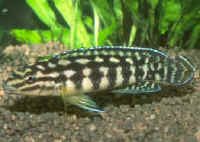
Overcrowding J. marlieri juveniles to minimize aggression
11/28/18 Shell dwellers tankmates 12/3/13
STYROFOAM HUNGRY
TANGANYIKANS?? 1/24/12 Substrate and DSB for FW Tanganyika
system 1/8/12 African cichlids Tanganyika Tank, misc.
stkg. 2/15/11 Mixing Tropheus In A Lake Tanganyika Tank
9/10/09 Wish list Tanganyikan Rock Setting Up a Planted Tank With Tanganyikan Shell Dwellers
5/5/09 Vallisneria, plants in the cichlid tank (Malawi, Tanganyika) 2/16/09 Hey Crew, First and foremost today I would like to congratulate you all on a very well put together and extremely informative website!!! I read your stuff till my eyes hurt almost every night. Anyways, on to business. Here's my setup 100 Gal.(60"x24"x16"), Fluval 305(3 trays sintered glass, 2 trays API ammocarb, 1 tray nitra-zorb), Penguin 350 running standard cartridges and bio-wheels, H.O.T. Magnum 250 running micron cartridge, 2 Hydor Koralia 3's, Hydor inline 300 watt heater, 60" Hamilton HO lighting canopy with 1 each 10,000K day and actinic(room for two more T5 bulbs) on for 10hrs per day. 80 lbs pea gravel mixed with 20 lbs aragonite base cichlid mix, 80 lbs Utah lace rock, and 1 large piece African driftwood. Water parameters are PH 8.2, KH 9 degrees, GH 12 degrees, NH3/4 0ppm, NO2 0ppm, NO3 10ppm, temp 78 degrees. I use baking soda, Epsom salt, instant ocean marine mix, and Kent trace elements for cichlids. All water mixed, aerated, and heated the night before, of course. Maintenance includes gravel vacuum, 75% water change(stocking density is heavy), filter maintenance, and water testing, all weekly. Fish include various Malawi and Tanganyika cichlids, all of which are thriving, two pair breed all the time. I know they shouldn't be mixed, but all is well for over a year now. Not much aggression as I rearrange rockwork weekly. If problems arise I'll have a good excuse to buy another tank!!! Phew. Okay, here's my questions. Will plants(Vallisneria, Java moss, Anubias, etc.)thrive under my lighting? Should I add more bulbs to my hood? If so what K temp? Can I plants these in small clay pots with fertilized pond soil and then bury in my gravel? If so what would a good soil/fertilizer combo be? What other plants will thrive in my water? As well any recommendations for growing plant in a cichlid tank you could throw my way will greatly appreciated. I know my beloved cichlids will mow these like grass, but that's half the idea. Sorry if the tank description was long, just wanted to be as descriptive as possible. I would also like to thank the crew in advance for all the great pointers I am sure to receive. Yours Truly, Victor <Hello Victor. Vallisneria is very adaptable, and while it prefers really bright light, grows reasonably well even under moderate levels. So provided you have at least 2 watts per gallon, I'd fully expect Vallisneria to do very well in your tank. Since Vallisneria species are native to both Malawi and Tanganyika, they are one of the most appropriate plants to keep with Rift Valley cichlids. Nimbochromis livingstonii for example is a species that specifically inhabits Vallisneria thickets. Colour temperature largely doesn't matter for plants because they are much more adaptable in this regard than corals. But the ideal is around 5500-6500 K. Vallisneria can be planted in pots, but quickly grow out of them as they expand across the tank. If you want just a small clump of them in one corner, then those plastic pots with rock wool will work fine, provided you remember to put iron-rich fertiliser tablets in among their roots once a month. Alternatively, if you're growing lots of Vallisneria, then using a plant-friendly substrate will make sense, even if it's just one half (of whatever) of the tank. I find a mix of pond soil and gravel to about an inch works great. Put a gravel tidy (or any fish-safe plastic mesh) on top, and then cover with another couple inches of gravel or sand. The gravel tidy will keep the cichlids from making a mess if they dig. Putting large stones around the first few clumps of Vallisneria will help prevent them being uprooted. Epiphytes (Java moss/fern, Anubias, etc.) and floating plants obviously couldn't care less about the substrate and rely solely on fertiliser added to the water. Epiphytes tend to grow slowly, so a half-dose per month should be ample. Floating plants are nutrient greedy, so use a full dose for them. Floating plants are superb for removing nitrate, which is useful in cichlid tanks, and also provide the shade cichlids prefer. But do bear in mind most cichlids are partially herbivorous, and will view many species as food. Hard water is not a problem if you choose the right plant species, and in fact things like Java fern and Vallisneria actually prefer it since the bicarbonate salts are a prime source of the carbon they use for photosynthesis (which can cause issues with KH and pH stability through the light/dark cycle of the day, so once plant growth becomes rampant, keep a check on water chemistry). Hope this helps, Neale.>
Re: white specks 4/23/08 Hi Mike and Crew, Thank you for the advice given so far. The tank inhabitants are one male and three female Neolamprologus multifasciatus, chosen to suit the small tank. My current water conditions are as follows; Ammonia - .1ppm <Too much! Tanganyikans are notoriously sensitive to nitrogenous waste, and even Nitrate causes problems, let alone Ammonia. So, first up, review feeding and filtration. If these are basically fine, then also check you don't have ammonia in your drinking water. Sometimes as plain vanilla ammonia, sometimes as chloramine. In either case, you'll need to take remedial action by adding the appropriate conditioner to the water prior to use. All this said, if there's traces of ammonia in the drinking water, any half-decent filtration system should remove it quite quickly.> Nitrite- 0ppm Nitrate- 0ppm-1ppm PH- 7.6 (not currently adding Alkaline Buffer as I've been doing twice a week 50% water changes to keep the white specks numbers down) <Hmm... not sure you *can* safely economise on carbonate hardness in a Tanganyikan tank.> GH-179ppm (not currently adding KH/PH Plus as I've been doing twice a week 50% water changes to keep the white specks numbers down) KH-179ppm (as above) <Adding a pH buffer is largely irrelevant if you're adding sufficient carbonate hardness. DIY recipes for making Rift Valley water using cheap grocery store chemicals cost pennies per gallon. A common Rift Valley salt mix is as follows. Per 5 gallons/20 litres: 1 teaspoon baking soda (sodium bicarbonate) 1 tablespoon Epsom salt (magnesium sulfate) 1 teaspoon marine salt mix (sodium chloride + trace elements) Or get a recipe from a Rift Valley cichlid book, and then act accordingly. While I agree that commercial Rift Valley salts are pricey, that doesn't mean you can economise while treating your fish. Raising the carbonate hardness should automatically take care of the pH without any further need to add chemicals.> In my attempts to eradicate the organism I have tried an 18 day course of white spot eliminator, which had very limited effect. I then let the tank sit for two weeks before trying two courses of Parasite Eliminator, followed by water changes as directed, again with very limited results. <Do check you have removed carbon. One of the most common reasons medication don't seem to work is that carbon was left in the system.> As I learn more about the fish and fish keeping, I am hesitant to add more medications, instead doing twice weekly water changes to let the tank and fish recover from medications. I will try to take photo for more info but the specks don't photograph to well, as they are tiny. They could be compared to half a grain of sand size, and seem to be able to change directions in the water as they move against the current. <Sound like either Whitespot or Velvet; many medications treat both. Whitespot looks like salt, Velvet is smaller and looks like confectioners/icing sugar. Velvet also tends to have a slight golden sheen, hence the name. Often Velvet attacks the gills before anything else, so your fish "flash" against objects in irritation before any white spots become visible. Because Velvet attacks the gills early on, it is almost always associated with rapid or laboured breathing relative to normal.> At present I have not seen the white spots form on the fish like any of the pictures on the net, admittedly they are small fish which makes it hard to see. Thank you again for you time and assistance any advice is much appreciated. Kind regards, Darren. <Hope this helps, Neale.> Extended Cycling 1/15/08 Hi WWM Crew, <Hello,> I am setting up a rather small (40 G/ 150L) Tanganyika Tank. Water, Substrate (Aragonite) and Rocks are in the tank. Filter, Heater and Maxi jet are running. Filter is a Fluval 305, Media right now are Prodibio Bio Digest on Ceramic Media, Activated Carbon and 100ml of ROWAphos. <Sounds great, though I admit to considering carbon a total waste of space in freshwater tanks.> I'm slowly raising pH and KH to 9.0 and ~14KH respectively. Unfortunately I realized that I'll have to be away from the tank <Oh...?> for 3 weeks at the end of March. There will be somebody who can fill up evaporated water once a week, but not much more. <OK.> My questions here is, is there any problem to be expected when I extend the cycling and wait with the livestock until I'm back in late April? <None at all. If the tank is currently unstocked, throw in one or two of those dumb "holiday" food blocks. As the calcium carbonate (or whatever they are) dissolves, it releases small amounts of flake food. The food will rot, release ammonia in the process, and keep the bacteria happy. I think those blocks last 2 weeks, in which case you might ask your "baby sitter" to throw the second one in halfway through your trip.> I really don't want to put a couple of juveniles in there to pair off, and then not be there if there is any trouble. <Agreed.> Should I feed the bacteria with some fish food or organic salmon scraps? <Yes, but do as indicated above, so the food is releases slowly, a bit at a time.> As usual, many thanks for your great help and input, Jörg <Hope this helps, Neale.> Re: Extended Cycling 1/17/08 Hi Neale, <Joerg,> thanks for your quick reply. In terms of the carbon, I'm planning to use it in the beginning to get rid of organic compounds and heavy metals, might be wishful thinking...? <Your tap water shouldn't have much of either in it, and dechlorinator removes heavy metals anyway. But my honest opinion is that even if carbon has some small positive impact, it isn't nearly as helpful as, say, 50% weekly water changes or the use of chemical buffers to moderate pH changes.> I'm using Tap Water, prepared in a 10 G Food Grade Bucket, aerated, heated, dechlorinated, etc. <Sounds good.> What would be a good filter plan IYO for a Tanganyika Tank, in addition to the mechanical and biological media? <Your prime issues with Tanganyikans are carbonate hardness and nitrate removal. Tanganyikans don't like pH changes and they don't tolerate high levels of nitrate. So I'd be looking at things like crushed coral or crushed oyster shell to buffer the pH upwards and nitrate-removing filter media if the nitrate levels are excessively high. Beyond this, it doesn't really matter what filter you use, though some aquarists do point out that poorly maintained canister and undergravel filters especially can become "nitrate factories", the last thing you want in a Tanganyika tank!> You mentioned earlier that De-Nitrification media is not overly effective, so I was planning to take care of the accumulating Nitrates by bi-weekly water changes. <Yep.> Besides some Phosphate control, what else would you put in there? <Wouldn't be too fussed about phosphate compared with nitrate, which is much more worrying with Tanganyikan cichlids. At some point you have to look at the cost/benefit ratio; chemical media sound good in theory, but are expensive to use in the long term. So do spend time prioritising things if you're on a budget.> Fill it up with Bio Media? <Never a bad idea, but do remember biological filtration produces acidic chemicals, so you should also think about raising the carbonate hardness.> Appreciated as always, <Happy to help.> Joerg <Cheers, Neale.> Re: Extended Cycling -- 1/18/08 Neale, <Hello Jörg,> thanks again! As mentioned earlier I am trying to bring KH and pH up to appropriate levels. I am using "Tanganyika Buffer" by Seachem, 5gram per 10 Gallon, until I reach a pH of about 9.0 which should result in a KH of +14 I guess, as I have not yet determined the ratio pH/KH/CO2 in my water. So far pH is 8.0 and KH is at 7, so I keep adding Buffer. My super soft NYC water keeps swallowing the buffer... <Too funny. Here in England, most of us have "liquid rock" ideal for Tanganyikans and Malawians but not much good for South Americans, so we end up trying to soften the water. Isn't it odd how we always want to keep the fish that don't like our local tap water?> The Aragonite should help keeping the Hardness up, right? <Yes, up to a point. Once crushed coral or whatever gets covered in algae and bacteria, it can't dissolve any more, so it stops buffering. In other words, chemical filter media need to be kept clean. I'd recommend having two batches of the stuff, one in the filter, and the other at standby. Once a month (or whenever you notice the KH drifting down) take out the batch in the filter, and replace with the standby batch. You can now deep clean the removed batch using hot water and sunlight (for the UV). Maybe even a splash of hydrogen peroxide. When you're happy it's nice and clean and properly rinsed to remove any detritus, you'll have a nice clean batch of crushed coral to put in the filter next month. Easy peasey.> Concerning the Nitrates, plants might help to consume some of it, I guess, but I'd like to keep the biotope right and not use west African Anubias or other hard water suitable plants, actually keep it without plants, even if I right now would love to see something green in there. <Let's not forget that plants ARE part of the Malawian and Tanganyikan biotopes. They're just not all over the lakes. Vallisneria and Potamogeton are both found in Tanganyika (I believe) but there's no reason you couldn't use Crinum or Anubias, both of which occur in Africa and are plenty tough enough to do well. All these plants thrive in hard water. Apart from Potamogeton, which isn't in the trade much, if at all, Vallisneria is the fastest growing species and a good "nitrate eater". Slow-growing plants have little effect, and Anubias especially is hopeless. The other good thing about Vallisneria is that it is pretty indifferent to substrate type, though it does like soil/sand mixes. I've grown it in coral sand and it did remarkably well! Adding liquid fertiliser to the water will be a good idea though, if only for the iron that stops the leaves going yellow.> So it will be water changes, and I'll give De-Nitrate by Seachem a chance. To prevent the filter becoming a Nitrate Factory I should wash out the filter media in aquarium water, right? Bi-monthly, perhaps? <In theory, once a month is often recommended. But to some degree you'll need to experiment: for the first few months, do a nitrate test once a week and log the data onto a graph (woo-hoo, Excel can be fun!). See where the peaks occur, and what impact your water changes have. That'll give you the data you need.> About me being away in March and my tanks, I was also planning to upgrade the 10 Gallon planted tank I talked with you about, some time ago. There the Water Chemistry is approved since then, with KH now being 5, carbon removed to prevent washing out the nutrients. Anyway the plants still do poorly if I forget to add Excel on a daily basis. So I am planning to add CO2, with a little yeast generator + pump for diffusion and upgrade the light from now 17W to CF 36W, 8000K Guess that will require a fine tuning of fertilizers, and for safety reasons a higher KH to prevent pH crashes. My feeling here is that I should wait with the upgrade until I'm back, which requires quite some patience, as the hardware is here already and screams to put to work... <I tend to like 10 gallon tanks to be room ornaments -- kept as simple as possible, so maintenance is easy. For some reason I'm happy to mess about with big tanks, but like little tanks to sit still. What I'm trying to say is budget your time/money carefully here. The Tanganyikan tank, done properly, and tailored for "advanced" species will consume plenty of your resources. And I'm suspecting you'll want to keep the advanced species rather than a bunch of Brichardi cichlids! A 10-gallon planted tank filled with Cryptocorynes and Anubias is easy to make and looks lovely, even without CO2 or fancy lighting. Add a few small fish like gobies and then a bunch of cherry shrimps, and that's all you need.> Many thanks, and I just can not finish a WWM E-mail without saying how much I appreciate what you guys do for the aquarium community! <We're all happy to help.> Joerg <Cheers, Neale.> Cichlid substrate... Tanganyikan, African cichlids 12/12/07 Hi I have a cichlid tank an I'm think about switching my river rock substrate to a sand or grain. I mainly have Tanganyika fish and I was wondering what's the best substrate to use if I'm going for the white sand look. <Something calcareous, roundish... even intended for saltwater use... like crushed coral> I want to use fine white sand but I rather use something that benefit the fish more. I read about a silver sand but I don't want the metallic look rather just simply white sand. <Just seek out carbonaceous material, not silicate...> Also the coral sand is fine but isn't white but more tan. My fish rather have dark coloring so I think that white sand would look amazing in contrast. Also with sand.. does the fish waist <waste> end up laying on the surface or does the mild water current pick it up. <Hopefully the latter> I'm worried about the waist getting mixed in the sand since sand can't be vacuumed like river rocks can. Can u tell me the proper way to clean it? Thank you very much, Chris <Posted on WWM... Please read here: http://www.wetwebmedia.com/clnaqfaqs.htm and here: http://www.wetwebmedia.com/FWSubWebIndex/fwgravelfaqs.htm and the linked files above. Bob Fenner> Setting Up A Tanganyikan Shell Dweller Tank 4/29/06 I feel rather stupid asking you a question but I've scoured the internet looking for an answer and can't seem to find one'¦ I'm setting up a Tanganyikan biotope, though I'm still at school so I need something that is relatively easy to maintain and this would be my first fish tank. Also I'm only allowed a ten gallon tank so I decided that Neolamprologus brevis or perhaps Neolamprologus multifasciatus would be interesting shell dwellers to have in such a small tank. The tank will be set up with sand as the substrate and crushed shells to buffer the pH, with thinly planted Vallisneria and scattered river worn rocks (mainly for aesthetic reasons), and plenty of shells so the pair can take there pick (can you see a problem with any of the above)? < All the shell dwellers are constantly digging in the sand and moving it around. Place the plants in small flowerpots filled with Fluorite by SeaChem to prevent them from being uprooted. Us the rocks to hide the flowerpots. The crushed shells are not needed since the regular shells will be enough to buffer the water.> Though I've heard that cichlids are shy and that to make them less fearful you should introduce a school of dither fish, in such a small biotope is this possible? < Not needed with these little guys. They will swim away at first but will quickly be back out. Eventually they get use to the traffic outside the tank.> I want the fishes whether they be dither fishes or not, to be in something similar there natural habitat. I think it's only fair if we take them out of their habitat (captive breed or not) I feel (though it's not always possible) we should try to create their habitat to the best of our ability. Though I'm at a loss as to what fish to use, if there is any I can use? To make matters worse I am also not allowed a grow on tank, so if the shell dwellers do breed (am hopeful) I need dither fish that will not be too much threat to the fry (though I imagine most fish wouldn't be able to resist). If you could help I would really appreciate it. Thank you for your time Tara Ps. Hope the spelling and grammar is acceptable < I have been in Lake Tanganyika and have seen first hand the shell beds that Lamprologus multifasciatus come from. The water is too deep/murky/dark for plant growth except for some algae. Most of the fish are there to try and eat the shell dwellers. Many aquarists try and use dither fish with their Tang. tanks since most of the cichlids are attached to the rocks or sand. In a larger tank you could use a school of Cyprichromis. The Tang. killifish gets too big and only one male will survive in a tank. There are no barbs or tetras that are found in the lake itself. Other cichlids will try and eat the fry.-Chuck> WWM Does Good ...Tanganyikan Shell Dweller Tank - 5/2/2006 Hi, I just wanted to say thank you for your advice on setting up my Tanganyikan Shell Dweller Tank (4/29/06). I'm weary of asking anyone at or LFS for advice as they don't seem to know what a Tanganyikan Shell Dweller is. Its really good to get some definite advice that's not conflicting in anyway! Also your website fantastic seeing the problems that other people have come across makes me see how to (hopefully) avoid them and do the best for my fish. Again thank you for your prompt response. Tara (UK) < Thank you for your kind words.-Chuck> Large Lake Tanganyika Set Up 3/24/06 Hello friends at WWM :) I have a 600 gallon tank (90"x30"x48"). I've been chatting in an online forum and have received some very negative feedback about my stocking plan. All of the local cichlid breeders and wholesalers that I've talked to have given me very positive feedback. From my research, I believe that this mix can be achieved with care, and a willingness to separate fish as things may go wrong. I have a lot of rock - some 1500 odd lbs. There are two separate sandy beaches. A large cobble mountain that sort of bleeds down into the tank (lots of smaller caves, round rock). And there are 3 LARGE flat rock structures with very large caves. I'm not sure how good of a picture that paints, but hopefully it's good enough. The top 24" inches of the tank are basically empty except for where my largest rocks stand out in the water like towers. In the tank already are the following: 5 Yellow Calvus (1.5") 5 Inkfin Calvus (1.5") 6 Mpimbwe Blue Frontosa (1.25") 20 Tropheus "Moliro" (1.5") 6 Synodontis Petricola (1.25") I currently plan to add: 30 Cyprichromis "Undecided locale" 8 Paracyprichromis nigriventris 8 Benthochromis tricoti 8 Xenotilapia papilio 4 Neolamprologus "Daffodil" 4 Lamprologus ocellatus "Gold" 12 Lamprologus similis 6 Julidochromis dickfeldi 6 Lamprichthys tanganicanus So this is a ... "the pessimist said" - the I hope - <and the WWM feedback session> :) "Tropheus have special dietary needs dietary needs" - I will a primarily high protein vegetable diet. "Tropheus are just too boisterous" - Everybody on the forum assured me they should be kept in a species tank with only other very aggressive fish (Neolamps and Juli's). I am hoping/theorizing that with 600 gallons to go around, they won't cause too much havoc. Yeah or Nay IYO? < The larger tank will allow non-dominate males a place to hide.> "Benthochromis tricoti are simply too peaceful to be with most of these other fish" From my research, it seems like they'd have about 200 gallons of water to share only with the Cyps. Am I dreaming to hope that they could thrive with Neolamps and Tropheus? < The tricoti come from very deep open water. The tropheus scrape the algae off the rocks. There will be enough room for the tricoti to get away.> "Your Frontosa can and will eat everything in the tank except the tricoti". Grown from runts with the fish that might someday be food, kept well fed and given the aggression level of the fish that might get eaten seems like it could turn out okay. < The frontosa get over 12 inches and will eat sleeping fish that fit into their mouths.> In addition to that I could set up my shellies so that they would be very inaccessible to a monster Front. If that doesn't work out when I start losing fish I could pull them out. Decent odds? < The bigger fish will continually stress the smaller ones to the point you will not see them , so what is the point of having them?> "The combination of rock, shell dwelling and sand dwelling fish are simply incompatible and will make each other miserable. To try to do it is lunacy - slim down your selection." I just don't really understand why they said this - but this is my first Tanganyikan tank so maybe I just don't understand what goes on with these kids when they're full grown and breeding. I'm not sure if reading paints an adequate picture. I really don't know anything about the Killie on the list, except that it's very sweet looking and I want it. Nobody on the forum seemed to know either so that's sort of a wildcard. < The killies are shallow water fish that eat lake flies from the surface. male cannot stand each other.> In a nutshell they said they could set me up with Tropheus/Neolamp tank, they could set me up with a Frontosa tank, they could set me up with a Tricoti tank, or they could recommend an assortment that would inhabit each niche. But if I wanted to be a responsible fish keeper it was critical that I picked one of the previous tank setups they would recommend. I'll add just as a note I will probably be moving in the next year or so, and will have to break down the tank and move it so I'll have a mandated social reconstruction at that time. With that in mind, I'm more interested in innovating and exploring what my tank is capable than coming up with a successful "5 year plan". At the same time I don't want to set up a tank destined for failure - but I don't consider having to separate fish failure. I own a pet store, and have many, many tanks available for separating fish when/if it becomes a problem. Thanks for your time and feedback :) Scott <Everything will go together when small. After the first year pull the fronts and the tropheus for the reasons already stated. Don't even start with the killies. Go with the Cyps or the tricoti but not both. Better to go with one shell dweller. When these cichlids start to breed you will have lots of daffodils and eventually they will take over all the rocky areas of the tank.-Chuck> African Cichlid Set Up - 3/1/2006 I currently have a 65gal (36x18x24) tank with a Magnum 350 canister and BioWheel filter system. I have been researching for weeks and finding lots of conflicting answers. I am hoping you can help to clear up any final questions before I begin stocking. Here's where I'm at... I will cycle the empty tank for about 3 days before adding "ditherfish". I was thinking about 6 Tiger Barbs, wait 3 days, 6 Rosy Barbs and a Pleco and/or Catfish for the algae. Wait one week and then begin adding my Cichlids. < Go with Bio-Spira instead of using fish. Fish may introduce disease and then you'll have to get rid of them anyway. The Bio-Spira is faster too.> I'll start with juvenile's on all of them. Least aggressive first, wait a week, most aggressive last. Add fish at night just before lights out. I definitely want at least 2 variations of Peacocks, they're my favorite. < Go with a blue one and one yellow one and don't mix the females.> I have been able to find Golden and Ruby Red locally and was warned to stay away from the OB's as they are a hybrid? < Correct.> I also like the Electric Yellow Lab, the Kribensis and the Leleupi <sp?> And this is where I get stuck. What I want: A harmonious tank with smaller (6" and under) and very colorful or clear patterned fish. How many can I keep? Is overstocking a good idea to keep down aggression if they can't establish territory? Which are pairs and which are harems? Are they compatible with Gourami? Any help would be greatly appreciated... Thank you!!! Christina < Forget the krib and the gourami. Looks like you are into yellow fish. Lets look at building your tank around a peacock species, genus Aulonocara, since they are your favorite. They come from Lake Malawi where the water is hard and alkaline. Water temp in the mid to upper 70's. Lots of rocks and sand. The blue varieties of peacocks are better adapted to a community aquarium that the yellow or red varieties. All the females and fry are brown in color and very difficult to tell apart. Yellow labs will add some yellow color and are not too aggressive. Some of the sand sifting haps would go well with them too. Check out the book "Enjoying Cichlids" by Ad Konings at CichlidPress.com. You will find that there are lots of different peacock species available by venders online. All Malawian cichlids in the hobby are maternal mouthbrooders and do best in harems. Lake Tanganyikan cichlids like the Neolamprologus leleupi really do better in a quieter tank.-Chuck.> Frontosa Not Moving Much 1/14/06 Hi there, I saw your website when I Googled it, and wanted to ask a question about my husband's frontosa. He was an active fish, now it just sits on the bottom of the tank under a rock and is very lethargic, he has bubbles on his scales. Can you give me some advice? Shan from Australia < Frontosas are from Lake Tanganyika. They require warm, hard alkaline water. They are fish eaters in the wild. Bubbles on the scales is an unusual symptom. Bubbles usually indicate some form of bacterial activity. I would recommend a 50% water change, vacuum the gravel and clean the filter. Check the water chemistry for zero ammonia and nitrites. Nitrates should be under 20 ppm. The pH should be around 8.0 at 84 F. If things don't improve in a couple of days then you may need to use an antibiotic, like Erythromycin or Nitrofuranace.-Chuck> African Mbuna Tank Set Up 1/13/06 This is Roger Nicholl again, I wrote you earlier about my aquarium being cloudy and not knowing why. My tank has been setup for about 3 months and I do a 10 percent water change once a week. I have 2 Regent Aqua Teck 30-60 power filters on it and it just does not seem to be doing the job. But come this Saturday I will also have an Aqua clear 500 on there. Now I only have 20 fish in my aquarium and I am selling 18 of them in order to put African cichlids in there, I already have my waters pH set to 8.0 and I was also wonder if you could give me an idea on what African's I could go with to have a very colorful tank. Keeping in mind that I only have a 55 gallon. PLEASE HELP. Thank you. I am so fed up with it that I am almost ready to sell the whole works. < I answered this question or one just like it yesterday. Check the FAQ archives.-Chuck> Setting Up a Bigger Tanganyikan Tank 1/1/06 WWM Team, I have been enjoying the hobby for about 25 years. In fact I have had the same 100 gallon tank for about 23 years. Of course the livestock, décor and filter technology has changed. For about the last 10 years I have focused mainly on Tanganyika varieties. Over the past couple of years I have successfully integrated a heavy plant load with Tanganyikans. Currently both my fish and plants are doing great. By using alkaline buffer (Seachem) and co2 injection I have found a happy medium of a PH of 7.55 and a KH of 9 that both keeps the fish very health and the plants pearling. Let me first tank you for all the hard work. I have been reading your articles and advise, very nice stuff. How did we ever survive before the internet? < Books, magazines and fish clubs.> I am looking for some advice for my planed upgrade. I am in the process of purchasing a Lee-Mar 96x24x30 300 gallon tank. My goal is to have a bigger version of what I have today. From what I have learned in practice and from your great information I think I need a large closed loop system. The wet dry route would pretty much remove the co2 I am trying to keep in the water. I would like the closed loop system to include a cartridge filter, bio chamber, chemical chamber, heater and UV. I have never owned our used Ocean Clear or Nu-Clear products and it sounds like they are probably too small and labor intensive/frequent for my needs. What is your opinion on something like Hayward cartridge filters like the C900? < This will remove matter suspended in the water. May clog often depending on you selection of fish.> Do you have any cartridge filter recommendations? Do you have any recommendations on Ocean Clear and Pentair Aquatics for Bio and chemical chambers? < Pick the system that is the easiest for you to service and clean. Right now either will work for the fish you have. You really don't have that many fish for all the filtration you have. The new tank will depend on how many fish and what kinds of fish you plan to keep.> How would you feel about using Fluidized Be Filters like Pentair or Quicksand? < These filters work great for breaking down ammonia and nitrites to nitrates. They will quickly die if the power goes out and all the media settles to the bottom.> Thank you for taking to time to help me out. After 25 years in the hobby the more I learn the more questions I have. Regards, Freddy 100 Gallon glass CO2 injection with Aquacontroller II pro PH 7.55 KH 9 GH 7 (2) Via Aqua 750 (Sponge + 3 Chemi-pure + 2L of Seachem Matrix) each 18 watt UV (2) UG filters with 400 GPH Power Heads Java Ferns, Java Moss, Tiger Lotus, Micro Swords, Crinum calimistratum and others (2) Calvus, (7) Cyprichromis (2) leleupi (2) Daffodil (2) Cylindricus (2) random peacock (1) Old as dirt (over 12 years) and blind Texas (Aka "Bob") 10% to 15% water change every Saturday. < Do you really need CO2? Many plants in Lake Tanganyika actually get their CO2 from breaking up the CaCO2 molecule in the lake. For this you need very good lighting. I would recommend that you try your tank without the CO2 first. This could change your future filtration plans. The plants may not do as well but you really don't have any plants that really require CO2 supplementation. Much of your filtration needs will be based on what types of fish you wish to keep and how many. At high pH's ammonia is deadly to Lake Tanganyikan cichlids. Currently you have undergravel and sponge filtration that takes care of the biological filtration. The Chemi-pure actually removes valuable minerals that you Tanganyikans need. It is hard for me to argue with something that has worked so well for you for so long.-Chuck> Tanganyikan Cichlids, Carbon - II - 09/16/2005 Thanks for the reply. <You bet. Crewmember Sabrina with you, this time, as so many of our folks (Bob included) are out at MACNA.> I checked out Eheim's website, and they recommend running carbon short-term, to take something specific out of the water. <This is the best/most common use, yes.> I've never relied only on biological filtration. If I didn't run carbon on a regular basis, wouldn't my water not be as clear? <Mm, only if you have something in the tank that continually discolors the water (like driftwood). With proper maintenance, you should have no need for carbon except, as Eheim suggests, to remove something specific from the water (like discoloration from wood, undesirable chemicals, and emergencies where toxic substances may have been introduced).> I have always done 20% weekly water changes. <This is probably fine. I would suggest to try running without the carbon for a while; it loses its efficacy after a few to several days, anyhow, so you really won't be "missing" much, I think. Wishing you well, -Sabrina> 90 gal freshwater set-up for Tanganyikan Cichlids I am setting up a 90 gallon (72 inches long) freshwater tank for Tanganyikan Cichlids. I have an Eheim Classic 2217 and a HOT Magnum. I am considering running the Eheim with mostly biological media, and a poly-filter. I can then use the HOT Magnum with just carbon, as I think it would be easier to frequently change the carbon in the Magnum than the Eheim. I am planning on keeping a good number of hardy plants with the fish, such as java fern and anubias. My lighting fixture will be Custom SeaLife PowerCompact/Moon Lite. A bit of overkill, but I got a good deal on it. I'll probably run it with just the 10,000K bulbs it came with, not the actinics (which make up 1/2 the lighting from the fixture). I am trying to avoid a ton of algae growth and am concerned about phosphates from the carbon. Any suggestions in addition to or other than changing the carbon every couple of weeks? <Regular large water changes> Is there a brand of carbon that releases fewer phosphates? <The Eheim line, HR from TMC...> Other than poly-filter, I'd like to try and stay away from synthetic resins, but will consider using them if vitally necessary. <Not necessary. Bob Fenner> I forgot to add, that I would be using mechanical filtration in the Eheim also. Am considering the Ehfimech for mechanical, Substrat Pro for the biological, and Polyfilter, for good measure. HOT Magnum would just contain carbon. <Mmm, I'd use some mechanical media ("floss") to keep most of the "gunk" away from the carbon here... a pad before and after... sandwiching the carbon. Bob Fenner> Live FW Rock? 9/5/05 Hello crew, Thanks for the help with an illness problem. This question is about freshwater live rock. I started thinking after looking at so many marine aquarium setups, that there should be some sort of Rift Lake equivalent of 'live rock'. Lake Tanganyika has sponges, snails, algae and other micro organisms very much like a marine environment (it is the oldest Rift Lake), more so than either Malawi and Victoria. Is there such a thing as Tanganyika live rock in the hobby? If so this would be great for the micro predators and Mbuna. Any interest, ideas or info would be helpful. Allen < It is true about the age of the Lake Tanganyika, but that is nothing compared to the geologic time that the oceans have been around. You forgot about FW jellyfish, crabs, shrimp and eels too. No such thing as live rock from Lake Tanganyika.-Chuck> Re: Live FW Rock? Lake Tanganyika Critter Set Up 9/5/05 Chuck, So if it's not available, are the various sponges, snails, algae, jellyfish, crabs, shrimp and eels (or similar critters) available which could approximate this environment. If so, any names of the creatures and an idea where they may be found would be appreciated. I've been sifting through the site and trying to determine if there are ways of supplementing my cichlids diet with live forage foods living in my tanks. Allen <The commercially available fish foods we have today are pretty darn good for the most part. All the lamps and Julies will feed on Calif. black worms infested in the gravel. Spirulina flakes pretty much take cars of all the herbivores like Tropheus and Petrochromis. To give your fish a boost try making your own fish food using the formula in "Enjoying Cichlids" by Ad Konings. When I was in Lake Tanganyika I asked the same questions. There were plants there too. Unfortunately anything else other than fish has the potential to become a biological hazard if introduced into American waters. The paperwork for such importations make importing these things impractical. Europeans don't have the same restrictions as we do , so some items make it to their hobbyists. These things turn out to be very expensive and don't ship very well. The crabs tear each other up, the jellyfish are poisonous to fish, the shrimp get eaten when they shed, the snails may carry schistosomiasis and algae is algae. There are many eels that could be exported but they are expensive and love to jump.-Chuck> |
|

|
Features: |
|
| Featured Sponsors: |