 |
|
| Home | Marine Aquariums |
Freshwater Aquariums |
Planted Aquariums |
Brackish Systems |
Ponds,
lakes & fountains |
Turtles & Amphibians |
Aquatic Business |
Aquatic Science |
Ask the WWM Crew a Question |
| Please visit our Sponsors | ||||
Scratched glass/Aquarium Repair 8/24/12 Hair line crack!
HELP! 12/18/11 OxyClean, to clean aquariums? Glass
tank scratches 11/7/11 Possible Tank Repair? -- 11/09/11 Scratch or Crack in my aquarium?
3/29/11
Small Crack any help appreciated 7/29/09 Small Scratch/Crack in tank 5/26/09 Scratch Removal - Glass 3/17/2009 Concern over scratched Juwel 260 Vision Aquarium -- 09/04/08 Hi I have had my Juwel Vision 260 aquarium for around 4 years now and recently noticed a few scratches, the one that concerns me is at the bottom of the front glass and is about 2 inches in length and on the inside only, it is barely visible unless you know it is there, it has algae growing along it too. I am concerned that this may weaken the tank as it is at the part that bears most pressure, Is it likely that it will increase in size do you think? I must have done it myself with the course scraper I purchased, perhaps some gravel got caught in between the glass and the scraper? Any help or advice you could give me would be most welcome. Thanks, Jenni <Hi Jenni. It's easy to scratch the inside of the tank, especially if you get sand trapped between the glass and the algae scraper. My Juwel tank has lots of scratches! If small and superficial, these are unlikely to cause any major problems, and I wouldn't worry about it. There's no way to fix scratches, but you can replace the glass part of the tank through any Juwel dealer. Do also see here: http://www.wetwebmedia.com/glstkscratches.htm You are not alone! Cheers, Neale.> Fish Tank Crack or Scratch? (No Pics!) -- 08/02/08 Hi! <<Hello Grace>> I recently got a fish tank that's about fifteen gallons on Craigslist. <<Neat>> When I went to pick it up I looked at it and thought it was fine until I took it home. <<Uh-oh>> The person had filled the bottom with some gravel and when I took the gravel out to clean it, I saw these weird black "scratches" on them. <<Hmm'¦>> The weird thing is when you feel them some are raised bumps and some are dips. I don't know what to make out of the situation! <<Neither do I without some pictures of the tank and the damage>> Could I somehow fix this tank so I can put fish in? <<I have no way of knowing for sure by your description alone, but if the tank bottom is cracked you will not be able to use this tank. Repair 'is' possible but would need to be done carefully by someone familiar with the process and even then is likely more trouble and expense than this tank is worth. My first suggestion is to return the tank for a refund, if possible/practical. Otherwise, you could take it to a good LFS in your area and let them see it first-hand and advise you on its condition and feasibility for repair>> Thank you so much! Grace <<Happy to share. EricR>>
Very small cracks on the bottom. -- 06/14/07 First off, Incredible site. I can't believe it took me so long to find it. <Me neither!> Now, my question is: I've got a 75 gallon (48x18x21) aquarium the has two very small "cracks" in it. They are located in the center (width wise) and about 3/4 to the right (length wise) The cracks themselves are only about a hair thick and about an inch long, barely visible, unless you know about them. Also, there parallel to each other, about 3-4 inches apart. <... trouble... are these "just" scratches? At any length, I would NOT fill this tank> There located on the inside of the tank. By that I mean that when you feel the bottom of the tank you can feel them (finger nail gets caught as well). they can't be felt on the outside of the tank, so I don't think it's serious. <Uhh, no... do you know how most glass is cut? By making such cuts, applying pressure to a side...> I'm almost tempted to call them scratches. It's fairly thick glass, and the tank is new. <Oh? Take it back> If it helps, the hood fell into the aquarium when we were setting it up and made the cracks. <Yikes!> Just curious if this is cause for concern, and what I should do if it is. Thank you in advance for you help. Justin. <Let's see... no pix... a vague description... A response many thousands of folks will see over years time? Mmm, no contest... take it down, back... or change into a vivarium or such. Bob Fenner>
Glass tank repair (repairing a crack on the glass panel) <Grinding a pit...> - 05/26/07 Hi there, <Hola!> Germán from Mexico writing, I am amazed with the amount of valuable info posted here, I am very grateful for all I have been able to learn reading this site. Also I am still reading the CMA, lots of good info too. This is not a question, but some information I thought might be helpful to other readers. <I/we thank you> I am setting up a 200 gal tank, 12mm glass, I made it myself. I was going to use overflow boxes but after reading your site I decided to have it drilled, well I had a glass shop come home to drill the tank, I asked for 2 2" holes at the side glass panel, unfortunately the round piece of glass that came out of the hole was shot against the front panel (when it comes apart of the glass panel, it starts to spin inside the drill, I should have taped the glass on the opposite side to prevent this), <Yes> and it shattered it, any way it was a small crack, less than one inch long, but as we know any small crack will continue to grow to the edge of the glass in no time. <Yes!> even when I looked across the side of the glass (through the 12mm section), I could see how deep the crack was, it was only 1mm deep. I looked over your site and all the internet looking for a way to repair this but only found suggestions to replace the glass panel, which I was not willing to do, I would rather throw away the tank and buy new glass panels and plastic frames than tearing it down and cleaning all the silicone. After thinking about the situation 2 solutions came into my mind, one was to drill a 1" hole to remove the cracked section before it would grow, and then plug the hole with a bulk head and a cap, or glue from the inside a piece of glass to cover the hole, this would save the tank but did not like the idea of seeing the patch, the tank is a view through dividing the living room. The other solution was to "grind" the glass to remove the crack, then polish the glass to remove the whitish color after grinding, it would only leave a concave section on the glass. <Mmm, I hope this area is near/er the top/surface...> I got my hands on the Dremel tool and a scrap piece of glass and started to practice this method, I first used a green grinding stone (Dremel 85422 Silicon Carbide Grinding Stone), this allows to remove glass to a concave form, however the grinded glass looks whitish, then I used a polishing disk for metal, (Dremel 425 Emery Impregnated Disc), it is a rubber disk with very very fine sand, this started to smell to burnt rubber pretty fast so I took a new disk and used it with water this time, took the hose and pointed the water stream right where the disk touches the glass, the result is that it polishes the glass to leave the concave form to look like a magnifying glass, I was very impressed with the result, then I was ready to work on the tank. As I stated before the crack on my glass was still less than 1mm deep so I decided to go directly with the polishing disk (did not need to remove that much glass), I removed the glass section where the crack was, now there is no "line" on the glass that may continue to grow. I suggest to avoid getting a 90 degree angle on the section grinded, the shape of the grinding disk will leave that shape on the glass, so you have to practice first to grind to leave a round concave form as that of a magnifying glass, (I am not sure if I am getting myself explained). <Entiendo. I understand> Well, I saw on your FAQ people asking about scratches on their tanks, these can be very easily fixed with the polishing disk, takes less than 5 minutes to remove them. Hope this info can save others the pain of replacing a glass panel when they find a scratch or a surface crack. Regards, Germán <Again, thank you for this valuable input. If such damage is shallow, only surface (not through both sides of a panel) AND such blem.s are near the surface (not the deeper part of a tank where the pressure is greater) such repairs are possible. Mucho gusto y nos vemos. Roberto Fenner> Overflow Noise/Glass Scratches - 08/15/06 Hi, <<Hello!>> I have a 54G RR Corner tank with a 1" drain and a 3/4" return. <<Sadly undersized throughputs...even on this volume of water>> I bought the whole reef set up used, but I can't imagine how the previous owner tolerated the noise! <<Mmm, indeed...you can't really put much water through a 1" drain before it becomes problematic>> I installed a 1.25" Durso standpipe (1" did not work, now I follow directions, doh!). I have a 1/8" drilled hole in the top of the T of the Durso. It was fascinating to watch the relationship between the air hole size, the drain line position relative to the sump water level, and the gurgling and flushing effect. <<Ah yes, you are finding out just how "fiddly" it can be. I would like to suggest you try enlarging the hole just enough to push some airline tubing through and down in to the standpipe. This will help with aspirating/releasing air from the drain line and often eases the gurgling sounds. It will take some experimentation to determine the best length/diameter tubing to insert>> As I slowly increased the air hole from a pinhole up to 1/8", I observed the step by step decrease in flushing effect amplitude. <<Yes...allowing that air I mentioned to escape more readily>> It started at about a 3-inch oscillation, at 1/8, it was gone completely. Adjusting the drain pipe position also impacted the flushing effect and required small changes in the air hole. <<Pretty much all comes down to eliminating the obstructions (air bubbles) to the water flow>> OK, on to my questions: I have extensive bubbling/gurgling noise in the sump from the drain. <<From air that is "carried" down the line by the water>> I have read on WWM two things to try: A "T" or "Y" fitting on the drain line, and aspirating the drain line from the top with air line tubing. <<Yes indeedy...though I prefer a 45- or 90-degree ell fitting on the end of the drain line>> I am confused about the specifics of both of these. For the T or Y fitting, how is it positioned? <<Is of little consequence...just position to direct flow in the direction you desire>> I am guessing that it goes at the bottom of the drain line, with one leg submerged and one leg above the sump water level? <<Mmm, okay...I think I'm with you now. The purpose of the fitting on the end of the drain line is to "slow" the rush of water a bit. So...experiment with the position to determine which gives you best results. Either way you position it, I find that having the end of the drain line completely submerged usually works best. And do be aware, it is usually not practical to expect a 1" drain to flow more than about 300/350 gph without much hassle and noise, as you seem to be experiencing>> For the aspiration tubing, is the tube supposed to have its own hole separate from the existing air line in the Durso T cap? <<Refer to my earlier comments re>> Or does it simply go down the same hole? <<Yup!>> It also seems to me that the bubble/gurgle would be reduced if I had the water break on some live rock rubble or other irregular surface. <<Can give it a try>> I think I have seen reference to using filter pad material. <<A detritus trap>> Next question: Even though I only have about a 2-inch drop from the overflow wall to the top of the water behind it, it still makes an annoying, trickle noise that induces the need to visit the bathroom at night (tank is in the bedroom). <<Hee!>> I am thinking of installing some kind of stepladder down to the surface. Or perhaps a piece of filter pad would also suffice. How have you seen this done? <<Raise the height of the standpipe to raise the surface of the water in the overflow...it only needs to "fall" a fraction of an inch or so>> Last, the tank is used, and has a good number of extremely fine scratches that are visible depending on angle and lighting. I have read that you generally shy away from glass polishing/buffing, but that usually seemed to be because the emailer was asking about significant/deep scratches. What do you think about using a commercial buffer on an orbital drill pad, and follow with a thorough cleaning? <<I think you'll do one of two things...nothing at all...or make it worse. Scratches in glass "can" be repaired/removed, but unless you really know what you're doing/have done this before, I recommend you refer to a professional for advice/consultation. You may find it is easier/cheaper to replace the tank...or learn to ignore/accept the scratches>> Jack <<Regards, EricR>> Foggy glass I have a 135 RR Oceanic tank that I purchased used. It was previously used as a cichlid tank. The tank has been sitting in dry storage for almost 2 years. When I went to clean it, I noticed the (inside) front glass panel is foggy. I have tried hot water, vinegar and rubbing alcohol, but once the cleaning fluid dries the fogginess reappears. Is this normal? When I wet the glass it looks perfectly fine? I have never heard of glass getting old. Would soaking help? Any clues? < Two things could be going on. The glass could be scratched and there is not much you could do about this. If it is precipitated with mineral deposits then wipe down the tank with a vinegar and or lemon juice to dissolve the minerals. This is pretty common for a used tank. Be sure to check the silicon for leaks.-Chuck> Thanks, Ken Algae in scratches on glass Hello; <Good evening> I have scratches on the inside of the glass of my 55 gal reef tank. I'm not sure whether I created these scratches by using a metal scraper blade to remove coralline algae, or by using an algae magnet (I hear both actions, if done improperly, can scratch the glass). <Yes> Green algae grows in these scratches easily, making the scratches quite visible ;-) and making the tank generally ugly. Assuming there's no easy way to actually remove the scratches, what's the best way of removing the algae from them? None of the algae removal items (pads etc.) I've bought from my LFS seem to work. Thanks! <Other than techniques to make nutrients scarce through chemical filtration and/or competition, there is little you can do here. Are both sides of the tank scratched? One side may be better to turn as the front... The above methods are detailed in various places on WetWebMedia.com under marine algae control. Bob Fenner> Aquarium Disaster Prevention - and a small bubble in the glass Dear Sir / Madam, Upfront - My question is - how do I detect if an aquarium could crack or burst. Are there any notable things to look for? Here are my details leading to this question (my apologies for lengthiness). - Last night (new years eve) I heard a "slight bang" come from my 65 gallon aquarium (long). After inspection everything seems ok. Except for a small crack in the plastic molding at front top right corner. The molding is siliconed to the glass but the contact area of the silicon is about 1/2" up - away from the crack. That crack may have been there all along - or it may be new. Yesterday I had worked on the aquarium, replacing 1/2 tank of water as I do almost weekly. Also - there's a small bubble inside the front glass pane I didn't notice before - its 1/2 way up and near the same side of the tank as the molding crack. Its about 1pinheads wide, crest shaped. - The tank (Miracles Aquariums brand ) was bought with a pine stand - all sides are supported under the tank. We bought it new in late August. Its a freshwater, fully planted, lots of fish, co2 injection, some wood ,rocks and about 2 inches natural gravel across the bottom. The lighting canopy never did properly fit over the sides. the top molding does have a bar through its centre. I'm thinking the whole system is max 1200 lbs. It sits in the living room corner -along a retaining wall in our 50 year old apartment, but not across the joists. We felt that it was better to have it along the retaining wall than across the joists in the center of the apartment - in our limited space. - We've placed a piece of wood (pine) about 1/4" high and 3" back - as a shim underneath the front of the stand, as we had noticed the floor slightly drops towards the centre of the room. The floor also drops from left to right about 1/4" across the aquarium. I'm thinking that slight shifting over a few months time could crack the molding at a pressure build up point. But wouldn't the glass have cracked? Or can glass ever so slightly curve? Could a bubble in the glass mean trouble? Thank You in advance for your time and efforts. Any help with this source of insomnia is be greatly appreciated. < You have two things to be concerned about. One is cracks and the second is leaks. Planted tanks and reef tanks have pretty high lighting requirements. These high intensity lights generate lots of heat. As the lights are turned off and on the plastic molding expands and contracts accordingly. The plastic loses some of its elasticity over time and may not totally rebound and develop a crack. These cracks may develop leaks through condensation under the lip and should be resealed. Cracks at the top of the tank usually are not structural. The top of the tank has no pressure put on the joints. At the base of the tank a setting floor could case uneven settlement and put stress on one point of glass over another. That would case a crack and a leak. Bubbles are a structural weakness in the glass. I would recommend a better safe than sorry approach and check the tank and floor to see if they are level. If not then you may have to consult a structural engineer to see if you floor are capable of handling this long term strain on your floor joists.-Chuck> R Ryan Aquarium Glass Scratch Removal Idea/Experiment Good Morning, <Morrow to you> I've searched the archives and was unsuccessful in finding a similar post. Internal scratches on glass aquariums seem to be an accepted annoyance, one I hope to change. <Great> As an old fiber optic technician I have several grades of optic lapping film (See http://www.psidragon.com/store/enter.html for an example) left over from polishing fiber optic connectors in the 'good ole days'. I use these successfully to remove scratches from my wristwatch crystals, hence the origins of this Email'¦ <Okay> I want to conduct an experiment utilizing said lapping film in an attempt to remove scratches on the inside of my tank and thought it would be fun to have you 'involved' via before, during and after photos which I'll send as close to real time as possible. Sound interesting? If so, we can arrange a date and time that accommodates both our schedules. <Okay... or perhaps simpler digital/digitized pix over the Net> The only concern (possibly moot) that I have is that I'm not quite sure what the film I have is comprised of. I'm not overly concerned about the abrasive mineral itself but the glue holding it to the film backing. Any suggestions on testing the film? <Simple bio-assay... but I would not remove the scratches with livestock, water present... but rinse all out once the removal job was done> I was thinking of soaking it in saltwater and testing for phosphate, pH etc. to see if any changes occur. <Could> Hopefully this experiment will result in something a great many of us can benefit from. Tim DuBois, PA <Thank you for your efforts... reporting. Bob Fenner> Glass Repair <Hi Steve, MacL here with
you today.> I was cruising your wonderful site looking for repair
ideas for scratched glass and found none. <That's because glass
scratches are pretty much permanent, especially if they are on the
inside of the glass. Acrylic can be repaired.> I am considering
repairing my 150 with a razor blade and super glue gel. <I'm
assuming you mean you would scrape out the silicon with a razor blade
and them glue it back with superglue? My understanding is that this
will not work over the long term. That if you can get a bond that
eventually it will wear out.> Do you know of anyone that has tried
that before? <I know one guy who tried and ended up going back to
silicon.> I purchased Calfo's book on Coral Prop and find it a
great source but lacking on Fragging Techniques-I need pictures.
<Steve, that book is amazing isn't it? There are a few pictures
in there and I'm betting he will be updating soon as well. You
might try www.fragexchange.com I know they are adding more and more
fragging examples and after IMAC in June will have a lot of good
examples.> Can you suggest a good
book? <I don't know that there is a good book on
fragging other than Anthony's book but I'm sure it will be
covered shortly.> Thanks.
Scratch in glass I recently purchased a 30 gallon glass aquarium. I noticed it has a surface scratch on the back pane of glass that is about 6 inches in length across the back. Should I be concerned? Does a scratch typically lead to a crack or leak under pressure when filled with water? Thanks for your help. <scratches on the glass unless quite deep are unlikely to cause any problems left undisturbed. It would simply be a weakness if struck or torques there at best. If its on the outside, seek a filler of you prefer. Best regards, Anthony> Re: scratch in glass I recently purchased a 30 gallon glass aquarium. I noticed it has a surface scratch on the back pane of glass that is about 6 inches in length across the back. Should I be concerned? Does a scratch typically lead to a crack or leak under pressure when filled with water? <Not simple surface scratches. I would test fill it outside... and consider taking it back to your dealer if it concerns you. Bob Fenner> Thanks for your help. 380 Gallon Glass Aquarium scratches WWM crew, I have read many messages and I am afraid I already know your answer. I have a 380 gal Oceanic aquarium in my Great Room which I set up 2.5 years ago. I wish I would have know how important it was to keep scratches to a minimum and I wish I would have spent the money earlier on this expensive Magnavore cleaning magnet which has kept new scratches to a minimum. I have several scratches on the inside of the glass I created cleaning within the first few months of the aquarium. Is there any remedy to get rid of the scratches without having to empty my now mature aquarium? I am willing to spend whatever it takes. Do the acrylic scratch removers have any utility on a glass aquarium? I have called some jewelers and they indicate a jewelers rouge might work, although I would try it on a piece of glass outside the aquarium first.... do you think this might work? Is there such thing as ultra fine sand paper that I can use and if so any idea where to procure it? I am willing to spend hours on each scratch to get rid of these blemishes. If ultimately the answer is "you have to live with it" then in the future, would your recommend an acrylic aquarium that I could repair or would you recommend a glass aquarium and just be more careful? Thanks in advance for your help! Bob Wood <Sorry to say they are there for the duration with glass Bob. Acrylic can be polished, but scratches much easier to begin with. The answer depends on you, your needs, (earthquakes) and if you might scratch your tank again, esp. with sand or moving rock. Rock can gouge acrylic pretty good, but again can be polished. If you do switch to acrylic, get the special acrylic pads for your Magnavore. Craig (who has a few scratches too.)> - Replacing Severely Scratched Glass Pane - <Good morning, JasonC here...> I picked up a 90 Gallon "Reef Ready" tank over the weekend as part of a package deal for a really good price. The guy was getting out of the hobby so he gave me all of his stuff (tank, stand, hood, VHO lights, CO2, wet dry, pump, etc) for $200.00 and my time to break the tank down. I did have to drive two hours one way to get the stuff, but who reading this wouldn't?. The only down side is that the tanks front panel is severely scratched, to the point it would distract me from any wildlife I placed in it for viewing. I read the FAQS on tank repair but I still remain unclear of recommended process. I noticed that it is recommended to cut out all of the old silicone instead of just the area on the pane you are replacing. When you (the collective) suggest removing "all" of the old silicone, not just the affected area, and re-siliconing the entire tank are you suggesting that I cut out all of the silicone inside the tank, but leave that which is gluing the glass together, then re-seal all inside corners OR are you suggesting that I remove all panes separating them form the others and take every little smidgen of silicon off and start from scratch. <Leave the panes attached, apply a new bead to all the corners and seams.> Lastly, the alternative it to purchase a new replacement tank for roughly $270.00, and attempt to sell the scratched tank as it is, it does hold water. <Or use it for a mix tank or sump.> Would you attempt the repair or go with the replacement? <Depends on how much you value your time or enjoy fix-it projects.> Thanks ahead of time. <Cheers, J -- > Small scratch? Hi, I have a 20 gallon long tank with a possible 3/8 ths of an inch scratch on the back. Located on the upper half of the back glass wall. I felt it with my finger nail . And I felt the possible scratch on the out side. And then I felt it with my finger nail on the inside, and felt nothing. Should I be concerned with the possible scratch? If so what should I do?/ <Not likely a problem. I might "test fill" the tank in your garage and leave for a day or so... if this settles your mind. Not likely to fail if glass or acrylic. Bob Fenner> - Scratched Glass - Top of the morning to you! <And you as well.> A quick summary/question. I got a "great deal" on a used Oceanic Reef Ready tank (24"x 24"x 24"). The catch....the front glass is scratched to the point of distraction ( I bought it sight unseen from "a friend"). The overflow is positioned dead center on the back panel so rotating the side-to-front is not a good option. Also, there is no center bracing. I am considering replacing the front glass (3/8") panel. In your experience, is this a reasonable project or folly? <It is a project, that much is for sure... not unreasonable.> I am a diehard do-it-yourselfer (Civil Engineer), so I enjoy taking on projects as long as they have a good chance of a positive outcome. Also, any tips would be greatly appreciated. I'm not sure how to attack the top and bottom trim/braces. <Cut them out... is really what you will need to do is disassemble the most of the tank, clean the seams very well, and then re-silicone in your new front panel.> Thanks much for your time. gr <Cheers, J -- > Removing Scratches from Glass Hi Bob. I will be moving soon would like to remove some scratches my tank has obtained over the years. Do you have any suggestion on the best method to remove light scratches from glass. Is buffing the best method or is there a filler that is safe to use? If buffing is the only way, what will I need to do it? <On glass... better to actually ignore... maybe see if you can turn the tank around 180 degrees (with the hope that the current "back" side isn't as bad. Buffing out can be tried but is really a LOT of work... and can weaken the glass... heat burnishing can be tried on very thick glass tanks... by professional glass folks... but is rarely worth it for home hobbyists... maybe the present container can serve as a sump for a newer tank? Bob Fenner> Repairing Glass Scratches - Lighting a Reef Tank Hello Jason, is Bob still away? <<Hello, he is... he should be back Friday 12/7 although I doubt he'll be back in gear that day.>> I was the one who emailed you about my Lubbock's fairy wrasse. <<ok>> Anyways, I have a few questions. Here is a short history of my tank -its been up for 4 years -38 gallon (36" by 12" 20") with 60 watts of light -Inhabitants include Lubbock's fairy wrasse and a Centropyge argi angelfish, (nice to have a group of fish without compatibility issues) <<not too many arguments to get into in a 40 with two fish - a very good choice in my opinion, and aren't those argi's funny...>> Question 1: The tank is four years old and has quite a few scratches on the inside glass, is there any product that can help remove the scratches? <<on glass, erk... I don't think so. If it were acrylic, that would be a different story. I don't think there's anything that polishes glass that you want to put in your tank.>> Question 2: Since I am only 14, I don't have that much money, but I want to upgrade lighting, and I am trying to find a cheaper way of going (but enough to keep my corals thriving). I am interested in keeping shrooms, zoanthids, leathers and colts, and possibly a few hardy hard corals like bubble coral. I believe power compacts and VHOs both have 96 watts per for a 36" long tank. How many watts would you recommend for the inverts I am interested in keeping? Two power compact bulbs or one? Any other good ways to light my tank, (not metal halide, too expensive). <<ah sure. I'm a big fan of the "get as much as you can afford" philosophy when it comes to lighting so... power compacts, whatever you can afford.>> Also, my dad is worried about upgrading lights because I told him that my Atlantic pygmy angel comes from relatively deep water in the wild (even the fish is tank-raised). Will the increase in lighting harm him? <<Tell Dad it will be fine, the argi will do just fine.>> Sorry to bother you, and good luck keeping up with all the questions! Thanks <<Thanks, need some luck there, I'll tell ya'. Cheers, J -- >> |
|

|
Features: |
|
| Featured Sponsors: |
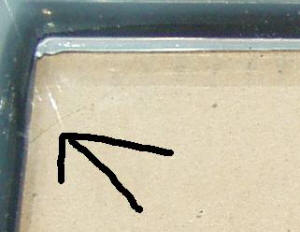
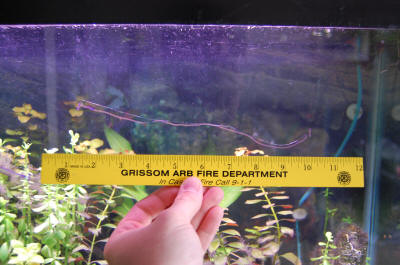
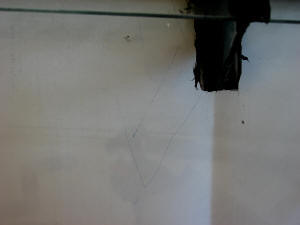
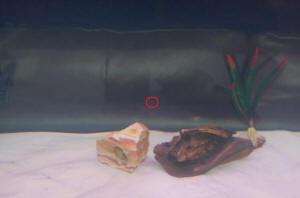
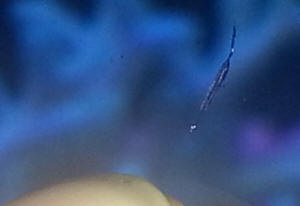 scratch and finger nail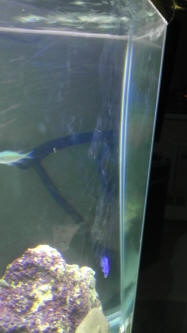


.jpg)
.jpg)
