 |
|
| Home | Marine Aquariums |
Freshwater Aquariums |
Planted Aquariums |
Brackish Systems |
Ponds,
lakes & fountains |
Turtles & Amphibians |
Aquatic Business |
Aquatic Science |
Ask the WWM Crew a Question |
| Please visit our Sponsors | ||||
|
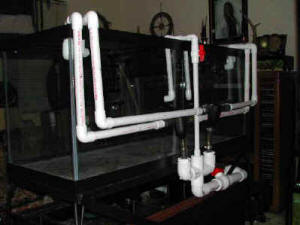
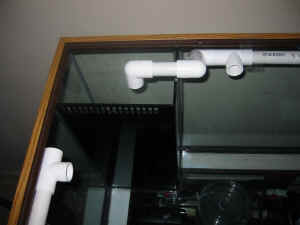
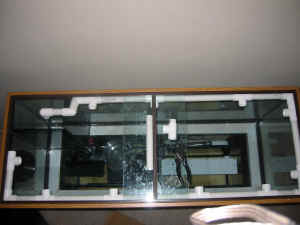
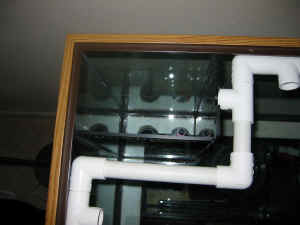
Many Manifold Questions... Dear Crew, <Scott F. your Crew member today> Reading through your plumbing articles and FAQs has inspired me to redo my reef plumbing. I especially love the closed loop manifold and am thinking I need to mosey on down to the local hardware store to start picking up some PVC. <Great idea, fun to plan and build, and really useful!> I have a couple of questions before I mosey, though. <Sure..> I have an in-sump Mag 9.5 whose return line is upgraded to a 1" flex hose. The return line travels five feet to the top of the tank and will connect to a 3/4" pvc closed loop manifold. Question one: Wouldn't 8-45 degree angles in each corner rather than four 90 degree angles help to prevent the water return pressure from reducing in the manifold? <Good question, and I suppose the answer really depends on the outlets' distance from the pump. On the other hand, you want a fairly sizeable number of outlets for maximum water dispersion/circulation, so it may be better to go with the greater number of outlets at lower pressure...You may have to experiment a bit before the manifold is installed...> Question two: I plan on having six outlet Tee's, one in each corner between the 45 degree angles, one in the center of each long side. The tank is 36"LX18"X18". What I haven't been able to determine searching through the plumbing/manifold FAQs is what size should the flexi ball socket tubing for the outlets be, 3/4" or 1/2". I'd like to get the best flow possible coming out of the outlets-not too weak, not too restricted. <Agreed...If it were me, I'd go for the 3/4"> Thanks again for all the help you folks have given me and fellow aquarists. Chris <Always a pleasure! Good luck and have fun! Regards, Scott F> - Plumbing a Closed Loop - Hi again. I have (another) question for you all. This is a quick one, I promise. I'm finally ready to install a closed loop on my 55 gallon tank (thanks for the advice on this a few months back!). My question is: I have a quiet one 4000 pump which has a 1" outlet that will be feeding the closed loop, coming from a small tank below main tank. Should I keep it 1" PVC for the loop or should I reduce it down to 3/4" PVC and if so, does it matter where I put the reducer pipe? <I'd go ahead and reduce it down - near the pump.> The pump should be pumping about 750-800gph after factoring in the 3' head going into the tank. <Perhaps a little less with the reduction in the output. Should still be plenty for a 55.> I will be putting about (any advice - more or less T's?) 6 movable T's spaced through out the perimeter of the tank - except for the back left wall. This is where the overflow box and hang on skimmer is so no pipe can go there... What's your take on this? <Sounds fine to me.> I've actually bought the 3/4" pipe etc. but now I'm not sure if I should be reducing it or not? <Would be best to maintain the same diameter as output on the pump throughout, but 1" pipe will dominate the top of your tank if you are building a manifold.> Hoping to get the most flow possible so I can get rid of powerheads... <Mmm... can understand the aesthetics motivations.> Thanks once again. You all are great and your advice is well appreciated. Jan <Cheers, J -- > - Closed Loop Plumbing - Hello WWMCrew! I am having a 180 AGA Reef Ready tank custom drilled for a closed loop. I had initially though that four 2inch holes placed at different levels on the back glass along with two 1inch holes placed about six inches up from the bottom of the tank (also on back glass) would allow for good flow throughout the tank. The arrangement would be as follows - two of the 2inch connected to the intake and one of the 1inch connected to the output of a little giant 4mdqx-sc and then the other three connected in a similar fashion on their own little giant 4mdqx-sc pump. <Hmm... a little scary. I wouldn't feed anything from drains below the water line. If a pump or plumbing fails, your tank will drain until it can't... and that would be a huge mess. I would feed your closed loop from one of the stock overflows.> Additionally, I am considering plumbing the return holes in such a fashion that I can split the return several ways and "snake the return lines to different positions in the reef stack. I thought about cycling the pumps off every four hours to try to generate a more "random" flow - but I'm concerned that this will not be good for the life of the pump. <Your thinking is correct, you will destroy the pumps.> I'm also concerned about the size and number of holes I am contemplating putting into the back glass. All that said would I be better off to reduce the number of holes by half and add two of the Tunze Turbelle pumps positioned so that they point at each other? <That's what I would suggest.> Attached is the initial placement jpeg... Thanks so much! Lisa <Cheers, J -- > - Re: Closed Loop Plumbing - Truly confused now! I have read that using the overflows are bad practice for closed loops because of limited real estate for holes in the bottom - especially on the AGA tanks --- and depending on how they are plumbed, they can exceed the capacity of the of the overflow. <That's what valves are for.> I have seen where people drill holes in the side of the over flows - but that puts you in the same situation of the tank draining if a pump fails... <Actually not... the overflow contains a limited amount of water. If there were a power failure, all that would drain would be the water in the overflow box, and not the contents of the tank.> Not sure how to proceed at this point. <What happened to the two Tunze Stream pumps?> At any rate I have re-thought my original design and am going to limit the holes to four; two midway up the back glass for pump input and two about 6 inches up the back glass for return and try using SCWD's internally on the returns to vary the flow throughout the reef. I have read that they can be used internally or externally - but I don't have any experience with these devices so any input on SCWD's used in an internal application would be great... <Will work fine internally, although you may find that you need to clamp the hoses on the SCWD is the water pressure is too high.> BTW - hole sizes are also changed (gone down) from the original to 1 1/2 inch for the pump input and 3/4 inch for the pump return! This design modification will also allow me to not power cycle the pumps off every 4 hours! <Ahh good.> Thanks in advance! --- Lisa <Cheers, J -- > Closed Loop 7/22/03 Okay, now that I understand the principles involved, I think I want to make a closed loop work. I figure I'll need to run a siphon over the edge (can hide it in the rocks) to supply the pump as the two 3/4" bulkheads will not handle the extra flow necessary which I figure is about 2,000GPH (shooting for 3,200GPH total). <I do not/will not recommend an over the tank siphon for any reason/application. They are archaic and prone to fail in time. In this case... at the expense of burning out your pump of it should lose prime. Closed loops as stated before are tapped into the tank. Literally tapped - two drilled holes... shut-offs coming off that... then quick disconnects... then the pump in between. All for convenient pump cleaning or replacement without draining the tank later. Do visit the message boards for perspective from many others that have tried this. A common strategy with SPS keepers> If I want the siphon to handle the total flow, what size do I need? 1.5"? 2"? What kind of strainer should I have on the business end? <the pump has an inlet and outlet size/tolerance. Simply follow the pump/mfg specs. And I prefer a coarse foam block on the intake if it will be serviced regularly... better/safer would be a sturdy filter cage like we use on pond pumps for leaf litter> One thing I have going for me is that I can run a manifold above the perimeter of the tank just about any way I want to. I know there are unlimited options in tweaking this sort of thing but where should I start? three 1" outlets? Four or five 3/4" outlets? <depends on the pump again... my friend. You are putting the cart before the horse. That said... 6 outlets on a four foot tank are in the ball park with 3/4 or 1" pipe> Should I bother with Sea-Swirls? <they are fantastic... just pricey> My tank is 69X24X24 so I estimate the net volume (minus two corner overflows) at 164 gallons. Thanks for your patience and also your books which I found after I have made a couple of mistakes but in time to help me correct them. George <slow down and enjoy the journey, bud :) its a beautiful hobby. I would strongly suggest you take some road trips to regional aquarium societies and stores to spy their aquariums and plumbing to put this all in perspective. E-mail can only do so much. Best regards, Anthony>
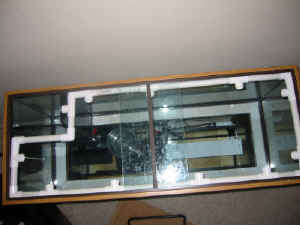
Closing The Loop! Top o' the day WWM crew! <Good morning to you! Scott F. with you today!> Anthony, after kicking back & checking/contemplating the plumbing design pictured on my new 75g/70g sump, and reading the Book of Coral Propagation, in your experience, would the pipe going up the center/back of the tank be more useful by "completing" the loop, siliconing the PVC under the lip behind the trim, with a few flexible, ball socket outputs in the loop and running it on a separate pump (Mag 7)? <First of all, I must say that I like your work! Very nicely executed! As a fan of Anthony's idea of the manifold, my advice is to complete the loop! It's such a cool idea, and a lot easier to construct than many of the other circulation ideas of seen discussed... Go for it!> As it is, a Mag 12 is intended to flow up from sump, thru the 1.5"id into the three way, two SCWD wavemakers & the 1/2" adjustable input, up the back of tank. I wanted an effective circulation in tank, with current behind the future aquascape. <It will be!> It seems it would be easy to complete the loop that I didn't realize I was starting to begin with, or would you leave it as is? Well wishes for the entire crew. Thanks, as always, Stormbringer <Once again- I'd close the loop! You've done some great planning and great execution, so just finish it off and you're perfect! Good luck! Regards, Scott F.> Microbubbles...Big Trouble! Hello <Hi there! Scott F. with you today!> I recently added a downstream refugium to my sump for my 75 gal reef ready tank. I realize I need to remove the mechanical filter items like all of my sponges so that beneficial copepods & such can pass through to my display tank. I mainly used these sponges in the past to keep out the micro bubbles from entering my display tank. I also added 2 baffles and one bubbles trap which is about 2 inches off the bottom of my sump and 2 inches above the water level in my sump. This helped but I am still getting a ton of micro bubbles in the display. What can I do correct this? <A couple of thoughts here: First, I'd search your plumbing for the obvious...any loose seals or connections that are not 100% airtight. Even the smaller break in seal can admit air, which causes microbubbles. Another step that works is to employ large chunks of live rock (which is quite porous) to help "catch" some of the stray bubbles, or you can use a dense growth of prolific and beneficial macroalgae, such as Chaetomorpha, which forms a dense, yet permeable matrix, allowing some microfauna through, but perhaps trapping bubbles in the process.> I have tried adjusting the pvc pipe where the water enters the sump so it is below the water level, above the water level and I even tried drilling a couple of holes in the pvc pipe to let out air before in dumps into the sump but I continue to get a lot of bubbles. I should mention , when the water comes from the display tank, it comes down & enters pool hose which links directly to some pvc pipe in my sump. The pool hose dips in the middle (from the wait of the water) where it suspended in the air and then rises about 4 inches because the hose needs to connect to the pvc connection on my sump. This pool hose is constantly shaky from the force of water flowing thru it but also it gurgles & hick-ups quite a bit. I think this is from to much air getting caught in it. <Sounds like it...Exactly> I am just not sure why this is happening. I hope I am explaining myself clearly. Do you think this is the cause of my problem? <A very good possibility> Do I need to find a way level off the hose (eliminate the dip) to make the water not rise & essentially flow smoother? I am not sure if this will eliminate the gurgling/air in the hose or not. <I think that this adjustment is certainly worth the experiment on your part...try it and see> I also have a question about mushrooms. I recently purchased a mushroom rock that has about 10-15 mushrooms on it. How can I transfer these mushrooms to my main rock in the display tank. Is it best to break this rock into several small pieces & glue them to the rock in the display tank? <If you don't want them all on one rock-yes> I don't think I should pry them off the rock they are currently attached to. <No, you shouldn't> Is there better way to get them transferred/attached to the large piece of rock in my tank? Please let me know- thanks for your time -Anj <I like the idea of carefully chipping off small pieces of rock on which the 'shrooms are attached, then carefully gluing the rock in place where you want them on your reefscape. Good luck! Regards, Scott F.> Micro bubbles from closed loop 10/7/03 Dear Reefers, <I prefer it in brownies instead, if you must know. Mmmmm... brownies> Firstly a big thank you to Anthony and Robert ( not to mention Messrs Gonzalez ) <ahhh, Messr. and Madame Gonzalez <G>.> for penning Reef Invertebrates. I have just finished reading, and it is a 5 star book with no equal in its field. <an outstanding compliment taken with thanks. Please do tell a friend :)> Please help me with a problem relating to micro bubbles. I am nearly there with my set up but have hit a dead stop again and am running out of steam. <microbubbles are a common problem... if you have the energy, it has be writ about at great length in the archives here at wetwebmedia.com> I have a 90 US Gal tank with a 7" square corner overflow box, bottom drilled to take one 1" and one 3/4" connector. The 1" drains a modified ( to optimize siphon effect) Durso which comfortably balances an Aquamedic Ocean Runner 6500 ( i.e. 1,670 USG/h nominal - excellent pump) from the second of 2 daisy chained sumps. The return is via 1" hose teeing to a 1/2" pipe work loop round the top of the tank with 8 x 1/2" mid water nozzles and 2 bottom spray bars. This all works very well, but there is not quite enough turbulence. In your pbfaq9mar.htm - item headed Closed Loop System - you advise in response to a question " Would it be possible to place the intake [for a closed loop circulation pump] in the overflow box" answer "< Ideal as long as the box itself can handle the flow>". I have therefore followed this advice and plumbed the 3/4" overflow box connector ( with a short stub and inlet screen inside box ) via 1" hose to a Dupla Turbo 5A pump ( 82w, 620 USG/h nominal, 2600 rpm, 14 feet max head ) and fed this into the other end of the same return loop. <interesting/good> This now provides the necessary turbulence/circulation, as far as I can tell. However, the Dupla is creating micro bubbles - so I have come to a dead stop again. <understood... the (overflow) well is too shallow and we need to baffle the bubbles. It could be as simple as installing an inline coarse prefilter (like a tube cartridge with a foam block) and only need to compromise with the additional servicing (monthly/quarterly?) of this media> The Dupla is the source as I can hear the characteristic snapping sound from the impeller housing, and no it's not venturi effect. <understood> Unfortunately, the overflow box is black glass, so I cannot see whether bubbles are being sucked down into the inlet. <seems likely... else it is an aspirating breach (pinhole) on the pump housing or intake plumbing (unlikely)> The overflow seems to work fine and I have tried adjusting the Durso to bring the box water level up to the tank level and avoid bubbles being created, and I have covered the outlet with a 2" dia pipe and cap, to draw water from nearer the bottom, but with no effect. Is it possible to pull bubble free water from the bottom of my overflow box handling this flow rate? <yes... as described above with a coarse prefilter... Or... you can even plumb the prefilter on the outflow side of it all (in a place that is easier to service)> The Dupla only has a 3/4" inlet connector. I have used 1" hose (4 feet) to connect to the box outlet, with one 90 degree bend. Which is the more likely cause of the bubbles, the pump cavitating, or bubbles entering from the overflow box? <in this case... I'll put my money on overflow influx> If the former is it worth trying a restriction valve on the return hose from the Dupla? <an inexpensive option to try indeed... use a gate valve if you do> If the latter, is it practical to make an in line vessel to vent any bubbles without losing the head - i.e. by venting at tank level? <complicated... some flow will be lost indeed as per above res> If neither is possible, do I have to run the 3/4" outlet into the sump and use a second sump outlet to feed the Dupla? <not ideal> This would mean pumping against a 4 foot head, which I was specifically trying to avoid by using a closed loop. Given the choice, is pumping against a 4 foot head more or less efficient than restricting the output in a closed loop? <I cannot say without seeing/working with it> Finally, in general is there a better way to set up a circulation loop using an external pump to enhance flow/turbulence but at the same time avoiding micro bubbles or risk to the inhabitants from intakes? Many thanks, Eric Brightwell FZSL <the simple closed loop manifold works well and easily with properly sized sumps. The problem for most aquarists is that their sumps, overflows and refugiums alike are grossly undersized. Public aquariums for all of their success with fish longevity can ascribe much of it to stability in the standard of having as much water behind the scenes as on display. Does this mean that aquarists need a 100 gall sump for their 100 gallon tank - no. But it does mean that a 20 gallon sump is too small/turbulent. In this case, your problem is not that your overflow box is too small/turbulent (or rather... it is a by-product of the real problem... which is that the sump is not large enough and/or the drilled overflow holes are not large/numerous enough to handle a single and proper large return pump to single power the manifold. It sounds like the modifications you'll need to make here though are minor. No worries! Anthony> Closed return manifold bubbles 9/29/03 Ok, I understand that micro bubbles are from the pump eating air or small leaks in the pipe joins. Where would large bubbles come from in a closed manifold? All of the tees are blowing 1-5mm bubbles into the water column of my tank. The tee to nozzle join is sealed with silicone and I have double checked all of the other plumbing joints. Dave Lockwood <there are a couple of possibilities... the most likely being a venturi like action from outlets placed just slightly above the water surface (or half submerged). If instead your outlets are all submerged but you are still getting bubbles... there is clearly a leak in the plumbing somewhere that is aspirating air (pinhole in fittings, pump housing, etc). Do consider. Best regards, Anthony>
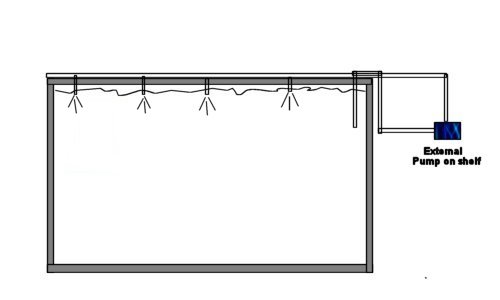
Return Pumps and manifold 7/1/03 Hiya, <howdy> I was talking to Anthony the other day about making a spray bar for my 80 gln reef. He suggested I put in a bigger pump and basically an adjustable spray bar for the return coming from my sump. this would eliminate some power heads and heat from my system and greatly improve circulation. <correcto> I was thinking of using one of the new Tunze wave maker pumps to do this. The general consensus is this will not work, (you can't use a wave maker for your return is all I hear) with nothing substantial to back up the argument. <actually... the Tunze streamer does not need to be harnessed to a manifold... quite competent in its own right> I can not see a reason why it wouldn't. <no need> What I can see is maybe the pump would have a load that it wasn't designed for which in turn will shorten it's life span. My system is low tech and all my skimmer really does is oxygenate my water. So having a surge through my in tank sump won't bother much. These are pricey pumps, and it will take some creative work to connect to any kind of plumbing, so I want as much input as I can get before I go shell out $300 to get one. Thank You Steve <the Tunze models are really outstanding and turnkey... the closed loop manifold we chatted about at DMS is rather a DIY project for a large return pump from the sump> P.S. Tell Bob and Anthony the DMS says thank you for the awesome evening. <we had a great time and met really nice folks like yourself! A blast. Kind regards, Anthony> Closed loop flow rate I posted a similar question on the chat forum and the responses spawned a new question. I wanted to know how much head pressure loss I have with my current closed loop wave-making system with a SQWD and the best advice anyone could give was that each 90-degree elbow adds about 1 foot of head pressure. This information is consistent with the ReefCentral calculator, <It isn't. Just go to RC and enter the params.> but if this is accurate I should be getting no flow out of my SQWD at all. <Yep, it assumes you are getting the right info from the chat....best to just go to RC. In your case, friction factor/pipe size, horizontal length, number of ells.> With 1 foot of head pressure, 5 elbows and 1 SQWD that's 7 feet of head pressure. According to the manufacturers specs I should be getting no flow out of my CAP2200 at that amount of head (says N/A). Do you know what these calculations are based on? Are they "calculations" or are they anecdotal? <No, they are real, but you can't assume one part of a complex equation and make it a simple calculation.> Needless to say, I am getting flow out of the returns... not as much as directly out of the pump, but seems to be at least as much as a powerhead... may upgrade anyway though. Jeremy <Of course! Best to engineer a system to move the volume of water you need, than to just upgrade pump. Plumbing size may be a factor as well. Better to look at all the parts.... Craig> Closed loop system I am in the process of building a 1" PVC loop with ? tees that have 90 degree swivels(10 of these) that will mount on top of my 180 gallon reef tank. I plan on using a external pump some where in the 2000 gph range with a ball valve to control flow (any suggestions on type?). <Iwasaki's are popular> This pump will need to take the water directly from the main tank since my overflows are all ready maxed and the return from the sump is pumped back into main display. I would like to hide the intake that will be used to draw the water for the external pump (also protect my livestock from the intake). Would it be possible in your opinion to place the intake in one of the overflow boxes? <Ideal as long as the box itself can handle the flow.> Or would the water be pulled out faster than it would be replaced. <Depends on flow *now* and how big the box is, what it's designed for.> My other thought is to some how build a protective box around the intake and hide it with rock? Your thoughts and opinions are always helpful and are appreciated. <You could do that or perhaps split the intake between two overflow boxes? Complicates plumbing a bit, but might be better for box capacity. The other choice is larger overflows....not much help, huh?> Thanks, Mike Winston <Hope this is useful! Craig> - Closed Loop Plumbing, sans image - Hi Guys, <Hello, JasonC here...> Attached is a rather silly bitmap (Paint sucks) depicting my plans for a closed loop circulation system for a 75 gallon reef tank I'm planning. <I hate to say it, but for whatever reason the image didn't make it here in a form that I can open... perhaps the Internet goblins got it.> The pump will be an Iwaki WMD40RXLT rated at 1200 gph at 4' of head. I should get a few more gph since I'll be using it at about 2.5 ' of head. But with all the plumbing..... The PVC all around will be 1", modified at the tees to 0.75" to accommodate the flares and SCWD's. <I'm not sure what an SCWD is?!> The outlets will be setup at different angles. What are your thoughts on this arrangement? <Without the image and a little more explanation, I'm afraid I don't have many thoughts...> Also, will 2 SCWD's be sufficient (at ~$50 each) to randomize/break up the flow? <Are these like Sea Swirls?> Thanks for your input, you guys are great! Mike <Please do try again, perhaps send yourself a copy first to make sure the image is making it through. Cheers, J -- > Overflow- undersized as usual Quick question I keep forgetting to ask. I have 2 1.5" bulkheads drilled into the back corners of my 75gallon tank. I am wanting to surface skim by putting 90 degree elbow attached to the bulkhead in the tank. (also help in the event of power failure/siphon) But... I can not get rid of the water swirling/sucking into the elbow. Looks like a tornado sucking into the 90 elbow and in sounds terrible. Any suggestion on what I can try? Thanks Bryan <this is a common problem bud... the overflows are simply too small in size or number. A common problem. What is happening is that your "oversized pump" (really not too big... just too much for the lack of holes/size) is pumping faster than they can gravity overflow and a siphon is being created (the sucking noise). Put a gate valve on the outflow of the pump and slowly restrict its volume returned topside until the noise stops. How ironic... you'll have to restrict the pump and then add power heads in the main tank to compensate for the lack of water flow (adding heat, electricity, eyesore, etc). Bummer dude... but a common problem from bad advice and poor overflow design by the manufacturers of tanks. Best regards, Anthony> Powerheads v. Closed Loop This is in reference to 180 gallon reef tank with sump in the basement. Possibilities for moving water include: 1.) Two pumps in the basement returning water to the tank and running in series (or parallel?) 2.) One pump in the basement returning water from the sump to the tank, and 4 powerheads in the tank (maybe with a wavemaker) 3.) One pump in the basement returning water from the sump to the tank, and a closed loop (circulation only) with the pump sitting upstairs underneath the tank. I don't see the advantage to option #1, i.e., having two pumps downstairs pulling water from the sump and running in series. By "in series" (or parallel?), I understand this to mean that if one pump goes out the other one would still carry the job (pulling water through the sump and the skimmer), albeit at reduced capacity. But why do it in series? <I prefer separate runs.> If you're that concerned about the pump failing, it would probably be more efficient and cheaper in the long run just to have a spare pump. <I am an aquarium maintenance professional that works out of his home, so I see things from that perspective. While for you and your own tank, you maybe perfectly happy with a spare pump sitting unused in the house. I don't want any more stuff than I already have to have around and I doubt any of my customers would want one either. I try to consider every possible catastrophe and design systems so that no matter what goes wrong they will continue to function and not flood. It is a liability issue for me. Also, if a pump were to fail, with two pumps, I can get to replacing the broken one when I have time. If there is only one main pump, I would have to drop every to fix it immediately.> Option #3 seems better than #2. <Much better!> I perceive the advantages to using a closed loop as follow: Aesthetics (no unsightly equipment in tank). And less heat in the tank. In favor of using powerhead, I saw the following idea to conceal equipment in the tank: do not make the rear center overflow flush with the back of the tank, rather set it forward 6" or so and hide the equipment behind the overflow. This also has the benefit of flow coming into the overflow from all four sides. Your thoughts on the above issue would be most appreciated. Aryeh L. Benjamin <While closed loop circulation is very popular, I routinely hear of individuals with a mobile invertebrate (anemones and snails are the most common) being turned into chowder enough that I won't use one. I prefer to get my 10-20 times turnover through overflows and return pumps. -Steven Pro> Closed Loop Configuration Hey there- <Good evening- Scott F. here tonight!> My little giant pump on my 125 is rated at about 1300 gallons per hour. I currently have just two outlets with ball and socket flex tubing. Would you recommend that I just place a couple powerheads in the tank or possibly use a mag drive pump plumbed from the 3/4" hole in the overflow box (normally used for return from sump) for a closed loop and plumb the main return from the sump behind and over the tank instead of up through the overflow box. The closed loop return lines would also run behind and then into the tank. The only problem is that I don't know if the all glass overflows can handle much more flow through them unless the slits at the top of boxes were widened. The other option would be to plumb an intake in front of the overflow box and then down through the box as Richard Durso has described. I hope all of this isn't to confusing. Thanks for your help. Josh <Well, Josh-you do have a variety of options for the closed loop. The most common configurations that I have seen simply have intakes in bulkhead fittings installed into the side of the tank, never having anything to do with the overflow box(es). Richard Durso's idea is good, too- he has a nice idea and makes one heck of a good standpipe, too! I guess my recommendation would be to do whichever configuration you are most comfortable with. And, do check with the people at All Glass regarding the flow rates that their overflows can handle...Sorry I couldn't be more specific-like I said, so many ways to accomplish the same thing! Good luck Scott F.> Closed loop? Hey there- I have a 125 gallon reef tank with mixed LPS, SPS, and soft corals. I have a little giant 4mdqxsc running from my sump to the tank and to the chiller. It seems that I do not have enough flow in the tank because there is a lot of settled detritus on the rocks. <Maybe or maybe not directed usefully? What is the flow rate of your pump?> I want to set up a closed loop system. I am not sure how to go about it without drilling the tank. Can I just use pvc or vinyl tubing to drain water? Can I use a mag drive pump? What would be your recommended setup without drilling the tank or without using an overflow box, there is not much clearance behind the tank. Thanks for your help. Josh <There are two ways without drilling your tank Josh. One, you put the pump or powerheads in your tank, or two you use a remote pump with a protected inlet in the tank. The problem with this idea is the system must be primed and may lose a prime with a power outage and run the pump dry....not good. Drilled overflows are the best way to go if you don't want pumps in the tank. Craig>
Tank move, lighting choices and closed loops 2/3/05 First off, I'm amazed at the info I've learned from streaming through all these pages. Thank you ahead of time again. <Glad you have benefited!> I am moving to Florida and must break my 180g down. Possibly several months before I will be able to restart. Unfortunately will not be able to save LR but can reseed it. <If you can't save the live rock, please sell it or give it away. Once it dries, I would not suggest trying to re-use it. It will be full of organic matter from all of the bacteria and tiny critters that died upon drying.> Current FOWLR, next set-up to be reef (some SPS, Mostly LPS, 1 xenia, 1 clam). Tank is 72x24x24. After the sandbed, the water column will be 20". Currently, I am looking at the Coralife Aqualight Pro HQI 3x150W DE HQI, 4x96 Actinic. Obviously, I will replace MH lamps w/Aqualine bulbs. Will this offer enough light if specimens placed at appropriate heights? Any good or bad remarks\reviews for this product? Or should I purchase another manufacturer? <My experience with Coralife lighting products is mixed. If you are going to replace the lamps with Aqualine lamps anyway, why not look at AquaMedic fixtures? They have a better reputation for quality and the lamps you want will be included in the (admittedly much higher) price. Aquamedic produces fixtures with PC's or T-5's.> I plan on adding large refugium and closed-loop water flow to hit around 20x turnover, but having some problems with schematics currently, any thoughts? I want to plan ahead. <Sounds good, but I am not sure what to suggest without a little more to go on. From the cuff... Be sure that the inlets to your closed loop diffuse the suction effectively (no sucking up fishies!) and use as few T's and elbows as possible.> Any thoughts on placing my skimmer AquaC EV240 outside my sump (changing water levels in sump tend to really play havoc-awesome skimmer though)? <You could place it outside of the sump, or simply elevate it so that the outlet will always be higher than the water level in the sump.> You have always been so helpful. I print out a ream of FAQ and just read and read, then reverse paper and print on other side-another 2 inch stack of FAQ. Wife thinks I'm crazy. Thanks <Glad to help! All of our spouses think we're crazy! Best Regards. AdamC.> Closed-loop circulation Hello, all! <Chad> I started a 75G FOWLR aquarium. It's started, cycled, and is now home to all my fish friends; a yellow-tailed damsel and a tomato clown. It has about 90 lbs live rock and 4-5" of aragonite sugar-sized substrate. Problem is that the water circulation flat-out sucks. Dangerously so. The only circulation comes from an Eheim 2026. (~250GPH) <Yikes, not much> In a week I should have the D&D Marine Terminator driven by a Pentair Quiet One 3000, which I _think_ should add an extra 250GPH. Then, finally, I've ordered an Eheim 1262, which at 5 feet, should boost another 500GPH for a total of 1000. Is that about right for a FOWLR? Too much/too little? <About right> But, here's my main problem: I don't know how I'm going to rig up this Eheim 1262 pump. I like the idea of closed loop circulation, but, it would be very difficult to work around the intake/return of the Eheim 2026 and the D&D Terminator. So, what's the trick? make the "loop" smaller as to leave more space around the perimeter of the tank? Or, can I, without a sump, hack out some sort of plumbing contraption such that all of my devices share a common intake and return? <They could share common intakes, discharges... but I would not do this... for the sake of efficiency as well as the ultimate probability of wanting, having to take one pump/filter off-line> The tank does not have a sump, nor is it drilled, and it's glass. <All can/could be arranged "over the top" with rigid and flexible tubing (connectors)... Eheim makes a bunch of these... and they're great, though pricey. Some of the online etailers (I think MarineDepot and Dr.s Foster & Smith (.coms) carry these> Also, I'm curious as to how I'd feed the water to the 1262. It's intake is 25/34MM, which is 1". I've not seen any 1" "intake strainers," only 5/8". What's the best way to get water to the pump? <See the Eheim site, the etailers I list... there are connectors made, available for this... factory made> An finally, is, in my case, a closed circulation system even the best way to harness the extra circulation potential of the 1262? Thanks so very much as always! - Chad <IMO/E, yes. Bob Fenner> - Tank Modifications, Follow-up - Thanks for the prompt response. <My pleasure.> Just one point of clarification. <Sure.> I meant to say that I would be using the shelf design as outlined in the book. My concern was is it possible to drill the holes needed centered on the back wall, 2" down from the top and sufficient distance from one another, and have this shelf built to span only what was needed to cover those drains (I.E. 12" - 16" of shelf covering the drains along the back wall)? <Should work fine, yes.> Then I would have space at either side of the shelf for returns, be it Sea Swirls or whatever. What do you think? <Yup, makes sense and will allow for the Sea Swirls.> Lastly, how far down from the bottom of the bulkheads can I end the shelf? <Likely right below the bottom of the flange.> In other words, if my drains are cut at 2" - 4" at center and the bulkhead bottoms are at 3" - 5", can I end the shelf just below the bulks? <I think so, sure.> Will this hamper water volume/flow in any way? <It may, but the beauty of silicone is that you can remove, re-glue if necessary. You are going to do a full set of leak tests before you fill with saltwater, yes?> Thanks so much for al of your help!! <Again, my pleasure.> P.S. Do you know any tank drillers in Northern NJ? <I don't - you should check on some of the forums, I'm sure you'll find someone in your area capable of doing this.> Thanks again!! <Cheers, J -- > Return spray bar Hi, <Hello> I've been reading the FAQs and searching setup info via google. However, I can't seem to find a good answer to my problem. I'm building a new tank - mainly planning to keep 2 or 3 fish, live rock, some soft corals, anemone and a clown fish. The tank size is a room divider (visible both sides) with dimensions of 60 x 18 x 30 high. <Quite high/tall for the stated length... and likely height from the floor... if not too late, I encourage you to consider lowering this to 24 inches... much easier to get your arms into as well...> I've got a Dolphin 2100 plumbed from the sump to the tank using a 1" which is teed to two 3/4" hoses. The pump is just under 6 ft below the top of the aquarium. So, the problem is that the returns from the 3/4" hoses don't generate enough current around the tank with 3/4 inch 45 degree pvc outlets at the top of the tank (on opposite ends). <Good descriptions> Therefore, I connected the 3/4" into a couple of spray bars. One of the spray bars is near the surface. The other is actually plumbed from the opposite end towards the center to three vertical spray bars that spray from the bottom of the tank (I figured this was better since I plan to stock the tank sparingly and want the flow to be at the bottom and push water up towards the overflow.) Illustration: 3/4" PVC I I I I I l l 1/2" PVC ------------ l-----------l 1/2" PVC starts from elbow The question I have is ... how do I know if I have too many holes or not enough? <Mmm, only from a practical application... i.e. trial and hopefully no/little error> I've drilled a bunch of omni-directional holes in the 1/2" PVC. (The 3/4" holes point towards the center of the tank.) I don't know if I drilled too many or not enough. <Better to start with just a few, drill a few more later...> I am trying to maximize the water flow into the tank while delivering the flow closer to where it's needed. In calculating the area of the holes, it looks like I've drilled holes equivalent to 48% of the 1" hose cross sectional area (coming from the pump). I'm hoping that this will help create good velocity out of the 3/32" holes. Thanks for the help! <You raise a few very good questions... common issues with plumbing, pumping of captive aquatic systems... most aquarium pumps are designed/engineered to produce "moderate" volumes at relatively "low" (compared with swimming pool pumps let's say) head/pressure... Going through turns, reductions (would be better to tee off, leave as much plumbing as the discharge diameter on your volute (1")), holes... There are, as you will likely agree, always "trade-offs" in life... and in this microcosm/problem... I would plan on possibly adding internal pump/s, powerheads (some are MUCH better than others... some input exists on WWM re) to bolster your circulation if you find/feel it deficient here. Bob Fenner> Re: return spray bar Hi Bob, <Ken> Well, after doing some experimenting, I followed your suggestion and removed the fancy stuff and just terminated the returns at the top of the aquarium with 45 degree elbows on opposite sides of the tank. I get a significantly higher amount of volume/flow through this instead of all of the fancy piping. I think I learned the value of concentrating on flow instead of velocity. Thanks! Ken <Life is a series of compromises... the trade off in flow versus pressure appears to be a mini-lesson. Bob Fenner> - Plumbing a Closed Loop - Hi good guys. I am now plumbing a closed loop. The pump I am using is a Dolphin Amp Master 2100 and has a 1 1/2" inlet. I planning on drilling the back of the tank for the inlet near the top, and in the center. My dilemma is because of the sucking power of this pump can any animals get sucked on the screen on the wet side? <Certainly.> I thought maybe would make some sort of Tee with 1 1/2" to two 1". I will add two screen on those and hope it wont be as much sucking power. I also would like to know if I can protect the area around those screens better so no animals gets caught? <There is an almost-flat intake screen made for 1.5" bulkheads which is designed to distribute the suction across a larger surface area and helps prevent animals from getting injured. I would go to great lengths to seek one of these out.> Perhaps I can build some kind of box with holes around the intakes? <Or surround with live rock.> Help! Thanks for all the great advise Sincerely Stephan <Cheers, J -- > Closed loop manifold Hey Gurus! <Stephan> I was wondering if you tell me where, in the back of the tank, where should I put a bulkhead intake for a closed loop powering a manifold? Top, bottom, middle? <Near the top usually... for a few reasons... to ensure more complete circulation, help with removing surface "scum", and sometimes very importantly, should the plumbing fail, to disallow the tank to drain completely> I am also worried about the intake sucking precious animals like snails and such. The bulkhead is 1 1/2". Can I split it to two 1" instead? <You can... but this may not allow sufficient intake volume/flow... remember, the surface area of a circle formula? Pi R squared? How much larger is one 1 1/2" fitting than two 1"? Better to have two fittings joined or leading separately back though...> Can anything be rigged like some kind of strainer box covering the hole(s)? <Yes... these can be purchased or made... like lengths of capped pipe with cut perpendicular openings...> Thanks yet again Stephan <Welcome. Bob Fenner> Water flow closed loop manifold 10/31/04 Hi guys/gals, <howdy> I have another question pending, but here's a new one. I just installed and ran my closed loop (to replace powerheads) in my 90 gal reef. The pump is a mag-drive 1800 gph running out of 7 outlets in the tank. Some of outlets have decent flow- some barely any. <the manifold is under driven here... tis the problem. even if you get the full 1800 gph without any head/resistance (not happening), that only gives you a little over 200 gph per outlet... that is staggeringly low by even tiny powerhead scale. More flow or less nozzles (hopefully not) will do the trick here> I'm now thinking of splitting the loop into 2 loops, and adding another pump. Is this too much flow? <the latter is the way to go... and no, my friend... you are not even remotely approaching what these animals get on the reef> Will the tiny bubbles jetting out soon disappear? <don't know... with no info, I cannot say where they are coming from. Do a keyword search of our archives for "air bubbles" and see many explanations and solutions. If you don't actually have air in the sump visibly being aspirated by the pump... then you may have a pinhole leak in your manifold somewhere> I want to create random turbulence, but my dog can drool faster than some of the current outlets. <the pump is sized too small my friend... no need to complicate/double the loop> Any pointers would be appreciated. <where slippers around your dog> Thank you James P <kindly, Anthony :)> Plumbing 9/30/04 Dear The Gang at WWM, <howdy> Let me first start off by saying thanks for the amazing service that you and the WWM provide. It’s a wonderful and invaluable resource of information. <thanks kindly! Please do tell a friend... hmmm, and recruit another volunteer to help us in the process <G>> I often find myself up till 2 or 3 in the morning trying to learn as much as I can about having a Reef Aquarium. I was reading your article by Anthony Calfo entitled Plumbing A Water Return Manifold – “goodbye powerheads!”. I had a similar idea and was wondering if it would be more beneficial to make the manifold going around the back of the aquarium? <whatever is most convenient for your physical placement/layout of the aquarium> By just adding a second 90 at the top and have it run along the back of the aquarium, you can have two sets of return jets in the back corner of the tank, at three different levels in your aquarium. And the bottom of the manifold would just be straight pipe with 30 - 1/8” holes in it to aerate the substrate and behind the live rock. <the later being interesting but not necessary when you have adequate random turbulent water flow overall... and most importantly, have not made the mistake of building your reefscape against (leaning) any wall like so many folks do against the back of the tank (bad long term)> And would it be possible to incorporate a 30-gallon refugium in the system? <certainly> If so can you direct me in the right direction to where I can find out the best way of doing that? <we have an extensive refugium chapter in our latest book "Reef Invertebrates" by Calfo and Fenner... and have some great archived FAQs on refugia> Thank you so much for your assistance. Joe Othman <best regards! Anthony> Internal Horizontal Overflow? 9/24/04 I have been reading the FAQ's on the internal horizontal overflow design by Anthony <its not much of an original idea, per se... but popularized with my "book of Coral Propagation" FWIW... I've used it for many years as have others. Its tidy and quiet... can be easily hidden too (encrusting inverts on an extended floor to the box> and would like to try this idea out on my new acrylic tank (approx. 140 gal). My tank measures 48" wide X 24" high X 28" deep. I have not had the overflow built or drilled yet as I want to make absolutely sure that they are located in the right place before I have them built/drilled. I was initially going to just build the standard internal overflow, but this new idea of the horizontal overflow has me intrigued. <yes... and besides sparing that dreadful and noisy floor-drilled tower... a horizontal box stretches thin surface overflow water for improved skimmer performance> I was planning on keeping some hardy soft corals and some reef safe fish, nothing extravagant yet. I was planning on doing all live rock filtration with a AquaC EV-180 protein skimmer, <excellent> small 15 gal refugium with macro algae (I don't have a lot of room in my stand), and a 6" deep sand bed (both in the refugium and main display). <all good> For lighting, I was going to either go all VHO's or metal halides with PC's. <pick your corals (a specific list by species) before you pick your lights... only then will you know what to opt for based on their actual needs> By the way, for a hood design how far should the lights be from the top of the acrylic tank and should I cover the two holes in the top acrylic plate/brace that give access for feeding, etc. <fluorescents should be no more than 3" off the surface... but halides need to be minimum 6-9"... higher if higher wattage MH lamps> My question is actually about the overflow and the manifold. I believe I read that about 2" from the top and sides for the holes (equally spaced) for the drain, and same for the return on the opposite end of the tank. Now, I have a Pan World 50PX-X (comparable to the Iwaki 30 RLXT) and want to maximize flow. What would you suggest based upon my setup would be the best design of the horizontal overflow as far as spacing, hole size and number of holes for the drain and return, <as long as you can comfortably and practically make it... the longer bos spreads surface over flow water thinner/better> and what would be the best design for the manifold. <little to worry about here... work around any structures needed... but essentially form a closed loop circuit fed by one supply tee for improved distribution of flow> Also, if the holes are about 2" from the top of the tank, is this going to adequately "skim" the surface of the water to provide maximum efficiency for the skimmer? <depends... if the nutrient load is high... this will work fine. But for hardcore reefs with good nutrient export, you will notice the benefit of the horizontal overflow more so here> Just though I'd ask plenty of questions before I have my tank drilled past the point of no return. Also, are the bulkheads just open on the inside of tank since there isn't a "pre-filter box" or do I need to in close the holes with some sort of "box"? <just strainers on the interior bulkheads> I love your site and am glad you guys are here to help educate us. Mahalo, Chris <thanks kindly... best of luck/Life to you. Anthony> Closed loop manifold 9/24/04 Hi Anthony. Can I build manifold as main return, or do I need to run it separately? Thank you <either way is fine my friend... some folks power it by their return pump... others use a submersible pump inside the tank to power it regardless of a sump pump or not :) kindly, Anthony> Questions about plumbing a "hard" water return line 9/20/04 I have read Mr. Calfo's article entitled "Plumbing a Water Return Manifold" and have built one. <neato> Should I glue the pieces together, with the obvious exemptions being the tee's that need to swivel? <Correct... glue the closed loop and its downward angled tees... but leave the nipples/stems and elbows/tees stuck into the outlet tees unglued> It is made out of 3/4'' pvc and was worried about pvc glue leeching chemicals into the tank once it is in use. <no worries... is fine once cured> Also, I had a question about whether or not to make it one piece, a sort of "closed loop." <Hmmm... you simply must if your tees are open and not regulated with valves on each one. The closed loop circle is critical for a manifold to build/maintain more equal pressure> Currently, it is in two pieces, to allow for the SCWD wavemaker to be able to blast each side independently, but I am wondering if I should make the manifold all one piece to make the flow more "balanced" overall. <exactly correct> Also, about how many outlets should there be? <depends on the needs of the inhabitants in the tank. I'd guess a tank this size will need/want about 4-6 here too or more> I know the article recommends 4 to 6, but currently, mine has 11 outlets fitted with 1/2'' Loc-Line adapters, to better direct the flow of each outflow. The return pump is a Pond Master 12b that should be running at about 1000 gph after calculating head loss. <wow... this is staggeringly low flow. You will simply be disappointed how little flow 1000GPH is through 11 outlets... a literal trickle of less than 100 gph per outlet> The total water volume is about 75 gallons, if that helps. <if this is a reef... I'd love to see at least 1500 gph of circulation in this loop. With 4-6 outlets... they would have reasonably good strength> I would like to create a suitable habitat for some easier to keep, colorful corals and other invertebrates (zoanthids, starburst polyps, a clam or two, perhaps a BTA, etc.) if at all possible. Any suggestions for some "guinea-pig" species of the above mentioned things to see how well they do? <all fine... but please resist mixing any anemones (motile) in an unnatural mix with corals (sessile). Its a problem for most in the long term. We answer enough sad queries from problems in such mixes> I hope these questions make sense to you, let me know if anything needs clarification, I can also send pictures if you would like. Thank you very much for your time. Jeremy Weaver <best regards, Anthony> - Back Wall Overflow - Hello to all... I am planning on upgrading from a 65 gal reef to a 125 gal. The tank I'm looking at is not drilled but I will be having it drilled. I would like to plan for 2 or 3 1.5" I.D. bulkheads possibly along the top back wall. I am curious to know further on Anthony's overflow design if glass should be used or could plexi-glass work as well? <Either would be fine.> And if plexi-glass would work, what type of adhesive is best for this? <For regular glass or acrylic materials, 100% silicone adhesive made for assembling tanks is best.> Surfs Up! -Jason <Cheers, J -- > Manifold flow questions 4/20/04 tank is 75 gal tall set up as reef tank. it has 1 800gph pump on a closed loop behind live rock, <do be careful that the pump is accessible/serviceable> (tall tank is not very deep from front to back so rocks are touching the back wall). <this is a habit to be avoided with strategic rockscaping (stitching, shelves, arches, etc> overflow has been enlarged slightly to 1 1/2 in and the return pump is a velocity t4 returning to tank thru a thing called a "SQUID" which diverts the flow between 2 - 3/4 inch returns that each have 2 - 1/2 inch lock line nozzles. No other circulation pumps. The flow is "OK" but not as good as I would like. <agreed... this is only about 10X and the most successful reef tanks have closer to 20 X. Paletta cites some of the best in the world as having upwards of 40X water flow (SPS tanks)> I read the articles about the manifold around the top edge of the tank with 6 or so outlets and the 45 degree fittings used as nozzles and it sounds like it should work. except that many on you site warn against "laminar flow" would I not just have 6 small "laminar flow" problems with the manifold? <no my friend... multiple swiveling, adjustable and converging outlets produce random turbulent flow (ideal). The flow coming out of your unaltered return pump or any given powerhead is simply laminar flow> With 6 outlets running all the time the flow would be reduced quite a bit but it still would be in a fixed direction, is this acceptable and would the water flow be improved enough to be worth the effort. <yes, a tremendous improvement> also what do you think of the "SQUID" things , it does what it says but I think it reduces the flow quite a bit. <they are quite nice> thanks for any comments. Carson Crenshaw <best regards, Anthony> - Two Pumps, One Pipe - Hello all, Quick question for ya. Is it possible to run two pumps on the same closed system return manifold (and two separate intakes)? <It is possible, yes.> Is there a special valve that I would need in order to prevent troubles if one pump failed? <I have a better question... how would the 'valve' know a pump had failed? You can put check valves on each pump, would prevent one pump from flowing into the other.> I currently have a 90 gallon reef with two Hagen 802 power heads and an Eheim 1260 return producing the only current. As I have done more reading on your site I have come to realize that this is not sufficient circulation. <More would be better, yes.> I would also like to get the power heads out of the tank due to heat concerns and therefore am planning on building a water return manifold. I would like to use two Gen-x pumps because it would give me some security in case one pump fails and because it looks like they would produce more circulation at fewer watts than any single larger pump would. <Why not split the manifold in half... half a manifold for each pump.> I hope I included all the info you need. You are all doing an awesome job and I'm sure there are literally millions of captive marine animals all over the world that have benefited from your advise. Thanks. - Chad Calgary, Canada. <Cheers, J -- > - Return Manifold Problems - Terima kasih! (thank you in Malay). <My pleasure.> Just discovered a problem with the manifold return design (per your website recommendation), that the return water is quite weak (powered buy a 4880 l/hour return pump). I made 7 output/nozzles in the manifold return. Shall I reduce the number of nozzles? <Hmm... probably only part of the problem... could also be there are too many 90 degree turns in the entire piece of plumbing and/or your pump does not do well under pressure.> I plan to cut it down to half-manifold, is it ok? <I'm sure it will be.> Or any way to improve the output pressure by not changing the pump? <Hard to say exactly... certainly any place there is a 90, there will be a reduction in flow... I'd eliminate as many as possible.> Another problem with manifold is that it is just emerge under the surface of water level, that it will mostly blow near the surface area (even with 45% angle point down) rather than the bottom level that see no blowing effect. Is it possible that we connect a longer pvc pipe to T-join to point further down? <Sure... if you want, although I'd use a powerhead or two to get additional circulation within the tank.> A quick question on vacuuming the sand bed... how to prevent the tiny sand(1mm-2mm grain size) of being sucked up when vacuuming? <Cover it with a thin layer of heavier, larger crushed coral. That and don't vacuum so aggressively.> Thanks, your valuable input is truly appreciated. Best rgds, PJ <Cheers, J -- > - Return Manifold Problems, Follow-up - You are right, there have been so many 90% L-bow in my return pipe. Will revisit the design and find ways to cut it down. Once again, thank you very much for your kind & timely support! <My pleasure.> Best rgds, PJ <Cheers, J -- > Closed return manifold bubbles 9/29/03 Ok, I understand that micro bubbles are from the pump eating air or small leaks in the pipe joins. Where would large bubbles come from in a closed manifold? All of the tees are blowing 1-5mm bubbles into the water column of my tank. The tee to nozzle join is sealed with silicone and I have double checked all of the other plumbing joints. Dave Lockwood <there are a couple of possibilities... the most likely being a venturi like action from outlets placed just slightly above the water surface (or half submerged). If instead your outlets are all submerged but you are still getting bubbles... there is clearly a leak in the plumbing somewhere that is aspirating air (pinhole in fittings, pump housing, etc). Do consider. Best regards, Anthony> Bubbles 1/1/04 I have a 72 RR Oceanic bowfront, and an Iwaki MD40RLT for the return. The problem I am running into is that the return is producing bubbles everywhere in the tank and clouding it up. I temporarily switched to an Iwaki MD20RLT from another tank with no problems whatsoever in this same setup, and using the same tubing. The sump is an Oceanic Model 1. There are no leaks, as I have checked everywhere and used Petroleum jelly where possible, and I also have used a sponge prefilter to attempt to reduce any other bubbles. However, neither of these methods have worked. Is this pump too strong for the return drain of the tank, and therefore producing these bubbles? I am using 6 feet of head total. Any advice is much appreciated. <Hi Brian. Adam here. I would suspect that one of two things is happening. Either your drains are producing a lot of bubbles that are being sucked into the pump or the inlet of the pump is vortexing (looks like a whirlpool above the pump inlet). Try placing a downward facing elbow on the pump inlet inside the sump or increasing the depth of the sump. You could also try placing a valve on the outlet of the pump and slowly decreasing the flow until the problem goes away. An Iwaki 40 is a lot of pump for a 72! HTH. Adam> Question for Anthony: Manifolds 10/5/03 Anthony, great book. Gave me a lot of DIY work! <thanks kindly, my friend> With respect to the return manifold you utilize, should the return line be the diameter of the outflow of the pump all the way? <not necessarily> Is there any benefit to enlarging straight out of the pump and then reducing at the outlets? Would flow be maximized by making any similar modifications? Thanks for your help! <having a larger section off the pump that steps up, then back down is a common application with air and water manifolds. Some benefit with some applications, but perhaps negligible here. Same sized plumbing all the way from the pump will be just fine. Best regards, Anthony> Manifold plumbing 10/7/03 Anthony: I just finished reading your article on a manifold plumbing system. I think this is a great idea and plan on using it for my new 135g I will soon be setting up. However I am currently reworking my 55g and have some reservations. If I use a closed loop manifold, the pump needed would have to be fairly substantial. <hmmm... not really. Or at least, no more than the output of three medium sized power heads to produce the same desired 10-20X tank turnover (500-100 GPH). This is a small external water pump indeed> The power consumption would be very high and the heat generated by a large pump in a small in sump substantial. <wow... you are way off the mark here my friend. A single external water pump will definitely run far cooler than the same muscle in submersible powerheads... and their power consumption is easily similar or less than the cumulative powerheads/Fluvals, etc. Look to Iwaki or Supreme for such reliable and efficient water pumps. The latter being the more affordable> I am not sure if it would be worth it. <its well worth it for all of the reasons above plus safety and aesthetics> I am wondering what you think of a hybrid between this and a spray bar. <spray bars are antiquated and troublesome (tough to service and they diffuse the water too much)> 3/4" plumbing coming off the internal overflow on the left side and running across the back of the tank ending in the right corner. Outlets with LocLine fixtures evenly spaced , 2 or 3( your input required here), each preceded by a flow valve. Flow rate and direction would be controllable at each outlet. The black PVC and sch.80 fixtures I've located should be just about invisible. Do you foresee any problems, or anything I have overlooked? Thanks as always, Ken <no need to re-invent the wheel here my friend... do stick to the plan ;) Kind regards, Anthony> Manifold plumbing III 10/8/03 Thanks Anthony - I guess my question was not exactly clear. 55 gallon display with standard cabinet and 25 gallon sump = no room for an external pump. <understood... hence the recommendation for a Supreme (mag-drive) which is submersible> Manifold and plumbing = 9.5- 10' head pressure. A Mag 12 uses 110watts. wouldn't this generate a lot of heat for a tank this size? <again... no more (much less actually) than the 3-4 powerheads in the display that it would take to produce the same flow> I really wasn't going to use a spray bar per say but run the plumbing just across the back with 2-3 outlets, thus cutting down on the pump size. Your method or my mod.? Would a Mag 9.5 be sufficient? A little less wattage, a little less heat. Any other pumps you can recommend. <I honestly think you are overly concerned about the heat issue, mate. And what little is imparted can be easily dissipated by a cheap 9-watt muffin fan exhausting air from the surface of the aquarium (evaporative cooling easily rips off 4 degrees F)> Your friend in reef and reading( get that next book out) Ken <Thanks kindly :) Vol. 2 Reef Fishes is well underway... coming soon ;) Anthony> Manifold plumbing IV 10/15/03 Understood. One last question and I promise never to bother you again (at least about manifolds!). <no worries, mate> The return from the sump is 3/4".Do you see any problems if I reduce it to 1/2" where it returns at the top of the tank. <not at all... there are advantages to both routes. You will get slightly better operation at head along with velocity at the expense (slight again) of some flow> The corner overflow on the AGA 55 is fairly small. It also has a Stockman standpipe. I simply cannot fit a tee to 3/4" pipe. <understood> How many outlets for a tank of this size? Forever grateful, Ken <6-10 would be nice... best regards, Anthony> RETURN MANIFOLD, 9/16/03 Hi Anthony (crew), <cheers, bub> Thanks to all of you for such a great site! <truly our pleasure, and thanks for saying so :) > I just read Anthony's article on "Goodbye Powerheads" and wondered if my adaptation will work. I do not have a sump system and was thinking of just putting a PVC intake a few inches below the water line (with a strainer/filter) and then over the top of the back glass and down to a Mag drive type of pump and then a return line back up, just like in the article. Would this work? <yep... very well. The Supreme Mag-drives state they can be used externally, and do not impart as much heat to the water as when submerged. They are also energy efficient and reasonably good (enough) for working against head [little here... no worries]> Do these type of pumps have a enough suction to bring the water up and over the back or will there need to be siphon maintained? <neither... with an inlet sufficiently below the running water line, the pump will be gravity fed and self prime (if kept clean... service quarterly or better) after interruptions of power> I'm concerned with power outages and if the pump would prime back up? <no worries... this will work just like a sump pump tapped below the running water level of a sump> I would much rather have one quality pump and the manifold rather than 4 or more powerheads in the tank. <agreed my friend> Thank you for your assistance. <best regards, Anthony> New article - water manifold Hey friends... I finished a new article on a DIY manifold for marine aquariums... take a peak if you have the time and make suggestions/comments. <Will do... and post!> Bobster, I need to send you the last one I did some days ago too for posting on WWM (got a brief bounce back from your e-mail... sorry to add one more thing to your long list of things to read :p Welcome back <G>>) <Thanks... Bob, bushed and dazed... but okay in a day or so> Ciao, bubs |
|
|||||||||||||

|
Features: |
|
| Featured Sponsors: |